
Searching for the "best" sofa is overwhelming, and you're afraid of a costly mistake. A wrong choice means wasting thousands on a sofa that doesn't fit your design or wears out quickly.
The best quality sofa isn't defined by a "Made in USA" label or a specific brand1. It's about finding a manufacturer who delivers on a solid wood frame, premium upholstery like Belgian linen, deep customization, and lasting comfort2 that perfectly matches your design vision and budget.
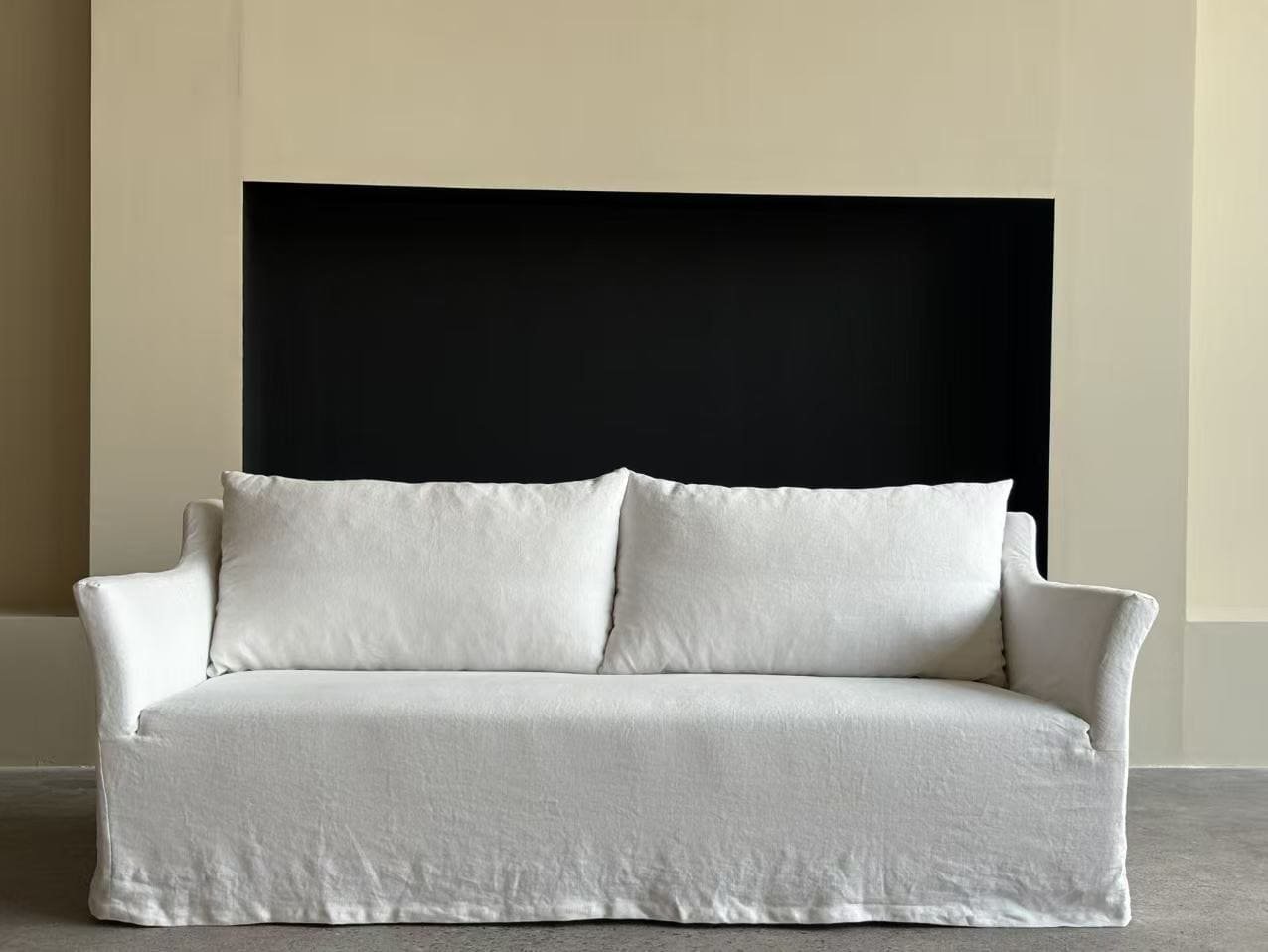
As the owner of a factory that has specialized in handmade linen upholstery for over 13 years, I've talked with hundreds of US-based interior designers, homeowners, and furniture brands. They all start with a similar question about finding the "best" sofa. But what I've learned is that they're not just looking for a brand name. They're trying to manage risk and ensure their creative vision comes to life perfectly. The real question isn't "who" makes the best sofa, but "what" makes a sofa the best for your specific project. Let's break down the factors that truly matter, moving beyond brand lists to find you the perfect fit.
What truly defines a high-quality sofa beyond the brand name?
You see beautiful sofas from top US brands, but you're not sure what you're paying for. Without knowing the details, you could overpay for a sofa with a weak frame hidden under beautiful fabric.
True sofa quality is determined by its internal construction, not the brand label3. Key factors include a solid, kiln-dried hardwood frame4, supportive 8-way hand-tied suspension5, high-resilience fillings6, and durable, precisely stitched upholstery like pure linen7. These elements define real-world comfort and longevity.
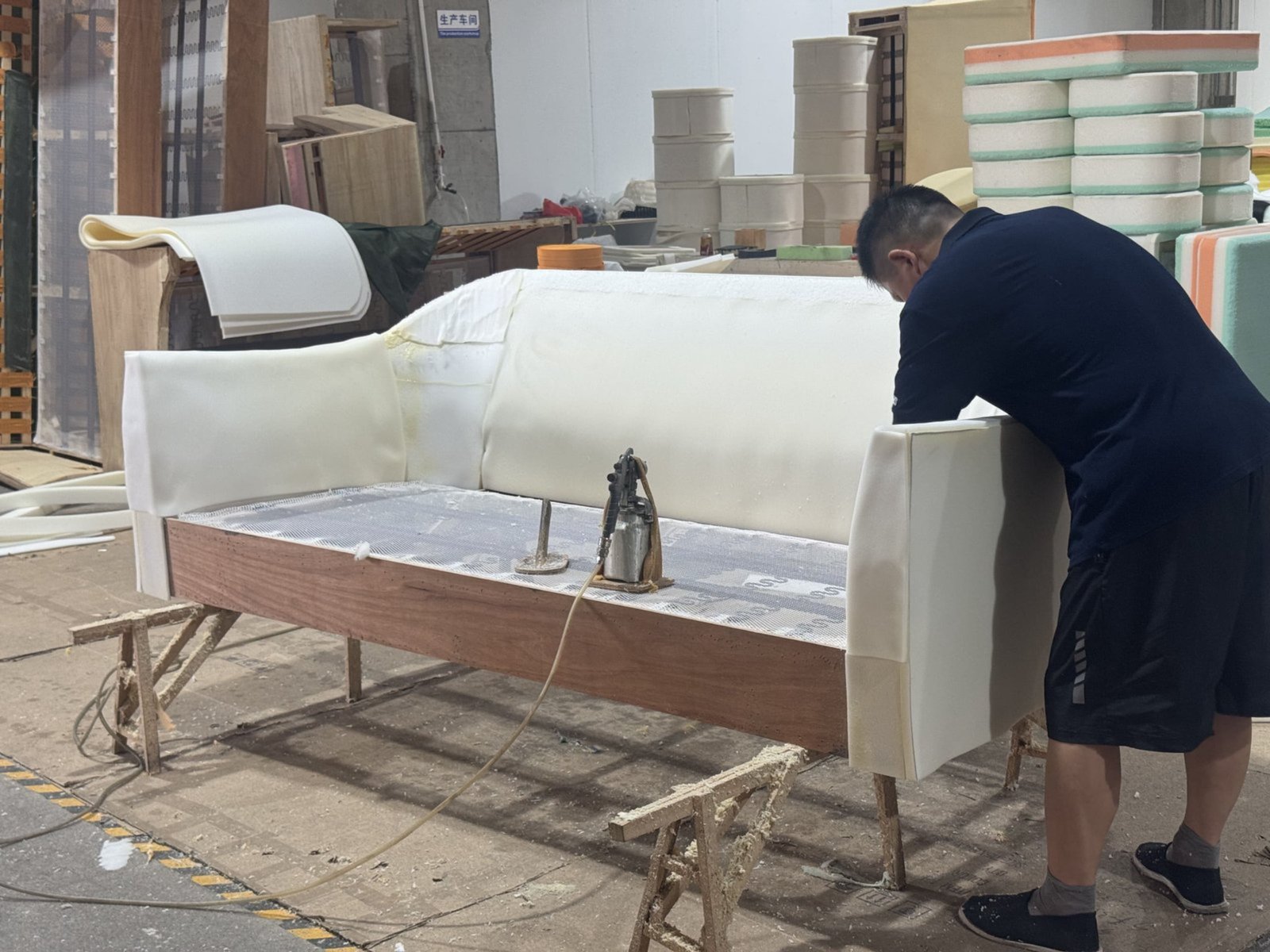
In my 13 years of building custom furniture, I can tell you that the most important parts of a sofa are the ones you can't see. A famous brand name doesn't guarantee a long-lasting piece. It's the quality of the materials and the skill of the craftsmanship that count. When we build a sofa for a designer's project, the conversation is always about these core components, because they know this is where true value lies. A sofa is an investment, and its foundation determines whether that investment pays off for years or disappoints in months.
The Anatomy of a High-End Sofa
Let's look at the key differences between a standard sofa and a high-end, investment-grade piece.
| Component | Standard Quality | High-End Custom Quality |
|---|---|---|
| Frame | Plywood, particleboard, or softwoods. Joined with staples.8 | Kiln-dried solid hardwood (e.g., oak, ash). Corner-blocked, doweled, and glued for maximum stability. |
| Suspension | Sinuous "S" springs or webbing. Can sag over time. | 8-way hand-tied springs. Each spring is tied by hand in eight directions, providing balanced, durable support. |
| Cushions | Low-density foam that flattens quickly.9 | High-resilience foam core wrapped in a down-and-feather blend for a mix of support and plush comfort. |
| Upholstery | Lower-grade fabrics, often synthetic blends. Simple stitching. | Premium, natural textiles like 100% Belgian linen. Detailed work like welt cords and pattern-matching. |
This is why just asking for a brand isn't enough. You need to ask what's inside.
Is a custom sofa from an overseas factory a risky choice for high-end projects?
You love the idea of a fully custom sofa but worry about ordering from an overseas factory. What if it's not what you expected? Communication barriers and quality issues could turn your dream project into a nightmare.
Working with a specialized overseas factory isn't inherently risky if they have a proven process for US clients. Direct communication, detailed shop drawings for approval, fabric sampling, and clear quality control checkpoints10 can actually give you more control than buying off-the-shelf locally.

This is a concern we address every single day with our clients, who are primarily US-based designers and high-end stores. The fear is completely understandable. But the image of a risky, unreliable overseas supplier is outdated. For specialized workshops like ours, our entire business model is built on trust and transparent communication. We've spent years refining our process to eliminate risk and act as a direct extension of our client's design team. A professional factory partner isn't just a vendor; they are a collaborator whose success is tied directly to the success of your project. We understand that a single mistake on a high-end residential project can damage a designer's reputation, so we build safeguards into every step.
How We De-Risk the Custom Process
When designers partner with us, they find our process is often more rigorous than what they experience with domestic suppliers. Here’s how:
### Crystal-Clear Communication Before a single piece of wood is cut, we create detailed shop drawings. These technical plans specify every dimension, angle, cushion fill, and leg style. You see exactly what you are getting and can make changes. This approval step eliminates guesswork.
### Tangible Quality You Can Feel You can't choose a fabric from a screen.11 We provide over 200 physical linen fabric swatches so you can see and feel the material in your project's lighting. We also fully support COM (Customer's Own Material) if you have a specific fabric you want to use.
### The Unmatched Value Proposition Our clients save 40-60% compared to buying a similarly specified sofa from a high-end US retailer. This isn't because the quality is lower. It's because you are bypassing multiple layers of markups: the importer, the distributor, the wholesaler, and the retail store12. That cost efficiency allows you to afford higher-end materials—like genuine Belgian linen—without compromising your budget.
How can I compare US-made sofas with international custom options fairly?
Comparing a well-known US brand to an overseas custom workshop feels like comparing apples and oranges. Focusing only on the brand's location could mean you miss out on a better-fitting solution for your design.
To compare fairly, evaluate manufacturers on specific criteria: material specifications (frame, fill, fabric), level of customization, communication process, and total landed cost. A US brand might offer speed for in-stock items, while a direct factory offers unparalleled customization and value.
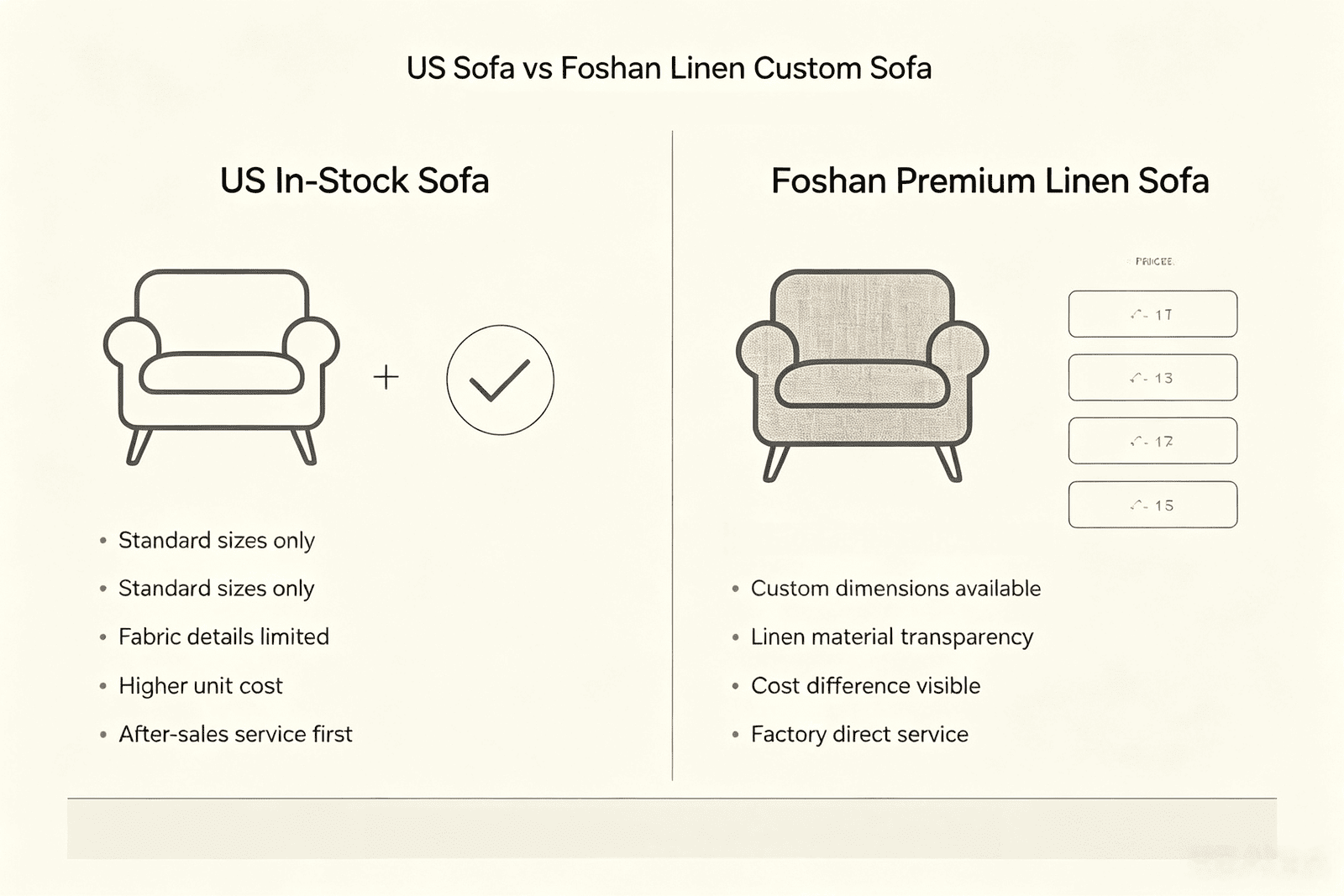
When designers come to us, they're often trying to achieve the aesthetic of brands like Restoration Hardware, Sixpenny, or high-end custom shops in California, but need more flexibility or better value. The goal isn't to find a "cheaper" option, but a "smarter" one. A fair comparison requires you to look at any potential supplier—whether they are in North Carolina or Foshan—through the same lens. You must assess them based on your project's unique needs for quality, specificity, and budget. For some projects, an off-the-shelf sofa from a US retailer is the perfect choice. For others, where the sofa is a centerpiece that must be perfect, a direct custom approach is far superior.
A Framework for Choosing Your Sofa Partner
Use this table to weigh your options based on what truly matters for your project's success.
| Factor | European high-end retail counterparts | Direct Custom Factory (like us) |
|---|---|---|
| Customization | Limited to standard sizes and a pre-set fabric collection. | Fully customizable dimensions to match your unique project layout, 200+ linen options, COM fabric support, cushion fill changes. |
| Material Specs | Often uses marketing terms. May be hard to confirm frame wood or spring type. | Fully transparent. Every material is specified in technical shop drawings for your approval. |
| Cost | Retail price includes brand markup, marketing costs, and physical store overhead. | Direct-from-workshop price. Savings of 40-50% for the same or higher quality materials. |
| Collaboration | You are a customer. Interaction is with a sales associate. | You are a partner. You collaborate directly with the people making your piece. |
| Project Fit | Best for standard needs and when speed is the top priority. | Best for unique design visions, specific dimensions, and maximizing value without sacrificing quality. |
Ultimately, choosing the right partner comes down to your priorities. Are you looking for convenience or control? A brand name or bespoke quality?
Conclusion
The "best quality sofa" isn't from a single US brand. It's from the maker who becomes your trusted partner, delivering the exact construction, materials, and customization your project demands.
If you are a US interior designer sourcing custom linen upholstered sofas for high-end residential projects, our 13-year professional custom factory in Foshan provides free furniture construction quality consultation, physical certified Belgian linen swatch kits, full technical shop drawing design for pre-order approval. We supply kiln-dried hardwood frame, 8-way hand-tied spring suspension and layered high-resilience foam sofas with full dimension customization and COM fabric support. Reach out via WhatsApp to request fabric samples or full furniture specification support.https://linenworld.pro
"[PDF] The Effect of Price, Brand Name, and Store Name on Buyers ...", https://carlsonschool.umn.edu/sites/carlsonschool.umn.edu/files/2024-06/Rao%20and%20Monroe%201989.pdf. Research on country-of-origin and brand cues indicates that such labels affect consumer quality perceptions but operate as indirect signals rather than direct evidence of a product's materials, construction, or durability. Evidence role: expert_consensus; source type: paper. Supports: Country-of-origin labels and brand names can influence perceived quality, but they do not directly establish the physical construction quality of an individual product.. Scope note: Contextual support only; the source would not evaluate this article's specific sofas or any particular manufacturer. ↩
"[PDF] Upholstered Furniture - MSU Libraries - Michigan State University", https://archive.lib.msu.edu/DMC/extension_publications/e503/e503_75.pdf. Educational guidance on upholstered furniture selection identifies frame materials, joinery, suspension, cushion composition, upholstery fabric, and workmanship as practical indicators of furniture quality. Evidence role: general_support; source type: education. Supports: Furniture quality guides commonly evaluate upholstered furniture by frame construction, cushion materials, suspension, upholstery fabric, and workmanship.. Scope note: Contextual support only; it supports the criteria used for evaluation but does not prove that any specific sofa meets them. ↩
"[PDF] Selecting Upholstered Furniture - USU Digital Commons", https://digitalcommons.usu.edu/cgi/viewcontent.cgi?article=1515&context=extension_histall. Consumer and furniture-construction guidance emphasizes that hidden structural components, including frames, suspension systems, cushion materials, and upholstery workmanship, are major determinants of upholstered furniture performance. Evidence role: expert_consensus; source type: institution. Supports: Internal components such as the frame, suspension, cushioning, and upholstery construction are central to upholstered furniture durability and comfort.. Scope note: Contextual support only; the source would not establish that brand labels are never relevant. ↩
"[PDF] Raw materials use by Mississippi furniture manufacturers, 1989", https://scholarworks.sfasu.edu/cgi/viewcontent.cgi?article=1111&context=forestry. University wood-products guidance explains that kiln drying lowers lumber moisture content and improves dimensional stability, a property relevant to the long-term performance of hardwood furniture frames. Evidence role: mechanism; source type: education. Supports: Kiln drying reduces wood moisture content and helps improve dimensional stability, which is relevant to durable furniture frames.. Scope note: Contextual support only; kiln drying is one quality factor and does not by itself prove the overall quality of a finished sofa. ↩
"Sinuous Springs vs Eight-Way Hand Tied - The Stated Home Blog", https://blog.thestatedhome.com/sinuous-springs-eight-way-hand-tied/. Upholstery references describe eight-way hand-tied suspension as a coil-spring system tied in several directions to distribute seating support across upholstered furniture. Evidence role: definition; source type: institution. Supports: Eight-way hand-tied suspension is an upholstery technique in which coil springs are tied in multiple directions to distribute support across a seat.. Scope note: Contextual support only; sources may describe the method and its intended function without conclusively proving it outperforms all other suspension systems in every use case. ↩
"(PDF) Polyurethane Foam In Furniture Design Considerations in ...", https://www.academia.edu/7460044/Polyurethane_Foam_In_Furniture_Design_Considerations_in_Furniture_Design. Technical literature on flexible polyurethane foams defines high-resilience cushioning by its elastic recovery and performance characteristics, which are relevant to support retention in upholstered seating. Evidence role: mechanism; source type: research. Supports: High-resilience foams are designed to recover shape and provide durable cushioning performance in seating applications.. Scope note: Contextual support only; cushion performance also depends on foam density, thickness, wrapping materials, and use conditions. ↩
"Linen Most Useful: Perspectives on Structure, Chemistry, and ... - PMC", https://pmc.ncbi.nlm.nih.gov/articles/PMC4403609/. Textile reference sources describe linen, produced from flax fibers, as a strong natural fabric with durability characteristics that help explain its use in household textiles and upholstery contexts. Evidence role: definition; source type: encyclopedia. Supports: Linen, made from flax fiber, is known for strength and durability among natural textiles.. Scope note: Contextual support only; abrasion resistance and upholstery suitability depend on weave, fabric weight, finishing, and testing results for the specific linen. ↩
"Hardwood vs. Particle Board Furniture - Kings Impressions", https://www.kingsimpressions.com/blog/hardwood-furniture-vs-particle-board-furniture/. Wood-products and furniture-construction guidance distinguishes the strength and durability characteristics of solid wood, engineered boards, and reinforced joinery methods, supporting the relevance of frame material and fastening method to furniture longevity. Evidence role: general_support; source type: education. Supports: Engineered boards and weaker joinery can have different strength and durability characteristics than solid hardwood frames with reinforced joints.. Scope note: Contextual support only; high-quality plywood and engineered products can be appropriate in some furniture designs, so the source should not be read as a universal rejection of all plywood construction. ↩
"[PDF] 1 Negative Poisson's Ratio Foam as Seat Cushion Material A. Lowe ...", https://lakeslab.ep.wisc.edu/SeatCushion.pdf. Research and technical standards for flexible foam cushioning measure density, compression behavior, and compression set as indicators of how well a cushion resists permanent deformation during use. Evidence role: mechanism; source type: research. Supports: Foam density and compression properties are associated with cushion durability and resistance to permanent deformation.. Scope note: Contextual support only; exact flattening speed depends on foam formulation, user weight, cushion design, and usage frequency. ↩
"[PDF] Title: Supplier Quality Manual - Custom Interface, Inc", https://www.custominterfaceinc.com/hubfs/Documents/Supplier-Quality-Manual-effective-10-10-13.pdf?hsLang=en. Quality-management standards and supply-chain literature identify documented specifications, approval procedures, supplier communication, sampling, and inspection checkpoints as controls that reduce manufacturing and procurement risk. Evidence role: mechanism; source type: institution. Supports: Formal specifications, approval steps, supplier communication, sampling, and inspection checkpoints are recognized quality-management controls in manufacturing and supply chains.. Scope note: Contextual support only; such controls reduce risk but do not eliminate the possibility of defects, delays, or miscommunication. ↩
"Improving color reliability of digital textile images via optimized ...", https://pmc.ncbi.nlm.nih.gov/articles/PMC12789604/. Color-management and material-perception research shows that display settings, device calibration, lighting conditions, and the absence of tactile information limit the reliability of judging textile appearance and hand from a screen alone. Evidence role: mechanism; source type: research. Supports: Digital displays vary in color reproduction and cannot convey tactile textile properties, making physical samples important for material evaluation.. Scope note: Contextual support only; calibrated digital workflows can improve color accuracy but still cannot reproduce fabric texture or hand. ↩
"Pricing Strategies and Distribution Channels | PDF - Scribd", https://www.scribd.com/presentation/507596144/Chap-3. Marketing and distribution-channel scholarship explains that importers, wholesalers, distributors, and retailers typically add margins or costs as goods move through the supply chain, affecting the final consumer price. Evidence role: mechanism; source type: education. Supports: Distribution channels commonly add costs and margins at intermediary stages, which can increase the final retail price.. Scope note: Contextual support only; it does not verify the article's specific claimed savings percentage or account for shipping, duties, returns, or service costs. ↩


