

Clients ask us about sofa depth more than almost any other spec. They pick a number from a catalog, it looks fine on paper, and then the sofa arrives and something feels off.
Sofa seat depth typically runs from 85cm to 100cm1. The right number for you depends on how you sit, how tall you are, and what the sofa needs to do in that specific room. There is no universal one-size-fits-all sofa depth that suits every space and user; the optimal dimension always matches your specific living habits and room layout.
I have been working with interior designers and custom buyers for over 13 years on the production side2 at Linen World. The depth question comes up on almost every made-to-order brief. What I have learned is that this is not really a measurement question. It is a scene question. Who is sitting there, doing what, in which room?
That is what this guide is actually about.
What Does "Seat Depth" Mean and Why Does It Matter?
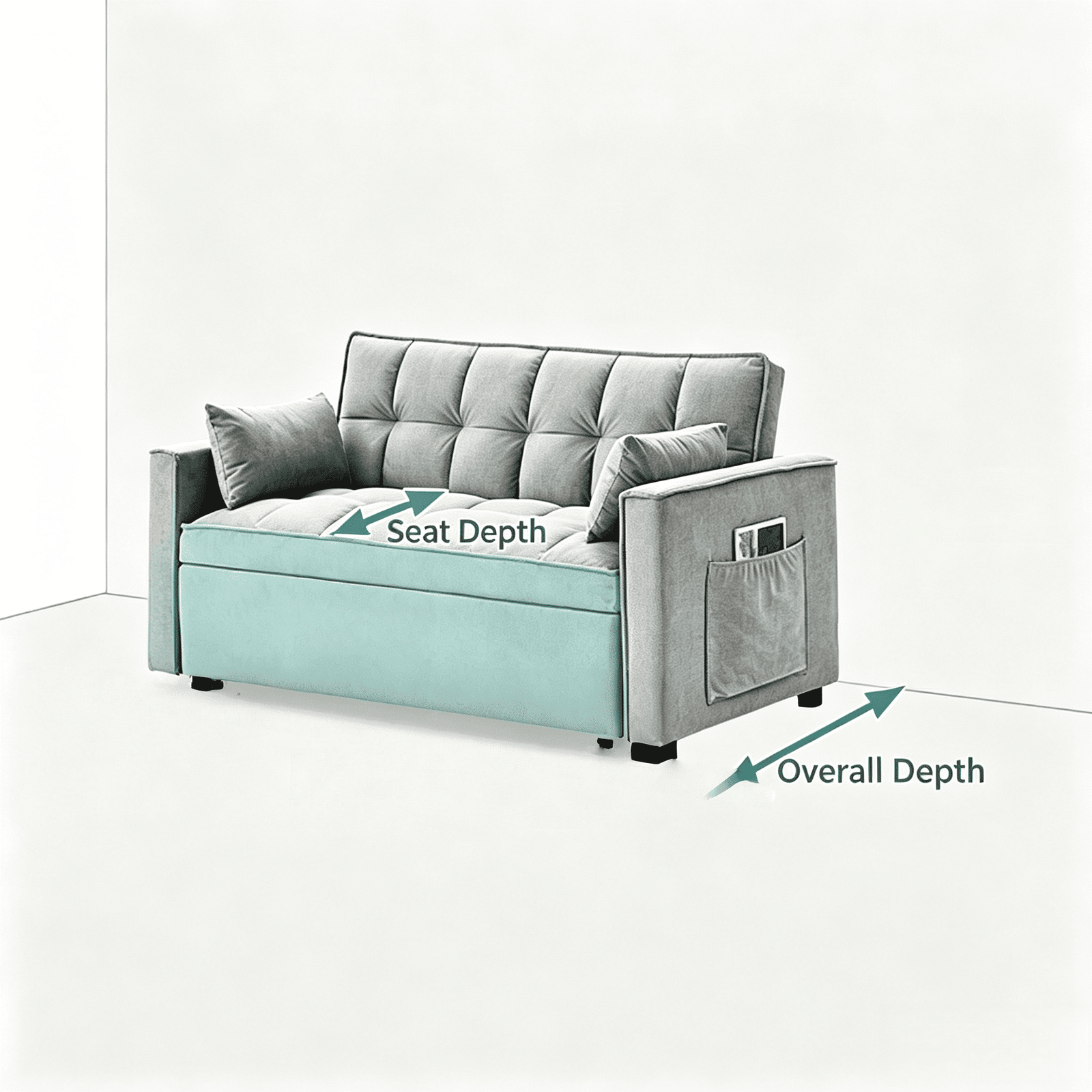
Buyers sometimes confuse overall sofa depth with seat depth, and that one mix-up can throw off an entire floor plan.
Seat depth is the distance from the front edge of the cushion to the back cushion face. Overall sofa depth includes the backrest structure and frame. These two numbers are not the same, and the one that matters for comfort is seat depth.
When a designer sends us a brief, one of the first things we check is which depth number they are working from. Catalog listings often show overall depth, which runs 10–15cm deeper than the actual seat3. If a buyer plans their clearance around the overall depth, that is fine. But if they are trying to judge comfort from it, they are reading the wrong number.
Why This Distinction Changes Your Decision
Here is what the two numbers actually control:
| Measurement | What It Controls |
|---|---|
| Seat depth | How you sit — upright, reclined, or legs-tucked |
| Overall depth | How much floor space the sofa occupies |
| Back height | Visual weight and support feel |
| Arm height | Whether you use the arms as a side rest |
When a client comes to us saying a sofa felt "too deep" in the showroom, it almost always means the seat depth was too generous for their posture, not that the sofa was physically too large. These feel similar but require different fixes. Adjusting seat depth on a custom order is a production decision. Adjusting overall footprint is a spatial one. Knowing which problem you have tells you where to look for the answer.
How Deep Is Comfortable — and for Whom?
This is the question we hear most often. And the honest answer is: it depends on how you sit.
For upright seating — conversations, dining-adjacent use, home offices — 85cm to 90cm seat depth generally works well4. For lounging — media rooms, reading chairs, deep relaxation — 90cm to 100cm gives more room to settle in5. Taller users with longer legs will often prefer the deeper end of that range6.
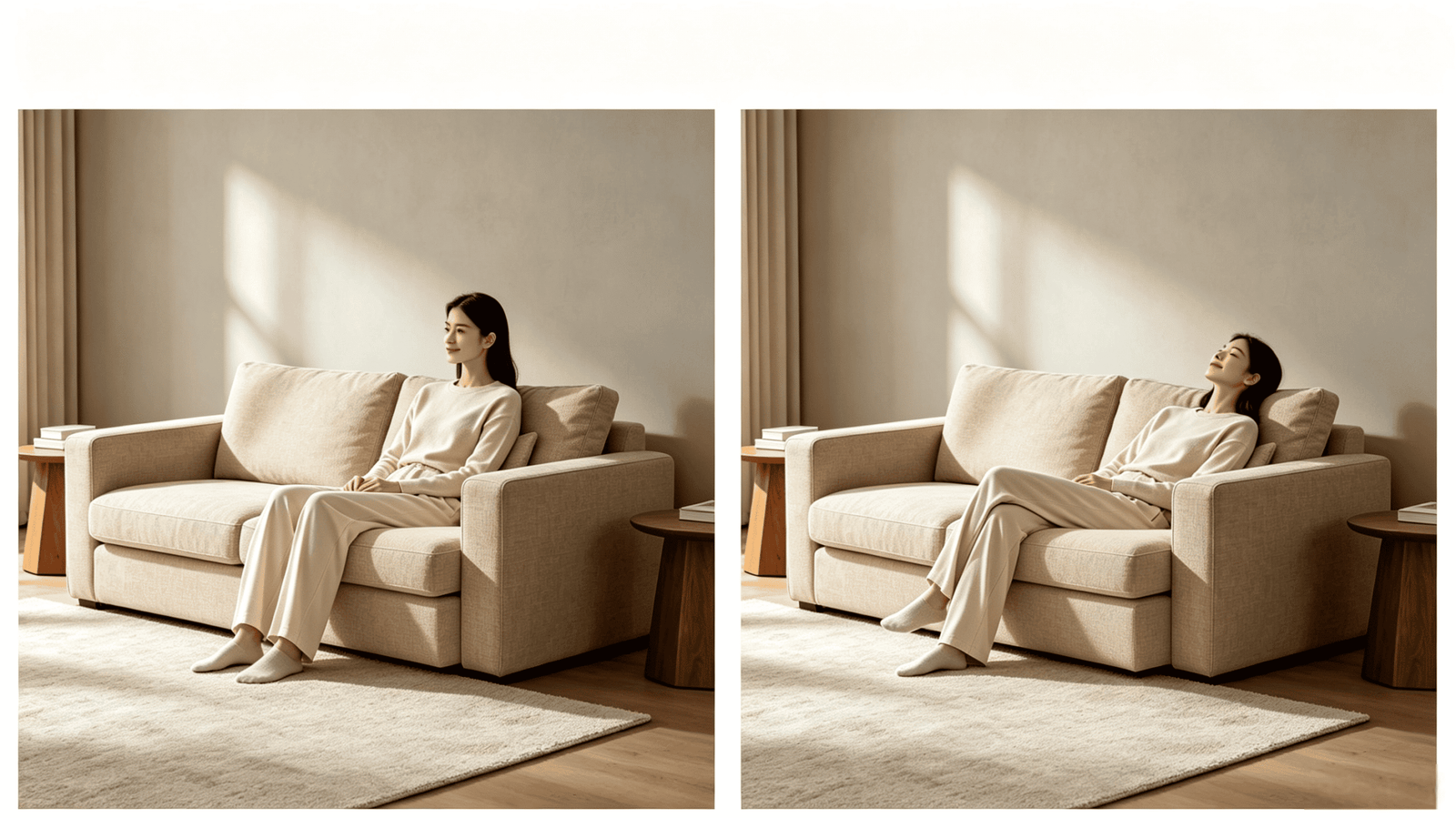
We see this play out clearly in the briefs we receive. A designer furnishing a formal sitting room in a brownstone will often spec a shallower seat — 86 or 88cm — because the room is meant for conversation and the clients entertain frequently. The same designer working on a media room in the same house will go to 95 or 98cm for the main sectional.
Matching Depth to Sitting Style
Neither a shallow nor a deep seat is better in absolute terms. The question is fit.
| Sitting Style | Suggested Seat Depth | Who This Fits |
|---|---|---|
| Upright, feet flat on floor | 85–90cm | Shorter users, formal rooms, conversation-first spaces |
| Relaxed, slight recline | 90–95cm | Average height, mixed-use living rooms |
| Full lounge, legs tucked up | 95–100cm | Taller users, media rooms, reading nooks |
One thing worth noting: a seat that is too shallow can feel rigid and uncomfortable just as much as one that is too deep. If your feet sit flat on the floor but the front edge of the cushion cuts into the back of your knees, the seat is too shallow for your leg length7. If you sit back and your feet lift off the ground, it may be too deep for your height. Both situations are solvable in a custom order by adjusting seat depth to the actual user.
How Does Room Size Change the Depth Decision?
A depth that feels generous and luxurious in a large great room can feel swallowing in a compact apartment living room. The seat depth is the same. The room is different.
In rooms under 4m wide, a sofa with 90cm+ seat depth will often dominate the space visually and reduce traffic flow8. In larger rooms — open-plan living areas, great rooms, loft spaces — deeper sofas tend to anchor the space better and read as more proportional.
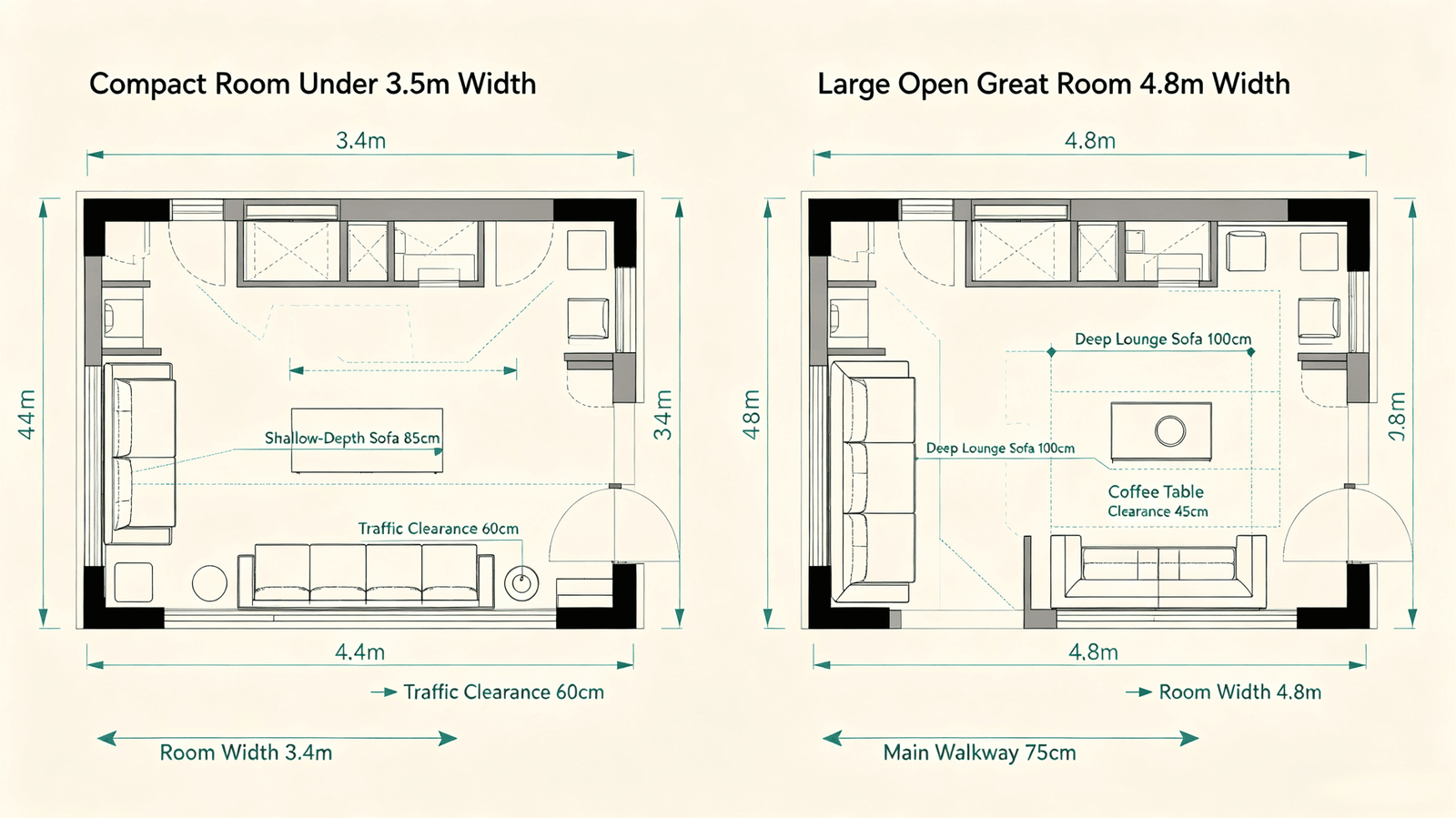
This is something designers we work with are very clear about. They rarely ask "what depth is comfortable?" in isolation. They ask, "given this floor plan, this clearance, and this circulation path, what depth range am I working within?" That is the right question.
Depth, Clearance, and Traffic Flow
Here is a practical way to think about it:
| Room Width | Max Recommended Sofa Overall Depth | Notes |
|---|---|---|
| Under 3.5m | ~85–88cm overall | Keep clearance to coffee table and opposite wall |
| 3.5m–4.5m | 88–95cm overall | Standard living room range |
| 4.5m+ | 95–105cm+ overall | Deep sectionals, modular configurations work well |
The clearance between the front of the sofa and the coffee table matters too. Most designers we work with keep this at 40–50cm minimum9. If your sofa is deeper and your room is narrower, something has to give — usually either the coffee table distance or the circulation path behind the sofa. Neither is wrong, but you want to decide that intentionally, not discover it after delivery.
Traffic flow behind the sofa is the other variable. In open-plan layouts, the sofa often sits mid-room with a walkway behind it. Adding 5–10cm of seat depth shifts the entire sofa footprint toward the back wall, which can close off that path10. A detailed floor plan drawn to scale — not just an estimate — is the only reliable way to check this before ordering11.
When Does Custom Depth Make Sense?
Most buyers assume custom depth is a premium option reserved for unusual projects. In our experience, it is just a normal part of how made-to-order furniture works.
Custom seat depth makes sense whenever a catalog depth does not match your use case, your room, or your users. For made-to-order upholstered furniture, depth is a specified dimension, not a fixed one. Within our made-to-order production workflow, adjusting seat depth is a standard configurable parameter rather than an extra premium special request.
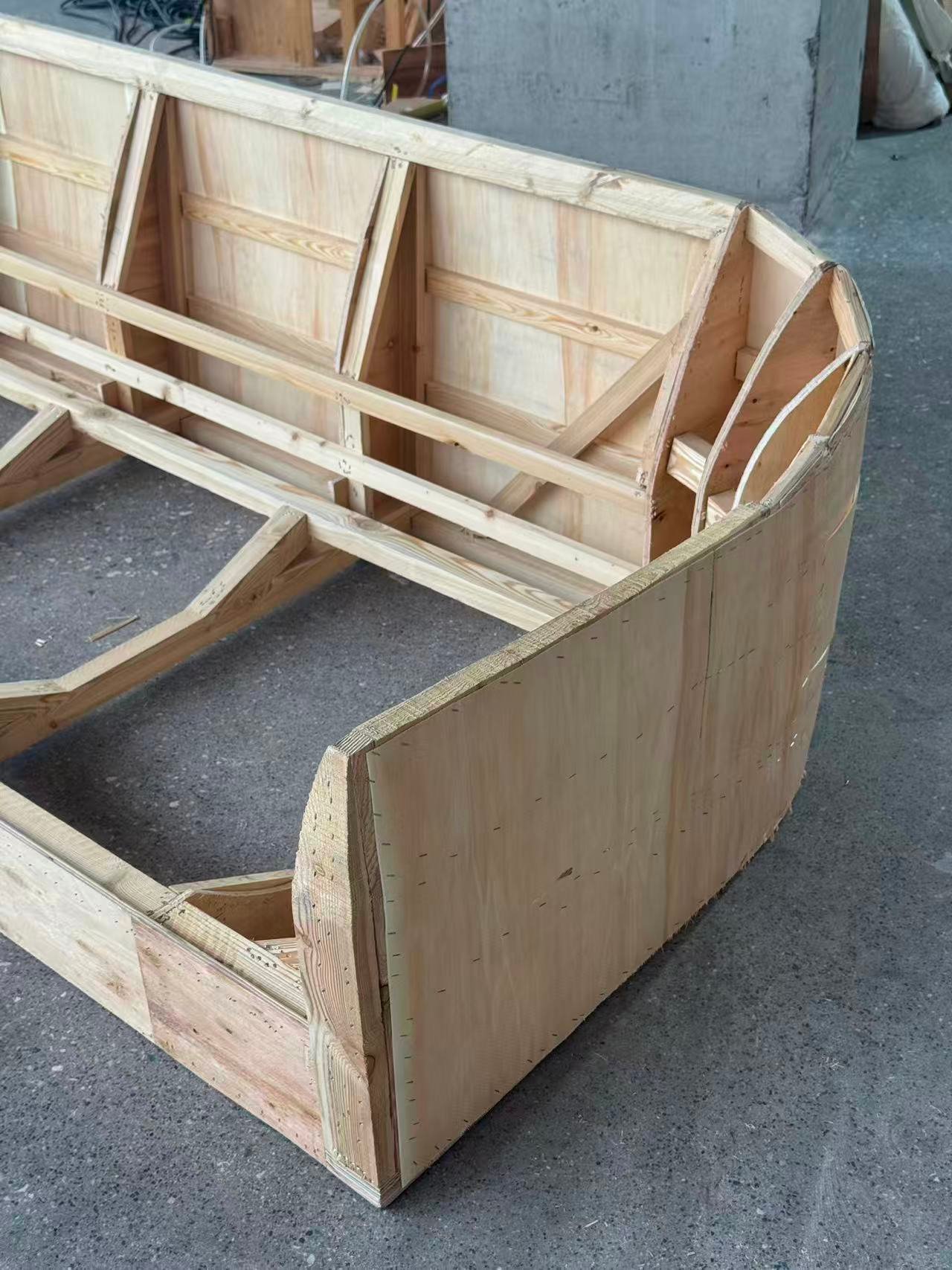
We receive briefs from US designers all the time that start with: "I need something between these two catalog options — one is too shallow, one is too deep." That is exactly the situation custom depth exists for. You are not stuck choosing between what is on the floor at a showroom. You can specify what your project actually needs.
What to Tell Your Supplier When Specifying Custom Depth
If you are briefing a custom order, here is what a production team actually needs to work from:
| What to Specify | Why It Matters |
|---|---|
| Seat depth (not overall depth) | This is the comfort measurement — be precise |
| Overall depth (if floor plan is tight) | Helps the factory calculate frame dimensions |
| Primary users and sitting style | Helps validate whether the depth makes sense |
| Room dimensions and clearances | Confirms the footprint works before production starts |
| COM fabric or factory fabric | Affects cushion construction, which can slightly change perceived depth |
One thing we always recommend: if you are sending a brief for a sofa with a non-standard depth, include a note on why. Not because the factory needs your reasoning, but because it creates a record you can refer back to if the client later questions the spec. We have seen situations where a designer correctly specified a shallower depth for a compact room, and then a client later asked why it felt "smaller" than expected. Having the reasoning documented makes that conversation easier.
Conclusion
The right sofa depth depends on who is sitting, how they sit, and what the room can hold. There is no universal number — only the depth that fits your specific project.
If you’re an interior designer sourcing custom linen sofas for US residential projects, our 13-year Foshan workshop offers fully adjustable seat depth without extra surcharge. We provide free scaled floor plan layout review to confirm sofa dimensions and circulation clearance before production. Reach us via WhatsApp to request linen fabric swatches, factory virtual tours or custom sofa quotations.https://linenworld.pro
"How to Choose the Right Sofa Seat Depth and Height for Your Body", https://chitaliving.com/blogs/blog/sofa-seat-depth-height?srsltid=AfmBOoop99b4_BZ_u0Z4E-FbH1QvOY9-twJMtoXAVI8vhmWNTsbxI4o2. Ergonomic and anthropometric guidelines for seating typically specify seat depth ranges based on population leg-length distributions; sources such as human factors research or furniture standards bodies provide reference ranges against which this claim can be evaluated. Evidence role: general_support; source type: research. Supports: That typical sofa seat depth falls within an 85–100cm range as a recognized industry or ergonomic norm. Scope note: Published ergonomic standards often address task seating rather than residential upholstered furniture specifically, so applicability may be contextual rather than direct. ↩
"Influencing factors of online furniture purchase behavior based on ...", https://bioresources.cnr.ncsu.edu/resources/influencing-factors-of-online-furniture-purchase-behavior-based-on-analytic-hierarchy-process/. Research on consumer furniture purchasing and interior design decision-making identifies dimensional fit — including depth relative to room size and user anthropometrics — as a primary driver of post-purchase satisfaction and return rates in the upholstered furniture category. Evidence role: general_support; source type: research. Supports: That furniture dimensions, particularly depth, are a significant decision point in interior design specification and consumer furniture purchasing. Scope note: Peer-reviewed consumer research specifically focused on sofa seat depth as a specification variable is limited; broader furniture satisfaction studies provide contextual rather than direct support for the experiential claims made in the article. ↩
"Understanding Sofa Dimensions | Bassett Furniture", https://www.bassettfurniture.com/blog/sofa-dimensions.html?srsltid=AfmBOorH9_uFH0NAg3Mw-R73Y1XG8EKYxOZpY0CULO30gtOTYAwXyUld. Furniture construction references indicate that backrest frames and cushion assemblies contribute additional depth beyond the seating surface; the precise differential varies by construction method and is not universally standardized. Evidence role: general_support; source type: institution. Supports: That a measurable and consistent gap exists between overall sofa depth and usable seat depth due to backrest and frame construction. Scope note: The 10–15cm figure cited in the article is a generalization; actual differentials depend on frame design, cushion thickness, and back construction, and may vary considerably across manufacturers. ↩
"Chair Size Design Based on User Height - PMC - NIH", https://pmc.ncbi.nlm.nih.gov/articles/PMC9944090/. Human factors and ergonomics literature establishes that seat depth should not exceed popliteal length to avoid pressure on the posterior knee, a principle that supports shallower depths for upright postures in populations with shorter leg lengths. Evidence role: mechanism; source type: research. Supports: That shallower seat depths support upright posture by allowing the user's feet to remain flat on the floor without the seat edge pressing against the back of the knees. Scope note: Most ergonomic seat depth research focuses on office or task chairs rather than residential sofas, so the specific centimeter ranges cited require extrapolation from general seating principles. ↩
"[PDF] The Importance Of Good Sitting - Environment, Health & Safety", https://ehs.umich.edu/wp-content/uploads/2023/01/Haworth-Work-From-Home-pricing-for-University-of-Michigan-employees.pdf. Ergonomic literature on reclined seating postures notes that increased seat depth can support the thigh more fully when the torso angle opens beyond upright, reducing pressure concentration at the seat edge. Evidence role: mechanism; source type: research. Supports: That greater seat depth accommodates reclined or legs-tucked postures by providing additional surface area for thigh and lower leg support. Scope note: Direct research on residential sofa depth preferences for lounging postures is limited; available evidence is largely drawn from studies on recliners or healthcare seating rather than domestic upholstered furniture. ↩
"Ergonomic and Anthropometric Evaluation of Locally Manufactured ...", https://pmc.ncbi.nlm.nih.gov/articles/PMC10880822/. Anthropometric studies document a positive correlation between stature and popliteal-to-buttock length, the key dimension governing optimal seat depth; taller populations therefore require deeper seats to achieve full thigh support without posterior knee pressure. Evidence role: mechanism; source type: research. Supports: That taller individuals, who tend to have longer popliteal-to-buttock lengths, require greater seat depth to avoid discomfort from insufficient thigh support. Scope note: Anthropometric datasets vary by population and measurement methodology; published figures represent statistical distributions rather than prescriptive individual recommendations. ↩
"Development of a statistical model for predicting seat pressure felt ...", https://pmc.ncbi.nlm.nih.gov/articles/PMC6016302/. Ergonomic seating research identifies popliteal pressure as a primary discomfort mechanism when seat depth exceeds the user's thigh length, though the same principle applies in reverse when a shallow seat fails to support the full thigh, concentrating load at the seat edge. Evidence role: mechanism; source type: research. Supports: That insufficient seat depth relative to the user's thigh length causes the seat front edge to exert pressure on the popliteal area, producing discomfort. Scope note: Most published research addresses seat depth that is too great rather than too shallow; the reverse discomfort mechanism described here is a logical extension of the same biomechanical principle rather than a separately studied phenomenon. ↩
"How To Design A Living Room - Our Go-To Rules (And When It's Ok ...", https://stylebyemilyhenderson.com/living-room-rules-know. Interior design and space planning curricula establish proportional relationships between furniture dimensions and room volume, noting that oversized pieces in constrained spaces reduce perceived openness and restrict circulation pathways. Evidence role: general_support; source type: education. Supports: That furniture depth relative to room width affects both visual proportion and functional circulation in residential spaces. Scope note: The specific 4m threshold cited in the article is a practical heuristic rather than a codified standard; actual impact depends on room configuration, furniture arrangement, and the number of occupants. ↩
"How Far Should a Coffee Table Be From a Sofa? - 2Modern", https://www.2modern.com/blogs/modern-how-to/how-far-should-a-coffee-table-be-from-a-sofa?srsltid=AfmBOooGftTSRCEm-LIgcVLEsZzuLokN2iTVF_RPbOhN6V2ZhBvcqx4C. Space planning references in interior design education commonly cite a clearance of approximately 45cm between a sofa and coffee table as sufficient for comfortable leg room and access without requiring occupants to rise fully from the seat. Evidence role: general_support; source type: education. Supports: That a minimum clearance of approximately 40–50cm between a sofa and coffee table is a recognized space planning guideline for comfortable reach and leg room. Scope note: Published clearance figures vary across sources and are not governed by a single universal standard; the range reflects professional convention rather than regulatory requirement. ↩
"Living Room Circulation Patterns This technical illustration ...", https://www.facebook.com/3dmilidotcompro/posts/living-room-circulation-patternsthis-technical-illustration-demonstrates-various/1392259509613870/. Architectural space planning principles hold that furniture placement in open-plan environments directly determines circulation corridor widths, and that incremental increases in furniture depth reduce available passage width by an equivalent amount when the furniture is positioned mid-room. Evidence role: general_support; source type: education. Supports: That small increases in furniture depth have proportional effects on available circulation width in open-plan residential layouts. Scope note: The practical significance of a 5–10cm shift depends on the total available circulation width; in spacious open-plan layouts the effect may be negligible, while in constrained configurations it may be critical. ↩
"NYIAD Design Articles - Planning a Furniture Layout", https://www.nyiad.edu/design-articles/interior-design/how-to-plan-your-furniture-layout. Professional interior design practice standards, including those referenced in credentialing examinations, identify scaled floor plans as the foundational documentation tool for confirming furniture dimensions, clearances, and circulation paths before procurement or fabrication. Evidence role: expert_consensus; source type: institution. Supports: That scaled drawings are the professional standard for verifying furniture fit and spatial relationships prior to procurement. Scope note: Digital 3D modeling and augmented reality tools are increasingly used alongside or instead of traditional scaled drawings; the claim that scaled plans are the 'only' reliable method may understate the validity of these alternatives. ↩


