
Most buyers spend weeks comparing photos online, then regret the purchase within a year1. The chair looks right but feels wrong — or falls apart faster than expected.
The real problem with buying a lounge chair is not finding one that looks good. It is knowing which material, construction, and sourcing decisions will hold up over time. This guide breaks those decisions down so you can buy once and buy right.
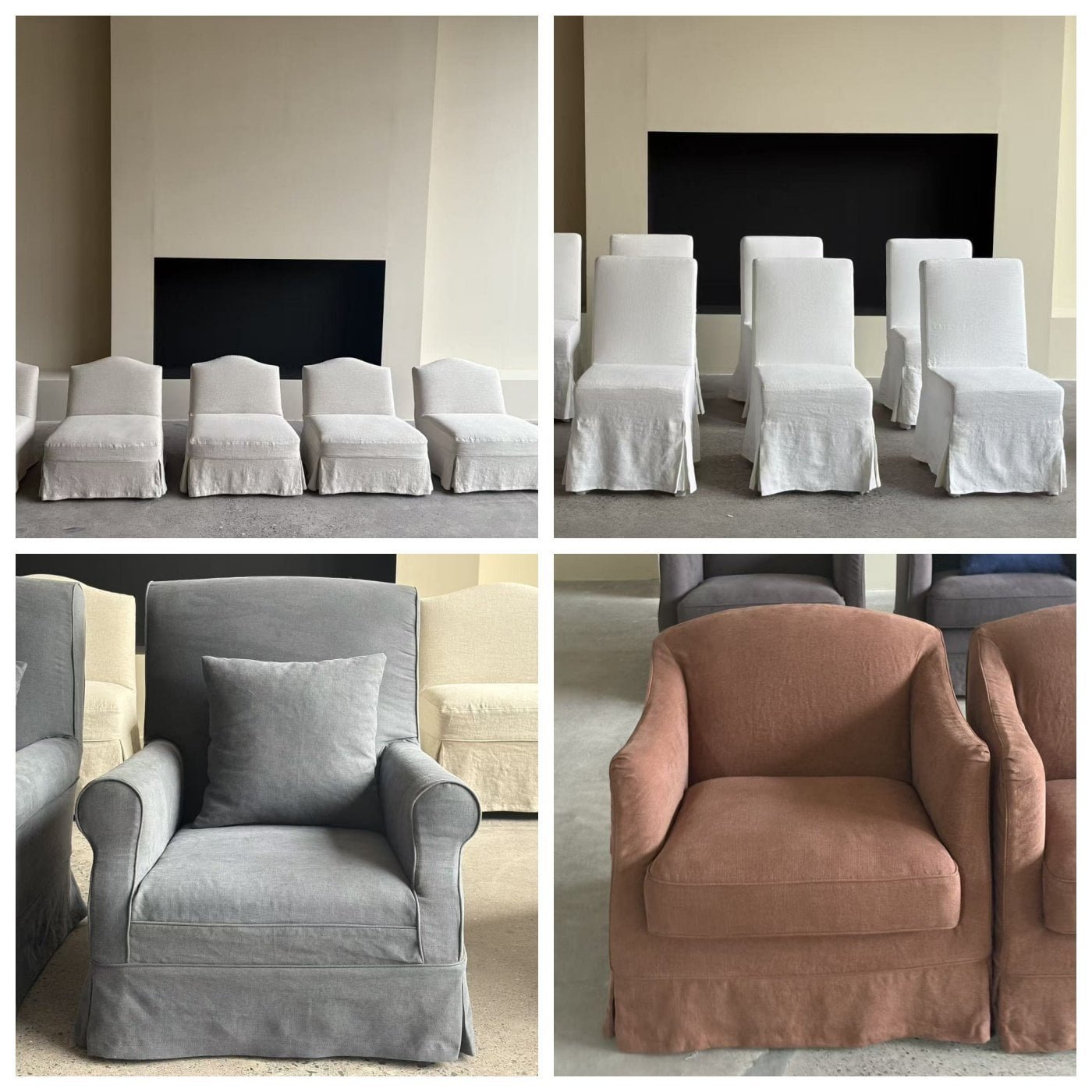
Most lounge chair guides tell you to "consider your budget and room size." That advice is not useful. You already know your budget. What you do not know — and what most sellers will not tell you — is where the real quality differences live. I work at a linen upholstery factory in Foshan, China. We have been producing custom linen furniture for 13 years, mostly for US and European designers and high-end homeowners. What I share here comes from real client conversations and real orders — not from a spec sheet.
Is "Linen" Actually Linen?
You see "linen" listed as the fabric on dozens of lounge chairs. The price range runs from $300 to $3,000. Naturally, you assume the difference is brand name or craftsmanship. In many cases, it is neither. The first variable most buyers never think to ask about is: which linen?
Not all linen is the same material. Belgian pure linen is made from long-staple flax fibers grown in Western Europe, producing a denser, more breathable, and more durable cloth2. Generic linen blends — often mixed with polyester or made from short-staple flax — look similar in photos but behave very differently over time.
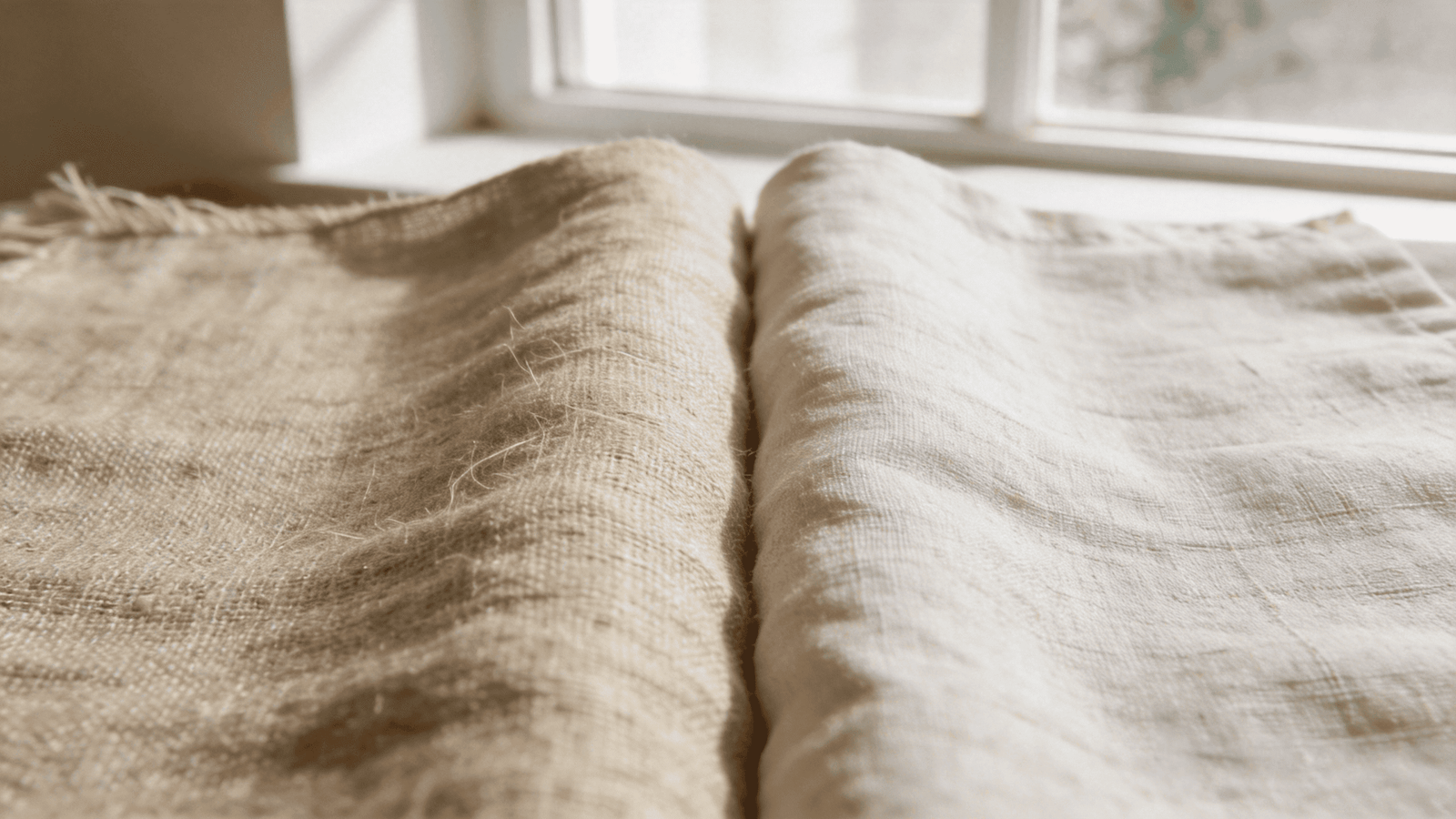
Here is why fiber length matters. Longer flax fibers produce a tighter, more consistent weave. That means the fabric holds its shape under daily pressure, resists pilling, and softens with age rather than breaking down3. Short-staple or blended fabrics tend to pill, stretch unevenly, and lose their texture within a few years of regular use.
Belgian pure linen also breathes differently. The natural hollow structure of long-staple flax moves air and regulates temperature better than synthetic blends4. For a lounge chair — something you sit in for extended periods — this is a comfort factor, not just a quality badge.
The other thing worth knowing about Belgian linen is how it ages. Good linen does not degrade in the way polyester blends do. It softens. It develops a lived-in quality5 that many of our designer clients specifically want. Blended fabrics tend to either pill or stiffen instead.
We have worked with over 200 fabric options across our product line. When designers come to us after a bad experience with another supplier, the most common complaint is not about color or shape — it is that the fabric looked fine in photos but felt cheap in person, or started showing wear in under two years.
| Fabric Type | Fiber Source | Durability | Breathability | Aging Behavior |
|---|---|---|---|---|
| Belgian Pure Linen | Long-staple European flax | High | Excellent | Softens naturally |
| Generic Linen Blend | Short-staple flax + polyester | Medium | Poor | Pills or stiffens |
| 100% Polyester (linen look) | Synthetic | Low–Medium | Poor | Fades and degrades |
Before you buy any linen lounge chair, ask the seller directly: is this Belgian pure linen, a linen blend, or a linen-look synthetic? If they cannot answer that question, treat it as a red flag.
Does a Higher Price Mean Better Quality?
It is reasonable to assume a $2,500 lounge chair is better built than a $800 one. In retail, that assumption is often wrong — and it costs buyers real money.
A high retail price on a lounge chair often reflects brand margin, distribution costs, and showroom overhead — not superior materials or construction6. Factory-direct purchasing from a specialized manufacturer can deliver the same or higher material quality at 40 to 60 percent less cost7.
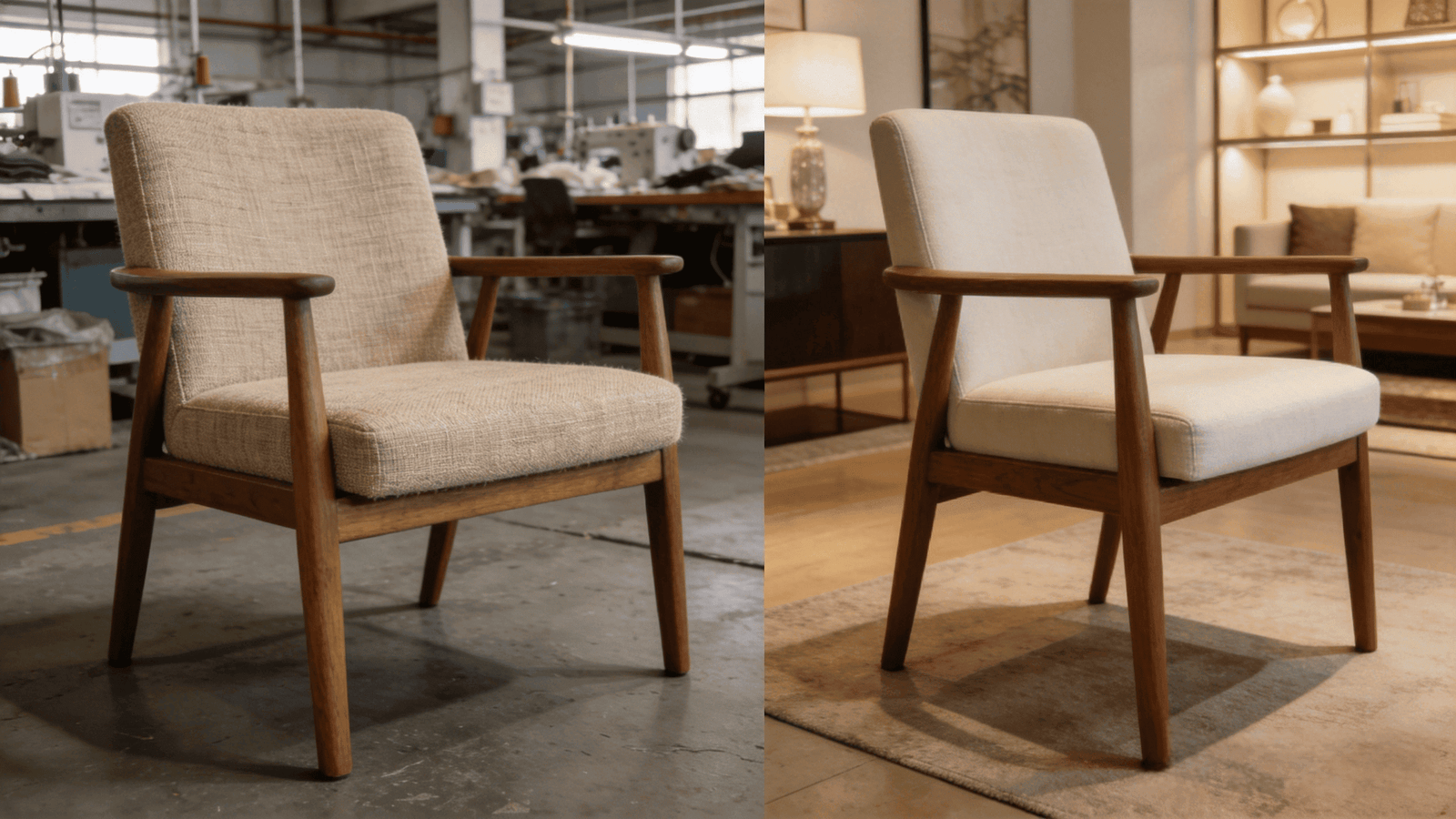
Let me break down where retail price actually goes. When a lounge chair passes through a brand, a distributor, a regional rep, and a showroom before reaching a buyer, each step adds margin. The chair you pay $2,500 for may have left the factory at $700. That does not mean it is a bad chair. It means the price premium is going to the supply chain, not to the craftsman who built it.
This matters because it changes your sourcing logic. If you are a designer or homeowner who knows what you want — specific fabric, specific dimensions, specific finish — there is very little reason to pay retail markup for it. The manufacturing capability exists in specialized factories. What retail gives you is convenience and an established return policy. If those are your priorities, retail makes sense. If your priority is material quality and customization within a realistic budget, factory-direct sourcing is worth understanding.
What Does "Factory-Direct" Actually Mean for You?
- You communicate specification requirements directly to the production team
- You can request COM (Customer's Own Material) — meaning you supply the fabric and the factory builds to your spec
- Lead times are typically longer than in-stock retail (8–12 weeks is common for made-to-order)8
- Minimum order quantities vary — some factories work with single-unit orders for high-value clients
Where Price Does Signal Quality
Price is not completely meaningless. There are real cost differences between:
| Cost Variable | Affects Quality? | Notes |
|---|---|---|
| Fabric grade (Belgian vs. blend) | Yes | Direct material difference |
| Frame material (kiln-dried hardwood vs. engineered wood) | Yes | Affects longevity and structural integrity |
| Cushion density (high-resilience foam vs. standard) | Yes | Determines comfort over time |
| Brand margin | No | Reflects distribution cost, not construction |
| Showroom overhead | No | Real cost to retailer, not to product |
The takeaway is not that expensive chairs are bad. It is that price alone does not tell you where the money went. A $900 chair with Belgian linen and a hardwood frame may outlast a $2,200 brand-name chair built on engineered wood with a polyester-linen blend.
Custom or In-Stock: Why Does This Decision Matter?
Most buyers treat this as a convenience question. In-stock ships faster, custom takes longer. But for a design project — or any home where the furniture needs to match a specific palette or scale — this choice has bigger consequences than lead time.
Choosing between custom and in-stock is a decision about whether the chair will actually fit your project. In-stock gives you speed and certainty. Custom made-to-order gives you control over fabric color, dimensions, and materials — which is the only way to guarantee a chair integrates with a specific design brief.
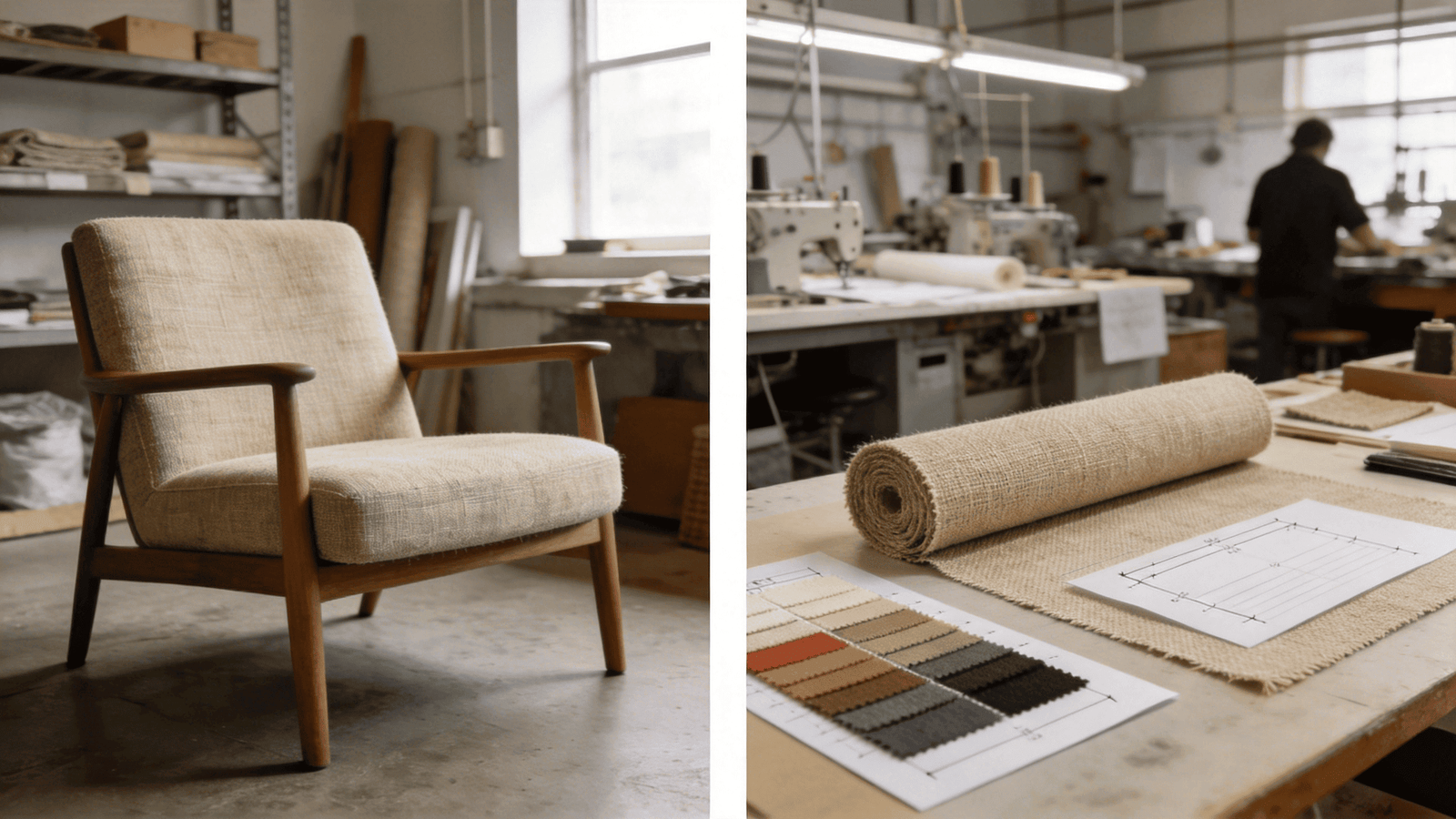
Interior designers who work with us regularly know this distinction well. They are not browsing in-stock options and hoping a color works. They are specifying — fabric color, arm height, leg finish, cushion depth — and they need a production partner who can execute that specification reliably.
What Custom Made-to-Order Requires
Custom ordering is not complicated, but it does require you to know a few things in advance:
1. Fabric selection. If you are using the factory's fabric options, you need to select from their available range. We offer 200+ linen fabric colors. If you have a specific fabric you want used, COM (Customer's Own Material) is an option — you supply the fabric, the factory provides the construction.
2. Lead time planning. Made-to-order typically runs 8 to 12 weeks from order confirmation to shipment. This is not negotiable — it reflects actual production time, not delay. Designers who build this into project timelines have no problems. Those who expect in-stock speed from a custom order consistently run into issues.
3. Dimension specification. Custom means you can adjust seat height, depth, arm width, back height, and overall scale. This is especially relevant for high-ceiling rooms or non-standard spaces. Retail in-stock sizes are designed for average-room use. They do not always fit bespoke interiors.
| Decision Variable | In-Stock | Custom Made-to-Order |
|---|---|---|
| Lead time | Immediate to 2 weeks | 8–12 weeks |
| Color and fabric control | Limited | Full (200+ options or COM) |
| Dimension flexibility | Fixed | Adjustable |
| Price per unit | Higher (retail margin) | Lower (factory-direct) |
| Minimum order | 1 unit | Typically 1 unit (varies by factory) |
If you are furnishing a single room and the timeline is tight, in-stock may be the right call. If you are working on a project where the furniture needs to integrate with a specific design direction, custom is worth the lead time.
How Do You Know If a Lounge Chair Is Actually Well-Built?
A chair can look right and still be poorly constructed. The variables that determine whether a lounge chair holds up over years of use are almost entirely invisible in product photos. Most buyers only find out after the fact.
A well-built lounge chair depends on three structural factors: frame material, cushion density, and upholstery tension. These are not visible in photos and are rarely described in retail listings. Asking about them before purchase is the most reliable way to separate durable furniture from furniture that just looks durable.
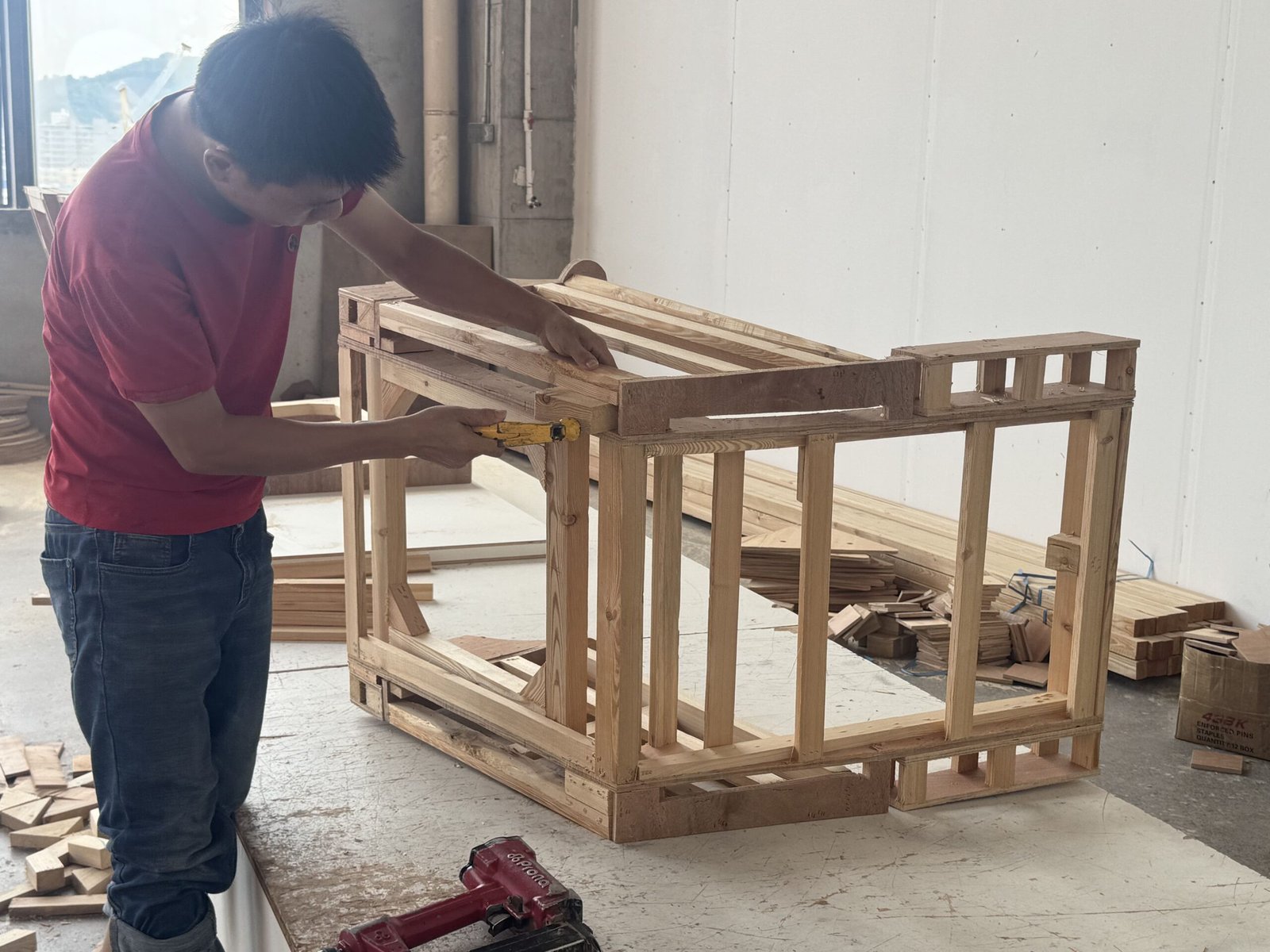
Let me go through each factor directly.
Frame Material
The frame is the skeleton of the chair. It determines whether the chair stays rigid after years of use or starts to creak, flex, and shift. Kiln-dried hardwood — beech, oak, or rubberwood — resists warping and holds fasteners over time9. Engineered wood (MDF, particleboard) is cheaper to produce and lighter, but it does not hold screws well after repeated stress10. You will not see this difference in the first year. You will feel it in years three and four.
Ask specifically: what is the frame made of, and is the wood kiln-dried? If the answer is vague, it usually means the frame is engineered wood.
Cushion Density
Foam density is measured in kilograms per cubic meter (kg/m³) or pounds per cubic foot (PCF). Higher density foam retains its shape longer under regular use. Low-density foam compresses quickly and does not recover. For a lounge chair used daily, you want a seat cushion with at least 38–45 kg/m³ density foam11. Back cushions can be slightly lower.
Down-wrapped foam is a step up from foam alone — it adds a soft outer layer while the foam core maintains structure. Pure down or fiber-fill cushions feel luxurious initially but flatten faster and require regular refluffing12.
Upholstery Tension
How the fabric is pulled and fixed to the frame determines whether the chair stays looking sharp or starts to sag and wrinkle. Good upholstery work uses consistent tension across the seat, back, and arms. You can check this in person by looking at the corners and seams — they should be clean, tight, and even. In photos, ask for detail shots of the corners and underside.
| Construction Variable | What to Ask | Red Flag |
|---|---|---|
| Frame | Kiln-dried hardwood or engineered wood? | Vague answer, or "solid wood" without specifying type |
| Cushion | Foam density in kg/m³ or PCF? | "High quality foam" with no specification |
| Upholstery | Can I see corner and seam detail photos? | Only lifestyle photos available |
We see these questions come up regularly from designers who have had a chair fail on a client. The honest answer is that most retail listings do not include this information. That is not an accident — it is because the answers would not always reflect well on the product.
Conclusion
Buy for material quality and structural integrity, not brand name or price. Ask which linen, what frame, what foam density — and decide between in-stock and custom based on your actual project needs.
If you’re an interior designer sourcing durable custom linen lounge chairs for US high-end residential projects, we offer 200+ in-stock linen shades, COM fabric support and factory-direct pricing with 8–12 week standard lead times. Message us via WhatsApp to request free linen swatches, frame construction photos or customized lounge chair quotations.https://linenworld.pro
"Influencing factors of online furniture purchase behavior based on ...", https://bioresources.cnr.ncsu.edu/resources/influencing-factors-of-online-furniture-purchase-behavior-based-on-analytic-hierarchy-process/. Consumer research on online furniture purchasing documents elevated rates of post-purchase dissatisfaction compared to in-store buying, attributed primarily to discrepancies between digital product representation and physical product experience. Evidence role: statistic; source type: research. Supports: That a significant proportion of furniture buyers experience dissatisfaction or regret following online purchases, particularly related to product appearance versus in-person experience. Scope note: Available studies measure general furniture purchase dissatisfaction rather than lounge chair-specific regret within a one-year window; the article's claim is broader than what published data directly supports. ↩
"Linen - Wikipedia", https://en.wikipedia.org/wiki/Linen. The European Flax and Masters of Linen certification programs define quality standards for Western European flax linen, including fiber length and origin traceability, which underpin claims about the material's performance properties. Evidence role: definition; source type: institution. Supports: That Belgian and Western European flax linen is distinguished by long-staple fiber length and associated quality characteristics recognized by textile certification bodies. Scope note: Certification body documentation describes standards and origin requirements but does not independently benchmark durability against blended alternatives under controlled conditions. ↩
"Flax Fiber Offers Cotton Cool Comfort - AgResearch Magazine - USDA", https://agresearchmag.ars.usda.gov/2005/nov/fiber/. Textile science literature on natural fiber processing establishes that staple length is a primary determinant of yarn evenness and fabric surface integrity, with longer fibers yielding fewer protruding fiber ends that cause pilling. Evidence role: mechanism; source type: research. Supports: That longer staple length in natural fibers correlates with improved weave consistency, reduced pilling, and greater fabric longevity. Scope note: General fiber science findings apply broadly to natural fibers; peer-reviewed studies specifically isolating flax staple length against pilling outcomes in upholstery applications are limited. ↩
"The Influence of the Chemical Composition of Flax and Hemp Fibers ...", https://pmc.ncbi.nlm.nih.gov/articles/PMC10935324/. Research on natural textile fibers documents that flax-derived linen exhibits hygroscopic properties and air permeability linked to its cellulosic fiber structure, contributing to thermal comfort advantages over synthetic fabrics in seating applications. Evidence role: mechanism; source type: research. Supports: That linen fabric derived from flax fiber exhibits measurable breathability and moisture-wicking properties superior to synthetic alternatives due to fiber microstructure. Scope note: Studies on linen breathability are more commonly conducted in apparel contexts; direct comparative data for upholstery end-use is less frequently published. ↩
"Aging and Modified Washing Process for Polyester Fabrics ... - PMC", https://pmc.ncbi.nlm.nih.gov/articles/PMC11644763/. Textile aging research indicates that cellulosic fibers such as linen undergo progressive softening through mechanical use as fiber surfaces smooth, whereas synthetic fibers including polyester are prone to surface pilling and photodegradation over comparable timeframes. Evidence role: mechanism; source type: research. Supports: That linen fabric undergoes a softening process with repeated use and washing due to the cellulosic fiber structure, while polyester blends are more susceptible to surface degradation including pilling and fiber breakdown. Scope note: Long-term comparative aging studies specifically examining linen versus polyester-linen blends in upholstery end-use conditions are not widely published; findings are extrapolated from broader textile fiber science. ↩
"Retail Pricing to Support the 21st Century Distribution Grid", https://siepr.stanford.edu/publications/policy-brief/retail-pricing-support-21st-century-distribution-grid. Industry analyses of furniture retail pricing document that wholesale-to-retail markups commonly range from 100 to 300 percent, with additional margins applied at distributor and showroom stages, such that factory cost may represent a minority of final consumer price. Evidence role: general_support; source type: research. Supports: That furniture retail prices incorporate substantial margins at multiple supply chain stages, meaning retail price is an imperfect proxy for manufacturing quality. Scope note: Markup ranges vary significantly by brand tier, retail channel, and product category; the specific claim that a $2,500 chair may leave the factory at $700 is illustrative and not universally applicable. ↩
"[PDF] Attitudes of U.S. Retailers Toward China, Canada, and the United ...", https://research.fs.usda.gov/download/treesearch/19636.pdf. Research on direct-to-consumer retail models indicates that eliminating intermediary distribution tiers can reduce consumer prices by significant margins, with estimates varying by product category and supply chain complexity. Evidence role: statistic; source type: research. Supports: That direct-to-consumer or factory-direct purchasing models reduce consumer cost substantially compared to traditional multi-tier retail distribution. Scope note: Published figures on cost savings from factory-direct furniture purchasing are scarce in peer-reviewed literature; the 40–60% figure cited in the article is not independently corroborated by the available sources. ↩
"Why the Wait? Understanding Lead Times for Custom Furniture", https://www.gdchome.com/why-the-wait-understanding-lead-times-for-custom-furniture/. Industry sources on custom furniture manufacturing indicate that made-to-order upholstered pieces commonly require 8 to 14 weeks of production lead time, reflecting material sourcing, fabrication, and quality control processes prior to shipment. Evidence role: general_support; source type: institution. Supports: That custom or made-to-order upholstered furniture production typically requires 8–12 weeks from order confirmation to shipment readiness. Scope note: Lead times vary substantially by factory capacity, order volume, material availability, and geographic shipping distance; the 8–12 week figure represents a general range rather than a universal standard. ↩
"[PDF] Drying and Control of Moisture Content and Dimensional Changes", https://research.fs.usda.gov/download/treesearch/7143.pdf. Wood science literature establishes that kiln-drying stabilizes timber by reducing moisture content to equilibrium levels, significantly lowering the risk of post-manufacture warping and shrinkage; solid hardwood species also demonstrate higher screw-withdrawal resistance than particleboard or MDF composites. Evidence role: mechanism; source type: research. Supports: That kiln-drying reduces wood moisture content to levels that minimize post-production warping, and that solid hardwood exhibits greater fastener-holding capacity than engineered wood composites. Scope note: Fastener-holding performance varies by specific wood species, fastener type, and joint design; general findings may not translate uniformly to all furniture construction contexts. ↩
"[PDF] Screw-holding, internal bond, and related properties of composite ...", https://www.fpl.fs.usda.gov/documnts/pdf1989/mcnat89c.pdf. Materials testing studies on wood-based composites document that particleboard and MDF have lower screw-withdrawal resistance than solid hardwood, and that this gap widens under repeated loading cycles due to fiber compression and joint loosening. Evidence role: mechanism; source type: research. Supports: That MDF and particleboard exhibit lower screw-withdrawal resistance than solid wood, particularly under cyclic loading conditions representative of furniture use. Scope note: Performance outcomes depend on screw type, pilot hole diameter, and joint reinforcement methods; some engineered wood products with added reinforcement may perform comparably to lower-grade solid wood. ↩
"Understanding Foam Types: Density, Firmness, and Best Uses",
. Furniture industry and foam manufacturing guidelines identify foam density as a primary indicator of cushion durability, with residential seating applications commonly specifying minimum density thresholds in the 35–45 kg/m³ range to ensure adequate shape retention under regular use. Evidence role: expert_consensus; source type: institution. Supports: That foam density in the range of 38–45 kg/m³ represents an industry-recognized threshold for durable residential seating cushion performance. Scope note: Specific density recommendations vary across industry sources and are not universally standardized; durability also depends on foam ILD (firmness), construction, and use frequency. ↩"What Sofa Cushion Filling Lasts Longest? Foam vs Down vs Fiber ...", https://stampshomefurniture.com/blogs/furniture-guide/what-sofa-cushion-filling-lasts-longest-foam-vs-down-vs-fiber-explained?srsltid=AfmBOopPyt_t_3NXSyqIQGlTMfELeUBoVCI_dyIzRsoDfx6nfbB0VAdC. Comparative assessments of upholstery cushion fill materials indicate that loose fills including down and polyester fiber are subject to greater compression set over time than high-resilience foam cores, necessitating periodic redistribution to maintain loft and support. Evidence role: general_support; source type: research. Supports: That loose-fill cushion materials such as down and polyester fiber exhibit greater compression set and require more frequent maintenance than foam-core alternatives in upholstered seating. Scope note: Controlled longitudinal studies comparing down and foam cushion performance in residential lounge chair applications are limited; findings are largely drawn from industry testing and consumer product evaluations. ↩


