
The most common question I get before a designer places an order is not about price or lead time. It is: "Is linen going to be a nightmare to maintain?" That fear is real — and it is worth addressing directly.
Properly pre-treated Belgian linen accent chairs require only simple, low-effort daily maintenance without complicated cleaning routines. The basics are: brush off dry debris regularly, blot liquid spills immediately, and avoid soaking the fabric or scrubbing it hard. Most everyday maintenance takes under two minutes and requires nothing more than a dry brush or a slightly damp cloth.
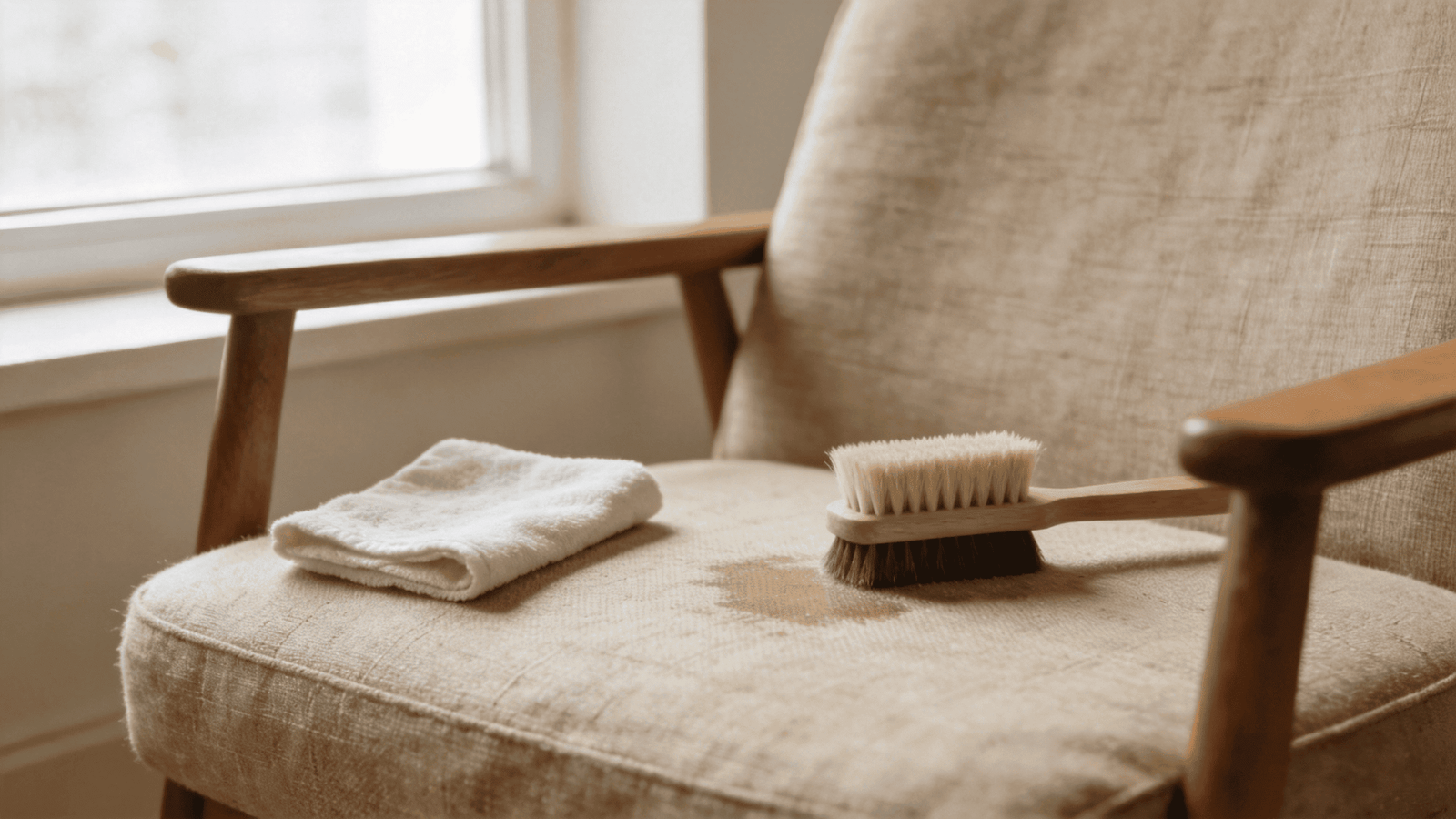
I have been running a linen upholstery production facility in Foshan for 13 years. In that time, I have spoken to hundreds of designers and homeowners who were on the edge of choosing linen — and pulled back because they were not sure they could live with it long-term. Most of them were imagining the wrong version of linen. This article is going to give you a clear picture of what upholstery-grade linen actually needs, and what it does not.
Does the Type of Linen Fabric Actually Change How You Care for It?
A lot of generic linen care advice online is written with linen clothing or linen bedding in mind. That advice does not always apply to an upholstered chair. And it can make linen seem more fragile than it actually is.
Upholstery-grade pure Belgian linen and linen-blend fabrics behave differently. Pure linen is tightly woven and dimensionally stable when dry. Linen-blend fabrics may react differently to moisture. Knowing which one your chair uses tells you a lot about how to handle it.
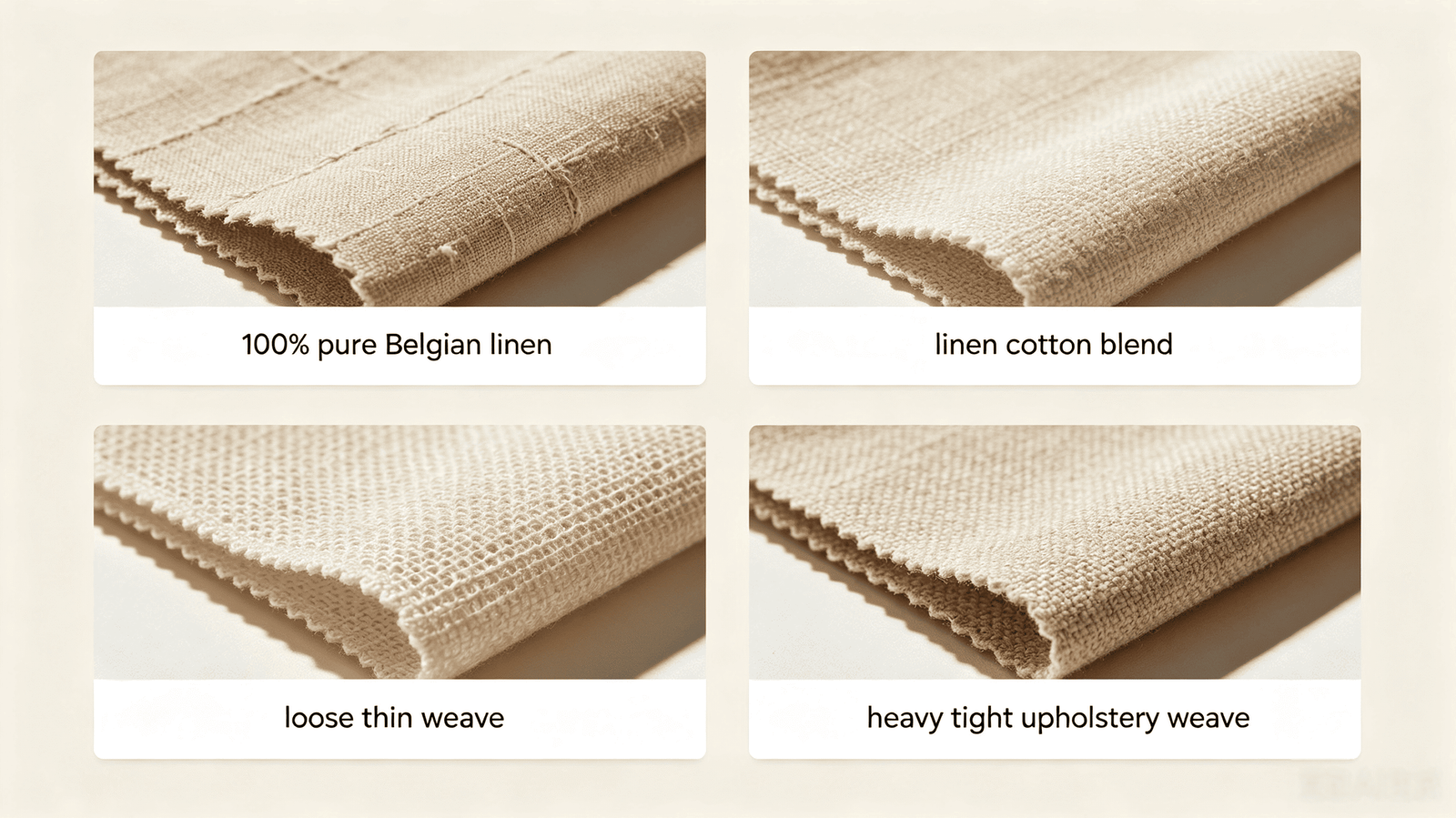
Here is the distinction I want to make clearly, because it matters at the point of purchase.
Pure Linen vs. Linen Blend: What Changes in Practice?
Pure linen — the Belgian linen we use at Linen World — is made from 100% flax fiber. The weave is firm. The fiber absorbs moisture slowly compared to a looser linen-cotton blend.1 When you blot a spill on pure linen upholstery, the liquid has not already soaked deep into the weave by the time you react. That gives you time.
A linen-blend fabric may feel similar to the touch. But a blend with a higher cotton content absorbs water faster and can show watermarks more easily. It also tends to pill more under friction over time.2
| Fabric Type | Absorption Speed | Pill Risk | Shrink Risk After Moisture |
|---|---|---|---|
| 100% Belgian Pure Linen | Slower | Lower | Low (if pre-treated) |
| Linen-Cotton Blend | Faster | Moderate | Moderate |
| Linen-Polyester Blend | Slowest | Low | Very Low |
The reason I bring this up is not to make the comparison complicated. It is the opposite. If you know your chair is made from pre-treated pure Belgian linen, you can stop worrying about half the scenarios that scare people away from linen in the first place.
When a designer asks me "will linen hold up?", my first follow-up question is: "What kind of linen are we talking about?" The answer changes everything.
What Does the Factory Do Before the Chair Ships — and Why Does It Matter?
This is the part most buyers never ask about, but it directly affects how the chair behaves in the first weeks after delivery.
Before our chairs leave the factory, the linen fabric goes through a pre-washing and pre-shrinking process. This process releases most inherent shrinkage stress within raw linen fabric before cutting and upholstery, greatly reducing risks of seam pulling or frame distortion under minor daily damp exposure.
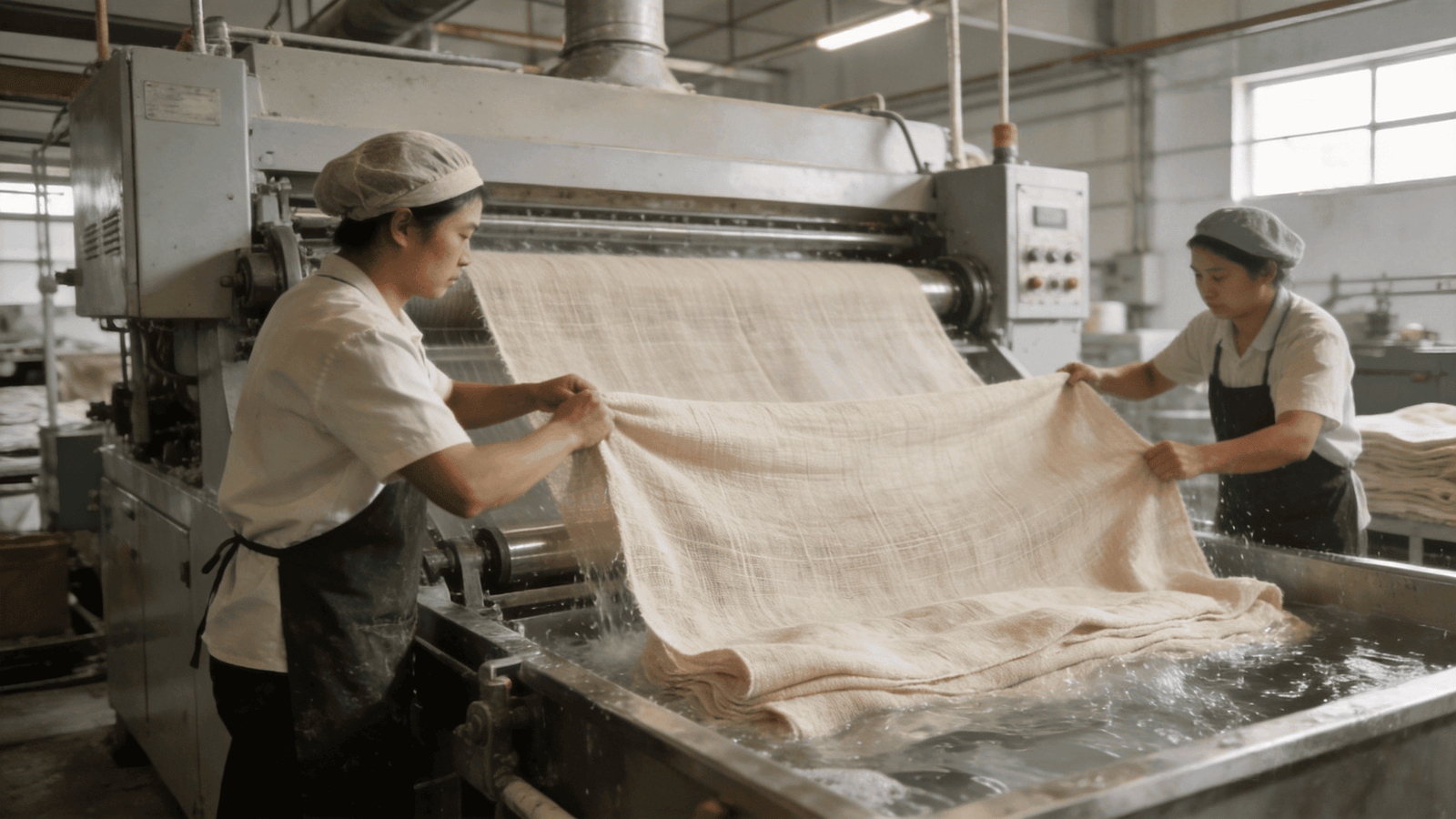
I want to explain why this matters in plain terms.
Pre-Treatment: What It Does to the Fabric Before It Reaches You
Raw linen fabric, straight off the loom, will shrink when it first contacts moisture.3 If that fabric is upholstered onto a chair frame before that shrinkage happens, you will feel it in the first few months. The seat cover may tighten. Seams may pull. The shape may shift slightly. None of that is catastrophic — but it is avoidable.
In our production process, we pre-wash and pre-shrink the fabric before cutting. That step releases the tension in the fiber. By the time the fabric is upholstered and the chair ships, the fabric has already gone through its first moisture cycle in a controlled environment. The shrinkage risk is largely gone.
We also apply an anti-soil finishing to the surface of the fabric. This does not make the chair stain-proof. It creates a light barrier that gives you a few extra seconds when something spills4 — enough time for a blot to work before the liquid soaks in.
Here is why this matters for your care routine:
| Without Pre-Treatment | With Pre-Treatment |
|---|---|
| First moisture contact may cause slight shrinkage | Fabric is dimensionally stable on arrival |
| Spills absorb quickly | Spills sit briefly on the surface |
| May require professional re-stretching over time | Shape holds under normal use |
| Care feels more urgent and stressful | Care feels manageable |
Customers who have received our chairs have told me that spot-cleaning was far less stressful than they expected. That is not luck. It is the result of what happened to the fabric before it left our facility.
If you are sourcing a linen chair elsewhere, it is worth asking directly: has the fabric been pre-treated? That question alone tells you a lot about how much ongoing care work you are taking on.
What Is the Right Way to Clean a Linen Chair Day to Day?
Let me be straightforward here. The daily care routine for a well-made linen upholstered chair is simple. The real risk is not neglect — it is using the wrong cleaning method when something goes wrong.
For daily maintenance: use a soft dry brush or low-suction vacuum to remove surface dust and debris. For spills: blot immediately with a clean dry cloth, never rub. For deeper cleaning: use a lightly damp cloth with plain water or a mild, pH-neutral fabric cleaner — no soaking, no scrubbing.
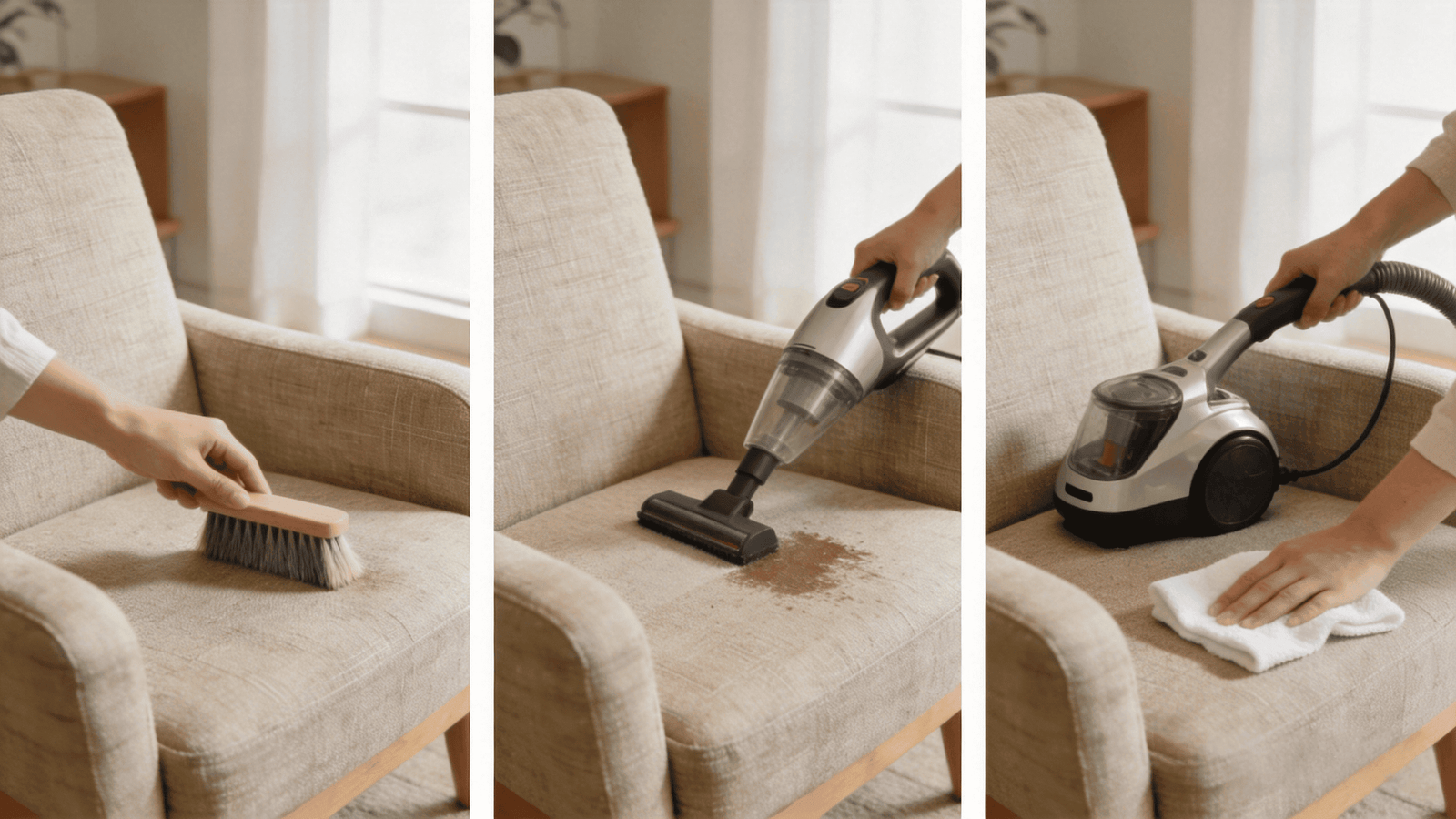
Here is a more complete breakdown of what works and what causes damage.
What to Do vs. What to Avoid
The designers I work with most often are not asking for a complex care routine. They want to know the short list of things they should never do. Here it is.
What works:
- A soft-bristle brush or a lint roller for dry debris — this takes 30 seconds and keeps the fabric looking fresh
- Blotting a fresh spill with a clean, dry, white cloth — press down, do not drag
- A slightly damp cloth with plain water for dried surface marks — work from the outside of the mark inward to avoid spreading
- Low-suction vacuuming with a soft upholstery attachment, along the fabric grain
What causes damage:
- Scrubbing with any kind of abrasive material — this breaks the weave surface and creates visible fuzzing5
- Soaking the fabric — moisture that gets into the filling and batting underneath will not dry evenly, and can cause mold or distortion6
- Bleach or solvent-based cleaners — these strip the anti-soil finish and can alter the natural linen color7
- Direct heat to dry a damp area — a hair dryer or iron will cause the fiber to contract unevenly and may leave a hard mark8
| Action | Safe? | Reason |
|---|---|---|
| Dry brush along grain | Yes | Removes debris without damaging weave |
| Blot fresh spills | Yes | Absorbs liquid before it penetrates |
| Damp cloth + plain water | Yes (lightly damp) | Works on surface marks without soaking |
| Machine washing the cover | No | Linen upholstery covers are cut to fit the frame — washing distorts the fit |
| Rubbing dry with a rough cloth | No | Creates surface abrasion and fuzzing |
| Applying bleach | No | Damages fiber and finish permanently |
| Using a steam cleaner at close range | No | High moisture concentration + heat is a poor combination for linen upholstery |
I say this to every designer who orders through us: linen chairs do not ask for much. They ask for the right response — not a fast or aggressive one. Most of the damage I have seen on returned samples or customer photos came from overcorrection — someone panicked about a spill and scrubbed too hard.
One practical note: keep a clean dry cloth somewhere near the chair. Not because you will need it constantly. Because having it accessible means your first reaction to a spill will be the right one.
Conclusion
Linen chairs are low-maintenance — not zero-maintenance. Brush, blot, and avoid harsh cleaning, and a well-made, pre-treated linen chair will hold up exactly as well as you need it to.
If you are an interior designer sourcing low-maintenance Belgian linen accent chairs for US residential projects, our 13-year Foshan factory provide free linen fabric swatches, printed fabric care guides and real-case stain handling references for your clients. Message us via WhatsApp to request fabric catalogs, custom accent chair quotations or factory pre-treatment process footage.https://linenworld.pro
"The Influence of the Chemical Composition of Flax and Hemp Fibers ...", https://pmc.ncbi.nlm.nih.gov/articles/PMC10935324/. Research on natural textile fiber properties indicates that flax fibers exhibit specific moisture uptake rates influenced by weave density and fiber structure, which differ from cotton and blended fabrics. Evidence role: mechanism; source type: research. Supports: That flax-based linen fabric has distinct moisture absorption characteristics compared to cotton or blended textiles. Scope note: Most fiber absorption studies focus on apparel or industrial textiles; direct comparisons for upholstery-weight fabrics may require extrapolation from general fiber science literature. ↩
"The Influence of Finishing on the Pilling Resistance of Linen/Silk ...", https://pmc.ncbi.nlm.nih.gov/articles/PMC8619160/. Textile science literature on natural fiber blends documents that cotton fiber's higher moisture regain and shorter staple length relative to flax contribute to faster liquid uptake and increased pilling susceptibility in blended constructions. Evidence role: mechanism; source type: research. Supports: That cotton content in blended fabrics influences both moisture absorption speed and surface pilling behavior under friction. Scope note: Pilling behavior is also significantly affected by yarn twist, weave structure, and finishing treatments, so fiber content alone is not the sole determinant. ↩
"Investigation of the Properties of Linen Fibers and Dressings - PMC", https://pmc.ncbi.nlm.nih.gov/articles/PMC9501175/. Studies on natural cellulosic fiber behavior confirm that linen fabric in its greige or lightly finished state undergoes measurable dimensional shrinkage upon first wetting, attributed to the release of internal stresses introduced during weaving and drying. Evidence role: mechanism; source type: research. Supports: That untreated linen fabric undergoes dimensional shrinkage upon initial moisture exposure due to fiber relaxation. Scope note: The degree of shrinkage varies considerably by weave construction, yarn count, and any prior finishing treatments applied at the mill level. ↩
"Stain Repellent Finishes: What You Need to Know | ACT", https://contracttextiles.org/learn/stain-repellent-finishes-what-you-need-to-know/. Textile finishing literature describes how fluoropolymer-based and alternative anti-soil treatments reduce the surface energy of fabric fibers, causing aqueous liquids to bead rather than immediately wick into the substrate, thereby extending the window for blot removal. Evidence role: mechanism; source type: research. Supports: That topical anti-soil or stain-resistant finishes applied to upholstery fabrics reduce the rate of liquid absorption by creating a hydrophobic surface barrier. Scope note: Performance duration varies with finish type, application method, and frequency of use; the claim of 'a few extra seconds' is qualitative and not tied to a specific tested standard. ↩
"Quantitative Assessment of Woven Fabric Surface Changes During ...", https://pmc.ncbi.nlm.nih.gov/articles/PMC12348827/. Upholstery fabric performance standards, including the Martindale abrasion test (ISO 12947), assess resistance to surface degradation under repeated friction; linen fabrics subjected to concentrated abrasive force show accelerated yarn fiber breakage and surface pilling relative to controlled rubbing. Evidence role: mechanism; source type: research. Supports: That mechanical abrasion of linen fabric surfaces disrupts the weave structure and causes fiber ends to protrude, producing visible surface fuzzing. Scope note: Standardized abrasion tests use controlled, uniform pressure; the damage from hand scrubbing varies with applied force, cloth texture, and the specific linen weave construction. ↩
"A Brief Guide to Mold, Moisture and Your Home | US EPA", https://www.epa.gov/mold/brief-guide-mold-moisture-and-your-home. Environmental health and building science research establishes that organic materials retaining moisture above approximately 70% relative humidity for extended periods support mold colonization; upholstery interiors with poor airflow are particularly susceptible when saturated. Evidence role: mechanism; source type: research. Supports: That moisture retained within upholstery filling materials creates conditions conducive to mold and microbial growth. Scope note: Mold risk depends on ambient humidity, temperature, and drying time; the claim applies most strongly in humid climates or where drying is impeded. ↩
"Industrial washing conditions as factor that influence the cellulose ...", https://pmc.ncbi.nlm.nih.gov/articles/PMC10374651/. Textile chemistry literature documents that hypochlorite bleach causes oxidative degradation of cellulose chains in flax and other natural fibers, resulting in fiber weakening, color alteration, and removal of hydrophobic surface treatments. Evidence role: mechanism; source type: research. Supports: That oxidizing agents such as chlorine bleach degrade cellulosic fibers like linen and can remove or impair topical fabric finishes. Scope note: The severity of damage depends on bleach concentration, contact time, and fiber weight; dilute solutions may cause less immediate visible damage while still degrading fiber integrity over time. ↩
"Improving thermal conductivities of textile materials by nanohybrid ...", https://pmc.ncbi.nlm.nih.gov/articles/PMC8867053/. Textile science research on cellulosic fiber behavior indicates that rapid, localized drying of wet linen under direct heat sources causes non-uniform moisture evaporation, leading to differential shrinkage and the formation of stiff, distorted areas in the fabric surface. Evidence role: mechanism; source type: research. Supports: That localized application of heat to damp linen fabric causes differential fiber contraction and surface distortion. Scope note: The extent of damage is influenced by heat intensity, distance, and duration of application; low-heat settings at greater distances may produce less severe effects. ↩


