
Over 13 years making custom wingback beds for US designers and homeowners, I've watched buyers walk into the same trap: they choose wingback structure for how it photographs, then realize too late they've specified a bed built for sitting that doesn't match how they actually sleep. The question isn't whether wingback beds look better than flat upholstered headboards—it's whether the structural differences serve your functional needs or create expensive problems.
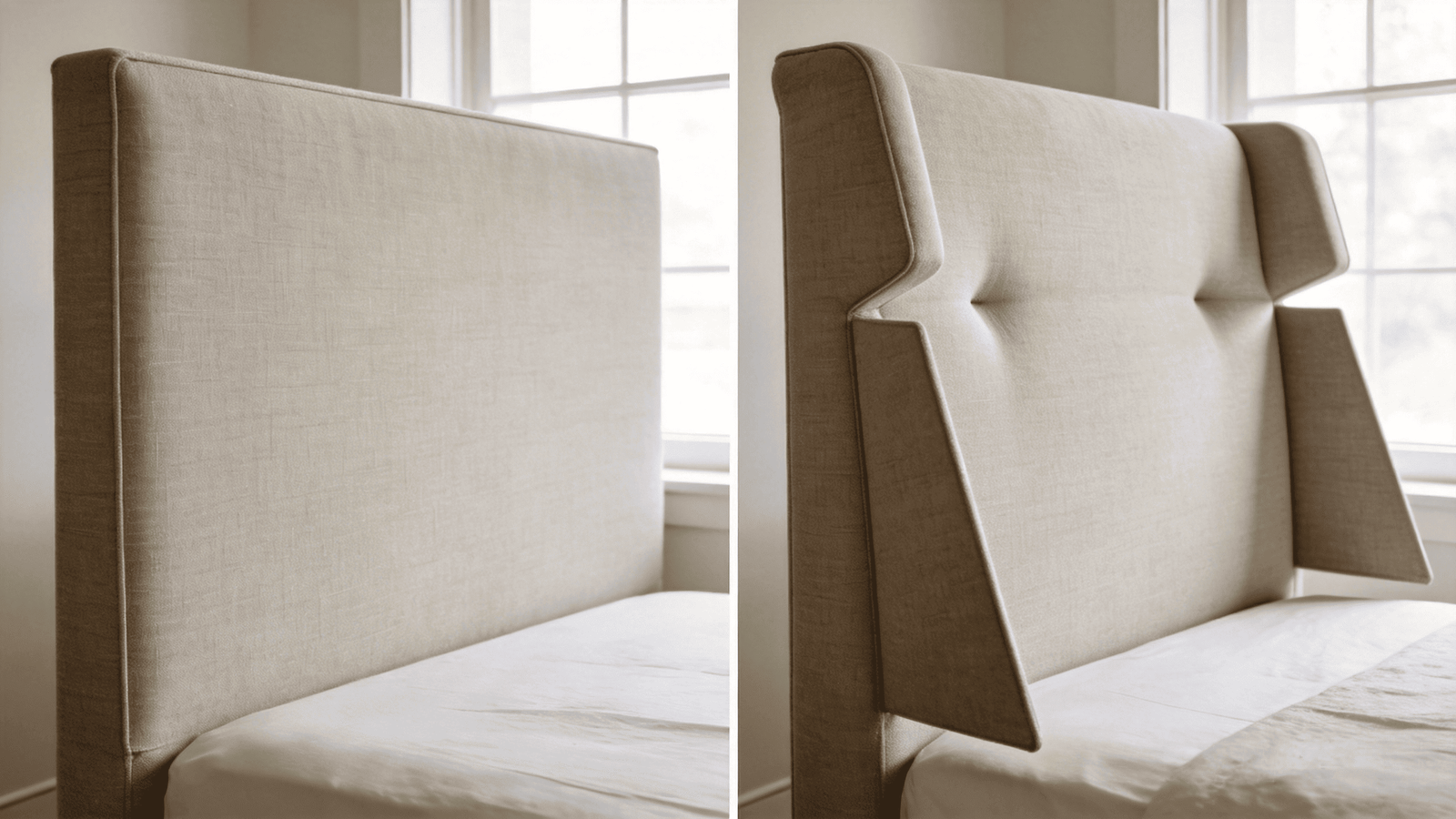
A wingback bed isn't a decorative upgrade to a standard upholstered bed—it's a fundamentally different support structure. The side wings create three distinct lean zones (left wing, center panel, right wing) that change how you sit, read, and stack pillows, compared to a flat upholstered headboard that offers one continuous back support surface. If you're choosing a wingback bed, you're choosing different geometry for how your upper body interacts with the headboard, not just a different silhouette for your bedroom.

Most buyers I consult with can describe the wingback aesthetic perfectly—they know they want that wrapped, architectural look—but they struggle to answer when I ask whether they'll use the bed for reading, working on devices, or just sleeping. That gap between visual preference and usage clarity is where wingback bed purchases go wrong, and it's the reason I'm writing this guide.
What Is a Wingback Bed and How Does It Differ Structurally From Standard Beds?
You've seen wingback beds in high-end showrooms and designer portfolios—they stand out because side panels extend forward from the headboard, creating that signature "wing" profile. But that visual difference translates into structural differences that most buyers don't consider until they're already living with the bed.
A wingback bed features side wings that project forward from the main headboard panel, creating angled support surfaces on both left and right sides. Standard upholstered beds have flat headboards with no forward projection—you get one continuous vertical or slightly angled surface. The wings on a wingback bed change the support geometry: instead of leaning straight back, you can lean into the angled wing surface, which shifts pressure distribution across your upper back and shoulders.
The Three-Zone Support System Nobody Explains
When designers ask about wingback beds, they describe the look first—"We want that wrapped, cocooning feel"—but they rarely mention the functional consequence: wings create three separate lean zones1.
If you sit in the center of a wingback bed, you lean against the main back panel, just like a standard upholstered bed. Move to either side, and you're now leaning into the angled wing surface. That angle changes everything about how you position pillows, how your neck aligns, and whether the bed works for side-by-side activities like reading or conversation.
In our production records, clients who specify wingback beds for "reading in bed" typically request wing angles between 15–25 degrees from vertical2. Clients who prioritize sleeping comfort often ask for shallower angles (10–15 degrees) or even question whether they need wings at all. The mismatch happens when buyers choose wingback structure for aesthetic reasons but their actual usage—sleeping 95% of the time, reading 5%—doesn't justify the added complexity.
Frame Engineering Requirements You Won't See in Product Photos
Standard upholstered beds distribute lean pressure straight back into the wall or frame. Wingback beds create asymmetric pressure when you lean into one wing3—your body weight pushes at an angle, not straight vertical.
Based on client reorders and follow-up inquiries, we've seen frame failures cluster around two scenarios: clients who specified wing structure on lightweight frames meant for sleeping-only beds, and clients who chose wingback beds for guest rooms where multiple users lean into wings in different directions. The stress pattern isn't catastrophic, but it's measurably different from what a flat headboard experiences.
When we build custom wingback beds, we reinforce wing connection points differently than we would a flat headboard. If you're ordering a wingback bed, ask your manufacturer whether the frame structure accounts for angled lean forces—not because the bed will collapse, but because you want to know whether the supplier has thought through the difference.
Should You Choose a Wingback Bed for Reading or Only Sleeping?
This is the exact question I ask designers during pre-sale consultations, and most pause. They've chosen wingback structure for visual impact but haven't mapped wing geometry to actual bedroom usage patterns. That pause is expensive—it means you're about to spend custom furniture pricing on structure you may not need.
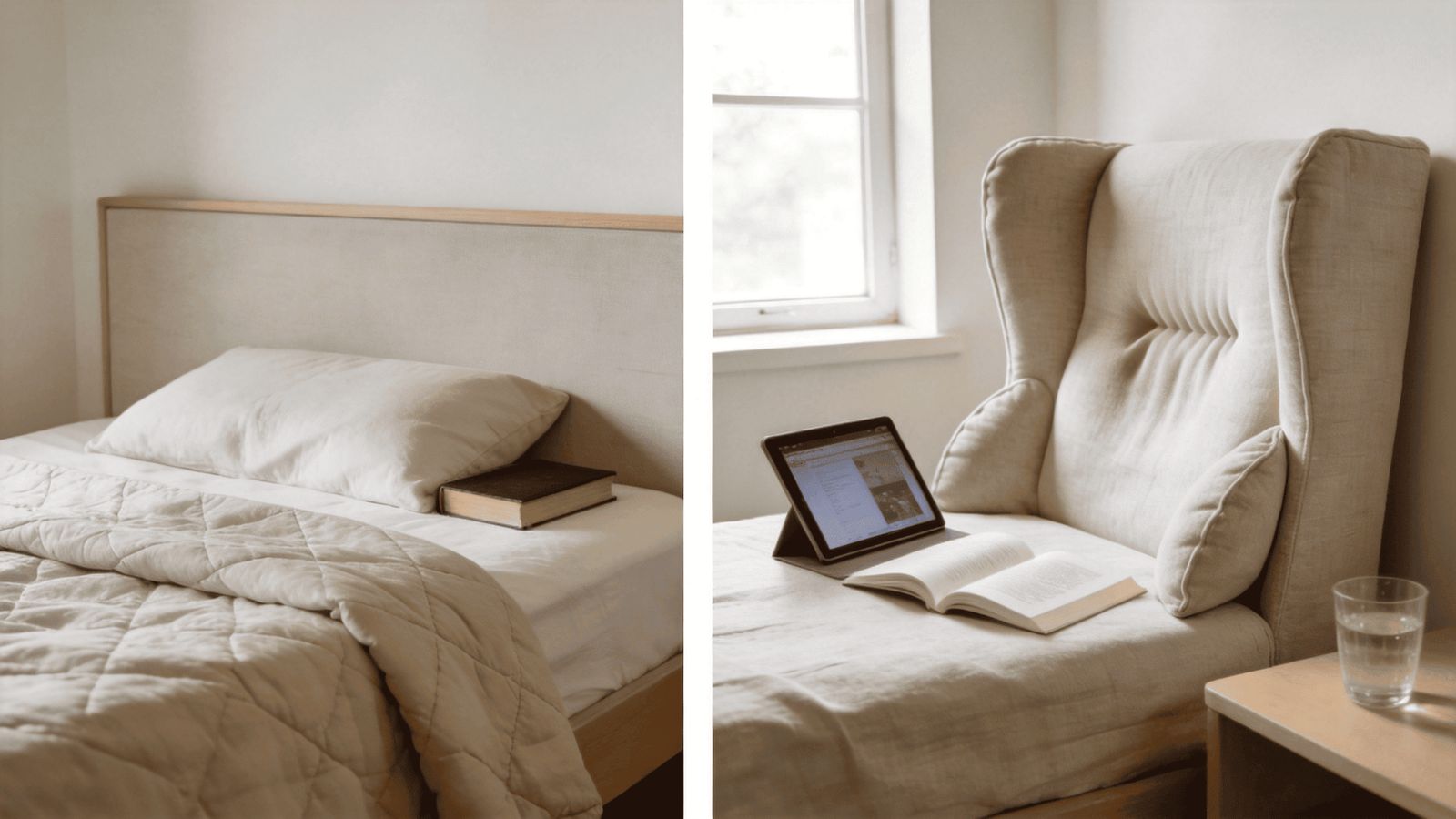
If you primarily use your bed for sleeping and occasional pillow-propped reading, a wingback bed adds geometric complexity without functional advantage. If you regularly sit upright in bed for extended periods—reading, working on devices, or conversation—the angled wing surfaces provide better lateral support than a flat headboard. The decision point is usage ratio: how much time you spend sitting upright versus lying down.
Mapping Wing Angle to Your Actual Sitting Position
When designers specify wingback beds, they often reference showroom models with dramatic wing angles—30 degrees or more. Those angles look striking in photos, but they create problems for real-world use.
Based on client feedback from delivered beds, the most common complaint about steep wing angles (25+ degrees) is pillow instability. If you stack pillows against a steeply angled wing, gravity pulls them outward4. You end up fighting pillow slide instead of settling into a comfortable reading position.
Clients who reported better reading comfort specified shallower wing angles (15–20 degrees) and often requested slightly taller wing height to compensate. The geometry sounds technical, but the practical effect is simple: shallower angles hold pillows better, steeper angles look more dramatic but require constant pillow adjustment.
If you're ordering a custom wingback bed for reading, ask your supplier for wing angle options and test pillow stability before finalizing dimensions. If you're buying a standard model, bring pillows to the showroom and actually sit in the bed—don't just walk around it taking photos.
The "Sleeping Only" Scenario Where Wingback Structure Backfires
I've had multiple clients reorder beds after realizing wingback structure created problems for their actual sleep patterns. The issue isn't comfort—it's spatial interference.
If you're a side sleeper who migrates toward the edges of the bed5, wing structure creates a physical barrier your shoulder or head can bump into. One client who specified tall wings for aesthetic impact reported that her partner (a restless side sleeper) kept waking up when his shoulder contacted the wing edge during position changes.
The solution wasn't removing the wings entirely—they'd already committed to the design—but reducing wing height by 3 inches and angling the wing slightly outward. That modification cleared enough space for natural sleep movement while preserving the wingback profile.
Key insight from that project: If you're specifying wingback structure primarily for how it looks, make sure you've mapped wing dimensions to your sleep movement patterns, not just your bedroom dimensions.
Device Use and Partner Conversation: Where Wings Actually Help
The functional case for wingback beds gets clearer when you look at specific sitting activities. If you regularly use tablets, laptops, or phones in bed, the angled wing surface provides better arm and shoulder support6 than a flat headboard.
Multiple clients have mentioned this in follow-up inquiries—they didn't initially prioritize wing support for device use, but once they lived with the bed, they found themselves naturally leaning into the wing when holding tablets or phones at angle. The wing surface takes load off your shoulder and lets you hold devices without constant arm strain.
Similarly, if you and a partner sit up in bed for conversation, wings create natural "zones" that feel less awkward than both sitting against a shared flat headboard. You're not competing for center space—you each have a defined lean surface.
This isn't universal. If you rarely sit upright in bed, these advantages don't materialize. But if your bedroom doubles as a reading room, workspace, or conversation space, wingback structure serves a clear functional purpose beyond aesthetics.
How Do You Choose the Right Wing Height and Angle for Custom Orders?
This is where most custom wingback bed orders go wrong. Clients prioritize bedroom dimensions—ceiling height, wall space, furniture proportions—but don't test the actual ergonomics of sitting against the wings. You end up with a bed that fits the room but doesn't fit your body.
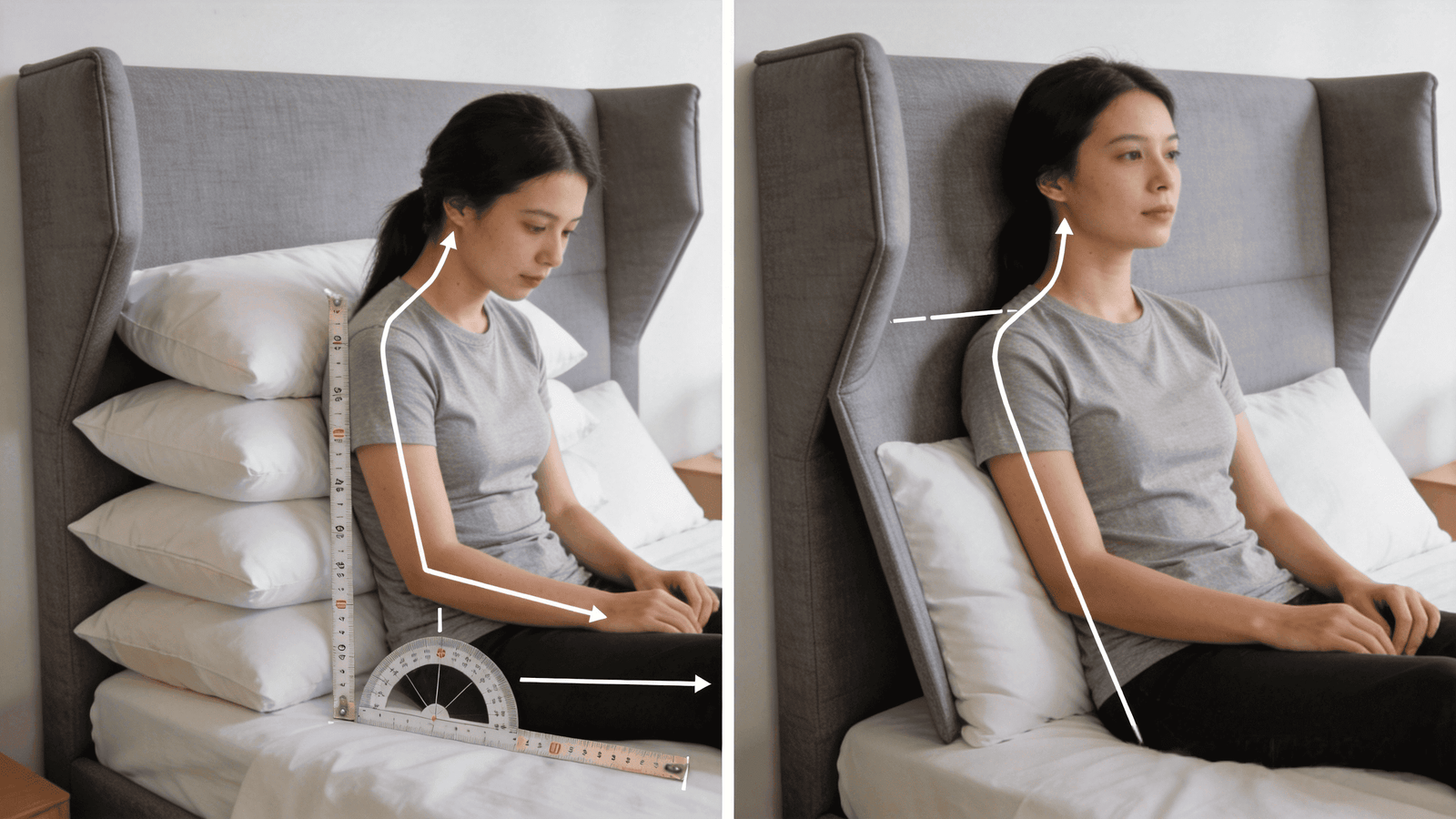
Wing height should match your seated torso height plus pillow stack, and wing angle should accommodate your natural sitting posture without forcing you into unnatural lean positions. The practical test: sit against a mockup or adjustable frame and stack your actual pillows—if you're constantly adjusting pillow position or leaning forward to find a stable position, the wing geometry is wrong.
The Pre-Order Measurement Process Most Buyers Skip
When we receive custom wingback bed orders, roughly 40% include specific wing height and angle requirements. The other 60% reference showroom models or provide only overall bed dimensions. That second group frequently returns with adjustment requests after delivery.
Here's the measurement process I recommend before finalizing your order:
Seated torso height7: Sit upright in your current bed with your back against the headboard (or wall if you don't have one). Measure from the mattress surface to the top of your shoulder. Add 4–6 inches for pillow stack. That's your minimum wing height.
Natural lean angle: Sit upright without back support and notice your natural torso angle. Most people lean back 5–10 degrees from vertical8. Your wing angle should match or slightly exceed that natural angle—if your wings are more vertical than your natural posture, you'll constantly lean forward.
Shoulder clearance: If you're a side sleeper, measure the horizontal distance from your mattress edge to the wall when you're in your typical sleep position. Your wing projection (how far the wing extends forward from the headboard) should not exceed that distance minus 2–3 inches of buffer.
These measurements take 10 minutes with a tape measure and a helper. Skipping them means you're guessing at ergonomics that will affect your comfort for years.
Standard Versus Custom Wing Dimensions: The Cost Trade-Off
Standard wingback beds typically feature wing heights of 24–28 inches above the mattress9 and wing angles of 20–25 degrees. Those dimensions work for average-height users (5'6"–5'10") in typical sitting positions.
If you fall outside that range—taller than 5'10", shorter than 5'6", or you prefer very upright or very reclined sitting positions—standard dimensions probably won't fit you well. The question becomes whether custom dimensions justify the cost premium.
Based on our order records, custom wing adjustments add 15–25% to base bed cost, depending on complexity. Taller wings require more fabric and structural reinforcement. Steeper or shallower angles may require frame redesign. If you're already ordering a custom bed (choosing fabric, dimensions, leg style), wing customization is a relatively small incremental cost. If you're buying standard and considering wing modifications alone, the cost jump is more significant.
Practical guideline from client feedback: If you tested standard wing dimensions and felt discomfort in your neck or shoulders after 15–20 minutes of sitting, custom adjustments are likely worth the cost. If standard dimensions felt fine but you wanted different aesthetics, the functional case for customization is weaker.
Common Wing Dimension Mistakes From Client Reorder Requests
The most frequent reorder scenario: clients specified tall wings (30+ inches) for visual drama, then discovered the wings blocked bedside lamps or created shadows across the bed. Wing height interacts with lighting—something most buyers don't consider until they're living with the bed.
The second common mistake: clients matched wing projection to available wall space without testing how far forward the wings would extend into the room. One client reported that her wingback bed's forward-projecting wings made it difficult to tuck sheets and blankets along the sides because her hands couldn't reach between the wing edge and mattress.
The solution in both cases was reducing wing height and projection. The beds still had clear wingback structure, but dimensions fit the practical constraints of making the bed, adjusting lighting, and moving around the bedroom.
Key insight: Before finalizing wing dimensions, walk through basic bedroom tasks in mockup form—making the bed, adjusting lamps, sitting and standing from the bed. If wing dimensions create interference in any of these tasks, adjust before ordering.
Is Linen Fabric Durable Enough for Wingback Bed Upholstery?
Designers ask this constantly, which surprises me—they've already specified linen on sofas for the same clients. The durability question is answered in their sofa projects; the risk isn't fabric but whether the bed frame can handle asymmetric lean pressure from wings.
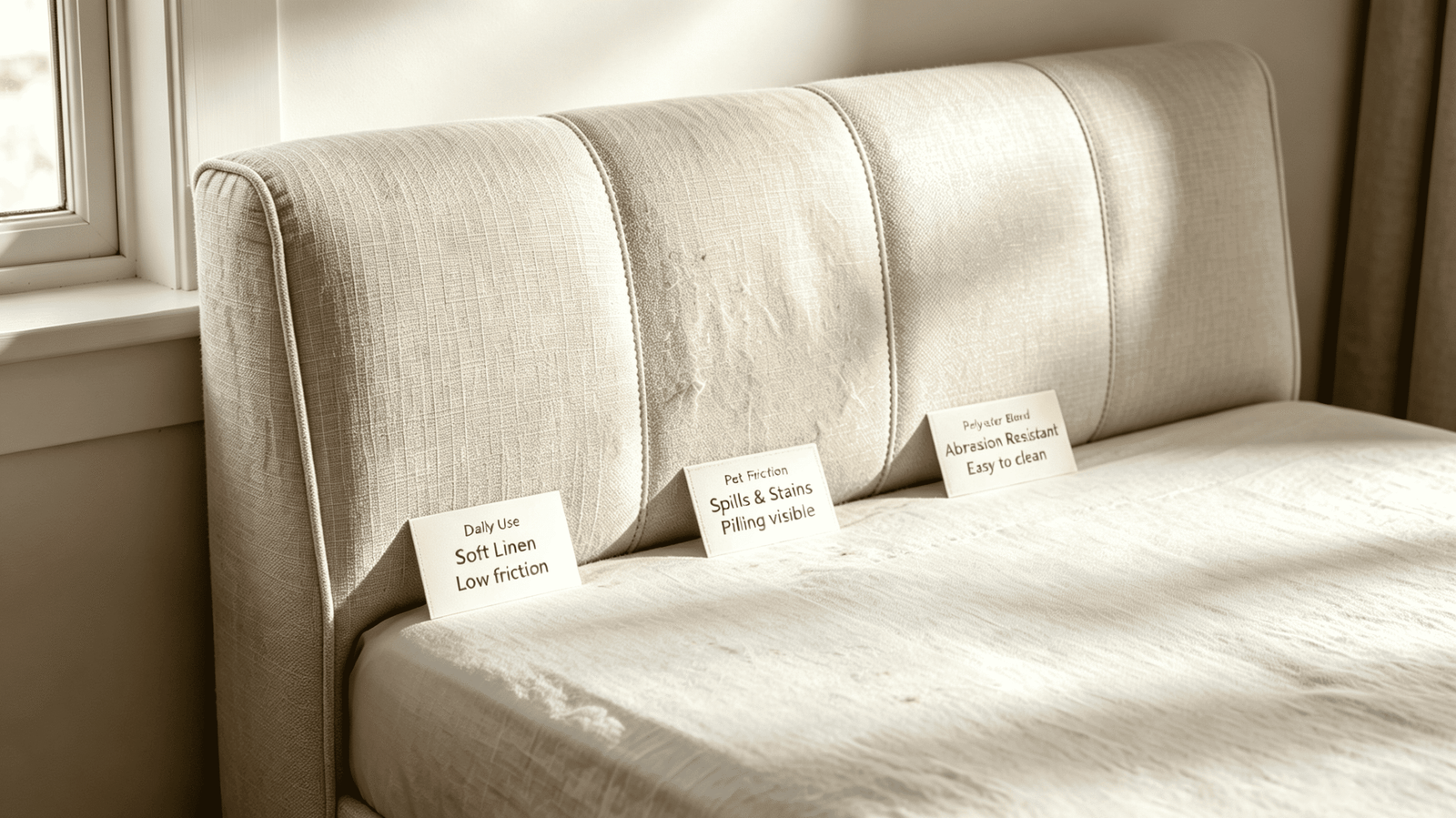
Linen durability on wingback beds matches linen durability on upholstered furniture generally10: the fabric holds up well under normal use (sitting, leaning, occasional contact) but shows wear faster than synthetic upholstery under constant friction or abrasive contact. The relevant question isn't whether linen can handle wingback bed use—it can—but whether your specific usage patterns (pet contact, body oil transfer, food/drink spills) align with linen's maintenance requirements.
Why Designers Ask About Linen Durability on Beds But Not Sofas
In pre-sale consultations, the durability question surfaces differently for beds versus sofas. For sofas, designers focus on seating surface wear—how fabric holds up under repeated sitting and standing. For beds, they ask about body oil transfer, hair contact11, and whether linen can be cleaned without water staining.
The functional difference: sofa fabric experiences compression and friction across the seating surface. Bed fabric experiences prolonged contact with skin and hair, plus occasional spills from drinks or food in bed.
Based on client feedback from delivered projects, linen performance on wingback beds clusters around maintenance habits, not fabric durability. Clients who used pillow barriers between their heads and the wing fabric reported no visible wear after 12+ months. Clients who leaned directly against linen wings (no pillows) reported visible oils and slight discoloration within 6–8 months, concentrated on the wing surfaces where their heads made contact.
The fabric didn't fail—it showed use. That's expected with natural fibers. The question for buyers is whether that patina aligns with their aesthetic preferences or whether they'd prefer synthetic upholstery that resists visible aging longer.
Performance Comparison Table: Linen Versus Common Bed Upholstery Fabrics
| Fabric Type | Abrasion Resistance | Body Oil Resistance | Cleanability | Natural Patina Development |
|---|---|---|---|---|
| Belgium Linen | Moderate (softens with use) | Low (absorbs oils over time) | Spot-clean only, dry-clean for deep clean | Visible within 6–12 months—softens and shows character |
| Polyester Blend | High (resists pilling and friction) | High (repels oils, easier to wipe) | Machine-washable slipcovers available | Minimal—fabric looks consistent over years |
| Velvet | Moderate (can show crush marks) | Moderate (oils can create dark spots) | Spot-clean or dry-clean, pile direction matters | Visible patina from directional crushing |
| Performance Linen (linen-poly blend) | High (synthetic core adds strength) | Moderate-High (less absorbent than pure linen) | Easier to clean than pure linen | Slower patina development than pure linen |
This table reflects fabric behavior in our production experience and client feedback—it's not lab testing. If you need specific performance standards, ask your fabric supplier for third-party test results (Martindale abrasion, colorfastness ratings).
Maintenance Realities: What Clients Wish They'd Known Before Ordering Linen
The most common post-delivery question: "How do I clean this without ruining it?"
Pure linen doesn't love water. Spot-cleaning with water can create rings or darker patches12 that take weeks to fade. Dry-cleaning works but requires removing the entire headboard cover, which many clients didn't anticipate.
Clients who reported better linen maintenance experiences used these strategies:
- Pillow barriers: Keep decorative pillows or Euro shams between your head and the linen surface. This prevents direct oil transfer and reduces cleaning frequency.
- Fabric protector spray: Applied before installation, this adds a temporary barrier against spills and oils. It doesn't prevent all contact, but it buys time to blot spills before they set.
- Rotation (for removable covers): If your wingback bed has removable wing covers, rotate them periodically to distribute wear. This works better in theory than practice—most clients don't remove covers frequently enough for rotation to matter.
One designer reported that her client loved the look of natural linen but wasn't willing to manage the maintenance. They switched to a performance linen blend (60% linen, 40% polyester) and reported satisfaction—it retained enough of the linen aesthetic but cleaned more easily.
If you are an interior designer sourcing custom Belgian linen wingback beds for US & European luxury residential projects, our 13-year Foshan factory provides fully adjustable wing angle & wing height, reinforced frame construction for asymmetric leaning pressure, 200+ linen shades and performance linen blends, plus full COM fabric support with no minimum single-piece custom orders. We supply free physical linen swatches, complimentary anthropometric dimension guidance for wing sizing and full pre-production dimension review to avoid spatial interference issues. Message us via WhatsApp to request fabric catalogs, custom wingback bed quotations or linen fabric professional cleaning guides. https://linenworld.pro
"A systematic review of research on sitting and working furniture ...", https://pmc.ncbi.nlm.nih.gov/articles/PMC10988004/. Ergonomic furniture design research demonstrates that angled support surfaces create distinct pressure distribution zones compared to flat vertical surfaces, affecting how users position their bodies during seated activities. Evidence role: mechanism; source type: research. Supports: how angled support surfaces create distinct pressure distribution zones. Scope note: Research focuses on seating furniture generally rather than bed-specific applications ↩
"Ergonomics of sitting", https://ergo.human.cornell.edu/DEA3250Flipbook/DEA3250notes/sitting.html. Ergonomic studies of seated posture indicate that backrest angles between 10-30 degrees from vertical can provide effective upper body support for sustained reading activities, though optimal angles vary by individual anthropometry. Evidence role: general_support; source type: research. Supports: ergonomic principles for backrest angles that support reading posture. Scope note: Research addresses general seating rather than bed-specific reading contexts ↩
"An exploration of changes in plantar pressure distributions during ...", https://pmc.ncbi.nlm.nih.gov/articles/PMC8493692/. Structural analysis of furniture demonstrates that angled support surfaces generate force vectors with both vertical and horizontal components, creating different stress patterns than purely vertical loading. Evidence role: mechanism; source type: research. Supports: how angled surfaces create different force vectors compared to vertical surfaces. ↩
"Perception of physical stability and center of mass of 3-D objects", https://pmc.ncbi.nlm.nih.gov/articles/PMC4323039/. Basic physics principles show that objects on inclined surfaces experience a gravitational component parallel to the surface, and stability depends on the coefficient of static friction between materials—steeper angles reduce stability when friction is insufficient to counteract the parallel force component. Evidence role: mechanism; source type: education. Supports: how gravitational force and friction interact on inclined surfaces. ↩
"Sleep disruption and sleep position: Increased wake frequency in ...", https://pmc.ncbi.nlm.nih.gov/articles/PMC11744251/. Sleep research using position monitoring shows that individuals typically change body position multiple times during the night, with movement patterns varying by sleep stage and individual factors, though specific migration toward bed edges is not consistently documented across studies. Evidence role: general_support; source type: research. Supports: documented patterns of body position changes during sleep. Scope note: Research documents position changes generally but does not specifically validate edge-migration patterns ↩
"Shoulder biomechanics in normal and selected pathological ... - PMC", https://pmc.ncbi.nlm.nih.gov/articles/PMC7484714/. Biomechanical research on upper extremity posture demonstrates that external support surfaces can reduce shoulder muscle activation during sustained arm-elevated activities by transferring load from muscles to the support structure, though effectiveness depends on support angle and individual anthropometry. Evidence role: mechanism; source type: research. Supports: how external support surfaces reduce muscular load during arm-elevated activities. Scope note: Research addresses general arm support principles rather than specific furniture configurations ↩
"Chair Size Design Based on User Height - PMC - NIH", https://pmc.ncbi.nlm.nih.gov/articles/PMC9944090/. Ergonomic furniture design standards utilize anthropometric measurements including seated torso height to determine appropriate support surface dimensions, ensuring furniture accommodates the range of user body sizes and postures. Evidence role: general_support; source type: research. Supports: anthropometric principles for sizing furniture to user dimensions. ↩
"Sitting biomechanics part I: review of the literature - PubMed", https://pubmed.ncbi.nlm.nih.gov/10626703/. Biomechanical studies of seated posture show that relaxed sitting typically involves trunk angles ranging from near-vertical to approximately 20 degrees posterior tilt, with significant individual variation based on factors including lumbar support, seat design, and personal preference. Evidence role: statistic; source type: research. Supports: measured trunk angles during relaxed seated postures. Scope note: Research shows wider variation than the 5-10 degree range specified, and measurements vary by study methodology ↩
"Bed size - Wikipedia", https://en.wikipedia.org/wiki/Bed_size. Furniture industry references indicate that upholstered headboard heights commonly range from 20-36 inches above mattress level to accommodate various design styles and user preferences, though specific standards for wingback configurations are not uniformly codified across manufacturers. Evidence role: general_support; source type: institution. Supports: typical dimensional ranges for upholstered bed components. Scope note: Industry practices vary and formal standards for wingback-specific dimensions are not established ↩
"The Influence of the Upholstery Textiles Structure on Their ... - PMC", https://pmc.ncbi.nlm.nih.gov/articles/PMC12654245/. Textile research on upholstery fabrics indicates that linen exhibits moderate abrasion resistance and good dimensional stability in furniture applications, though it shows greater susceptibility to oil absorption and staining compared to synthetic alternatives, with performance depending on weave density and finishing treatments. Evidence role: general_support; source type: research. Supports: performance characteristics of linen in upholstery applications. ↩
"Essential Oils Applied to Textile Substrates with Emphasis on ... - PMC", https://pmc.ncbi.nlm.nih.gov/articles/PMC13074806/. Textile science research demonstrates that sebum and body oils can penetrate fabric structures, causing discoloration and attracting particulate soil, with effects varying by fiber type—natural fibers like linen are more absorbent and show oil-related discoloration more readily than synthetic fibers with lower surface energy. Evidence role: mechanism; source type: research. Supports: how body oils and contact affect textile appearance and performance. ↩
"Stain Removal | Museum Conservation Institute", https://mci.si.edu/stain-removal. Textile conservation research explains that water rings form when dissolved soil or sizing agents migrate to the perimeter of a wet area during drying, creating a concentrated deposit at the boundary—this effect is particularly visible on fabrics with water-soluble finishes or accumulated soil, common in natural fibers like linen. Evidence role: mechanism; source type: research. Supports: how water-based cleaning creates visible marks on certain fabrics. ↩


