
You want easy cleaning. You fear sagging lines and tricky reassembly. I see this tension daily. The fix is not a promise. It is a set of choices.
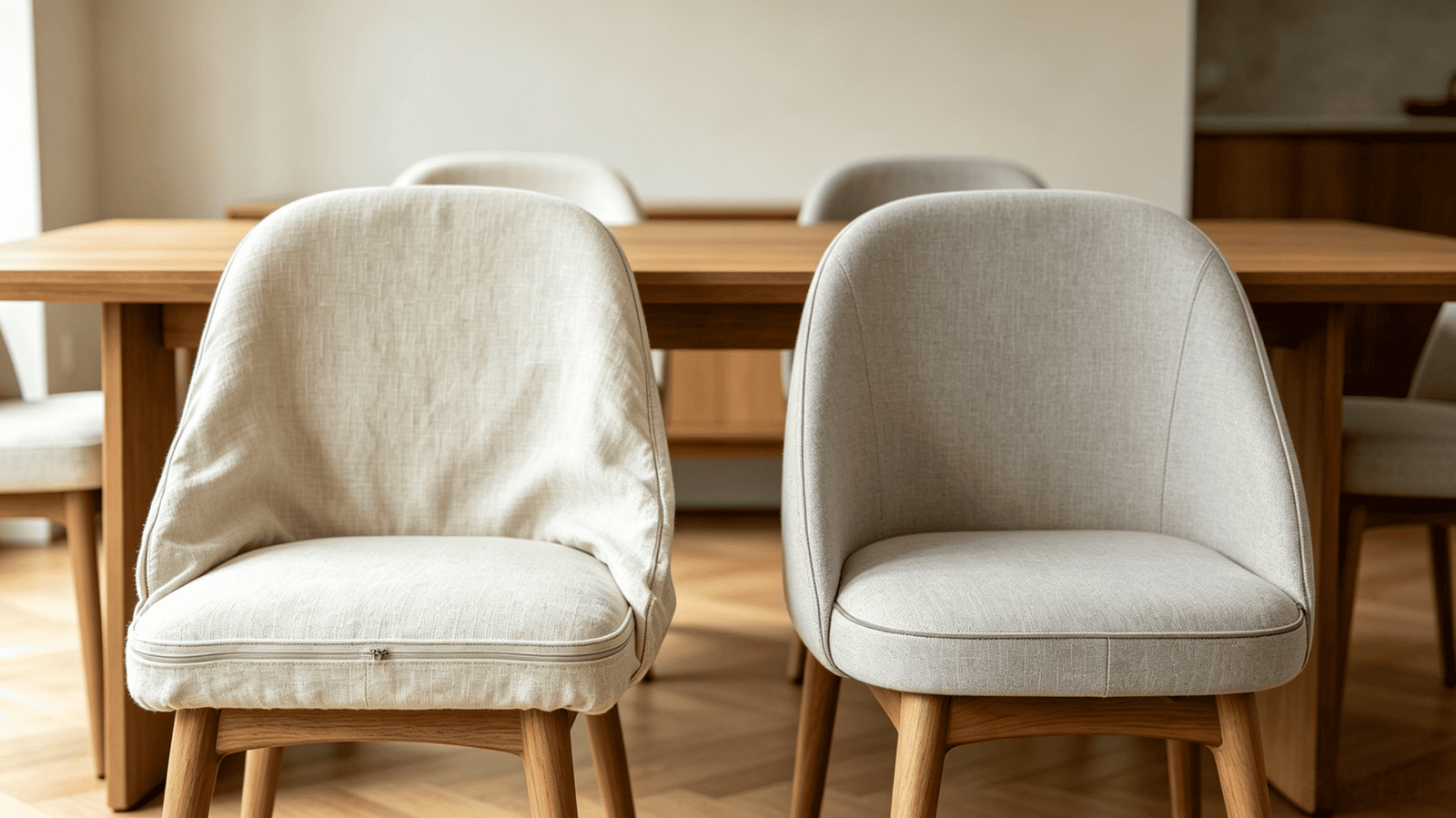
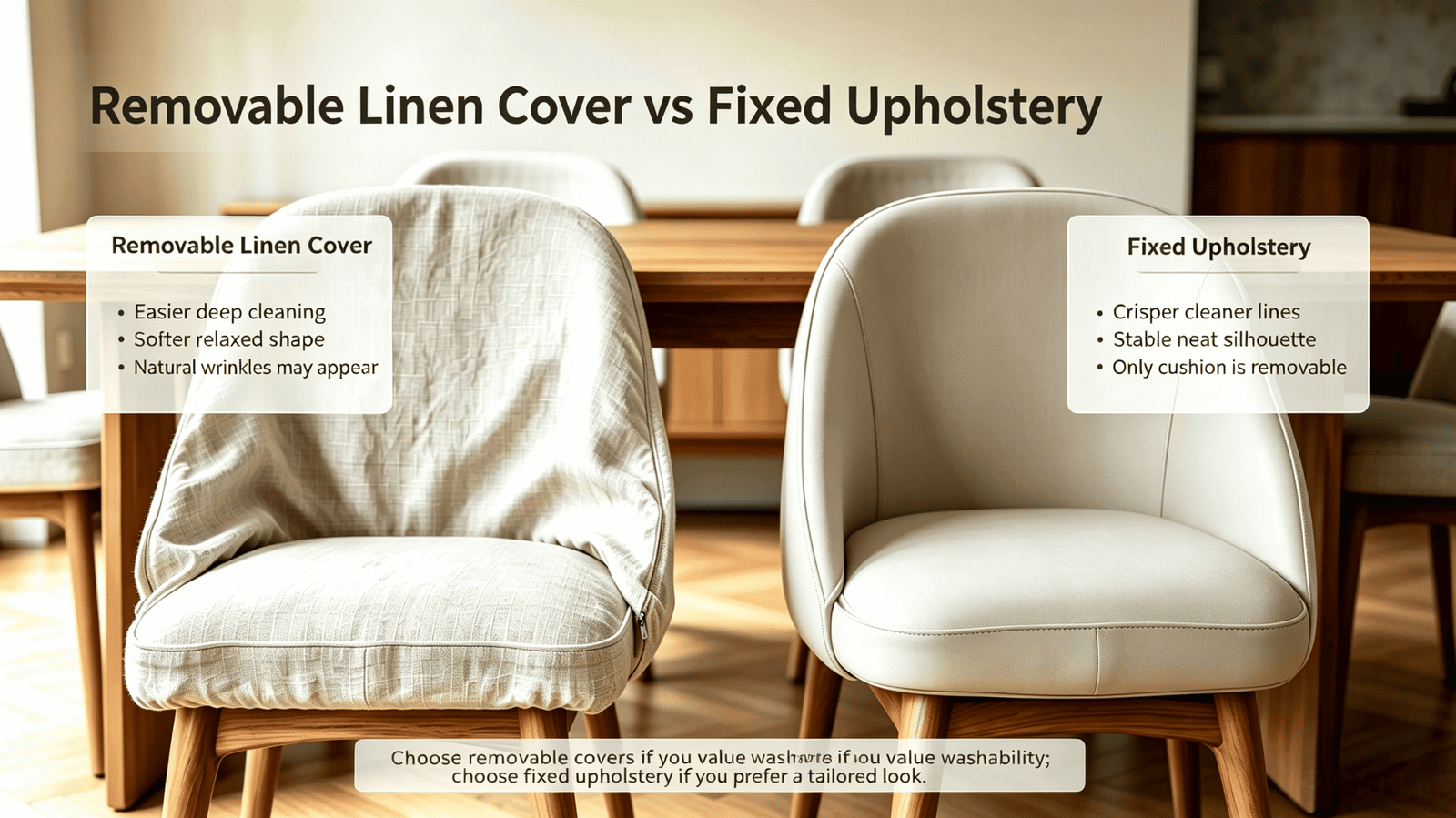
Treat removable covers as a maintenance strategy. First ask if you accept a relaxed slipcover look. If yes, go more removable. If you embrace the soft relaxed silhouette, a fully removable slipcover layout is suitable. If crisp tailored lines are your priority, fix curved chaise and deep corner sections while reserving simple flat cushions and straight panels as removable components, and follow dedicated linen care guidelines.
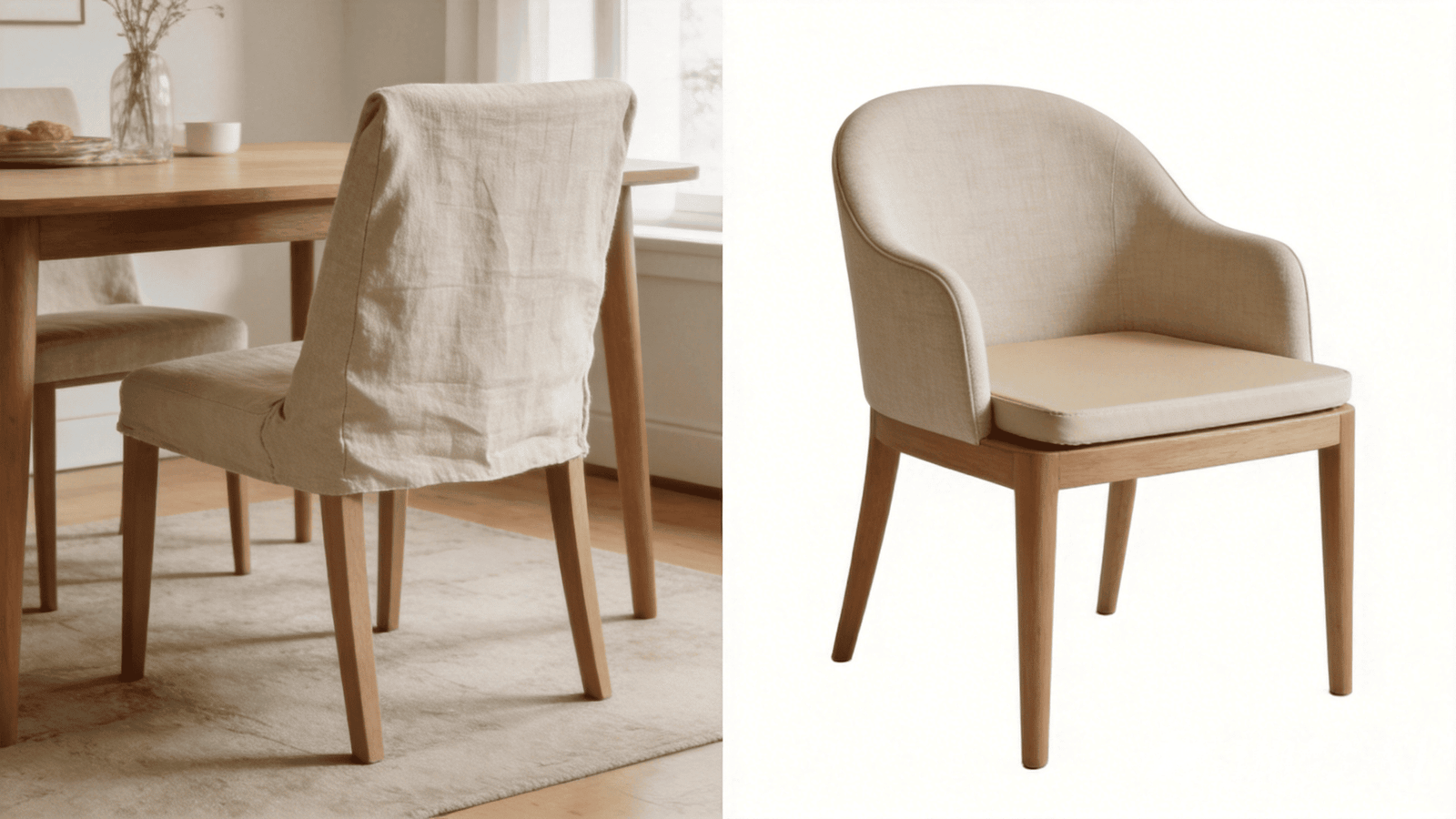
I help designers and homeowners choose this balance every week. I scope, build, install, then see the first wash. I have seen wins and messes. If you want fewer surprises, follow the path I use in projects.
Can you accept a relaxed slipcover look and slight wrinkling?
You want cleaning ease but not a baggy look. You fear a loose skirt or ripples on day two. I get it. The call starts with one honest answer.
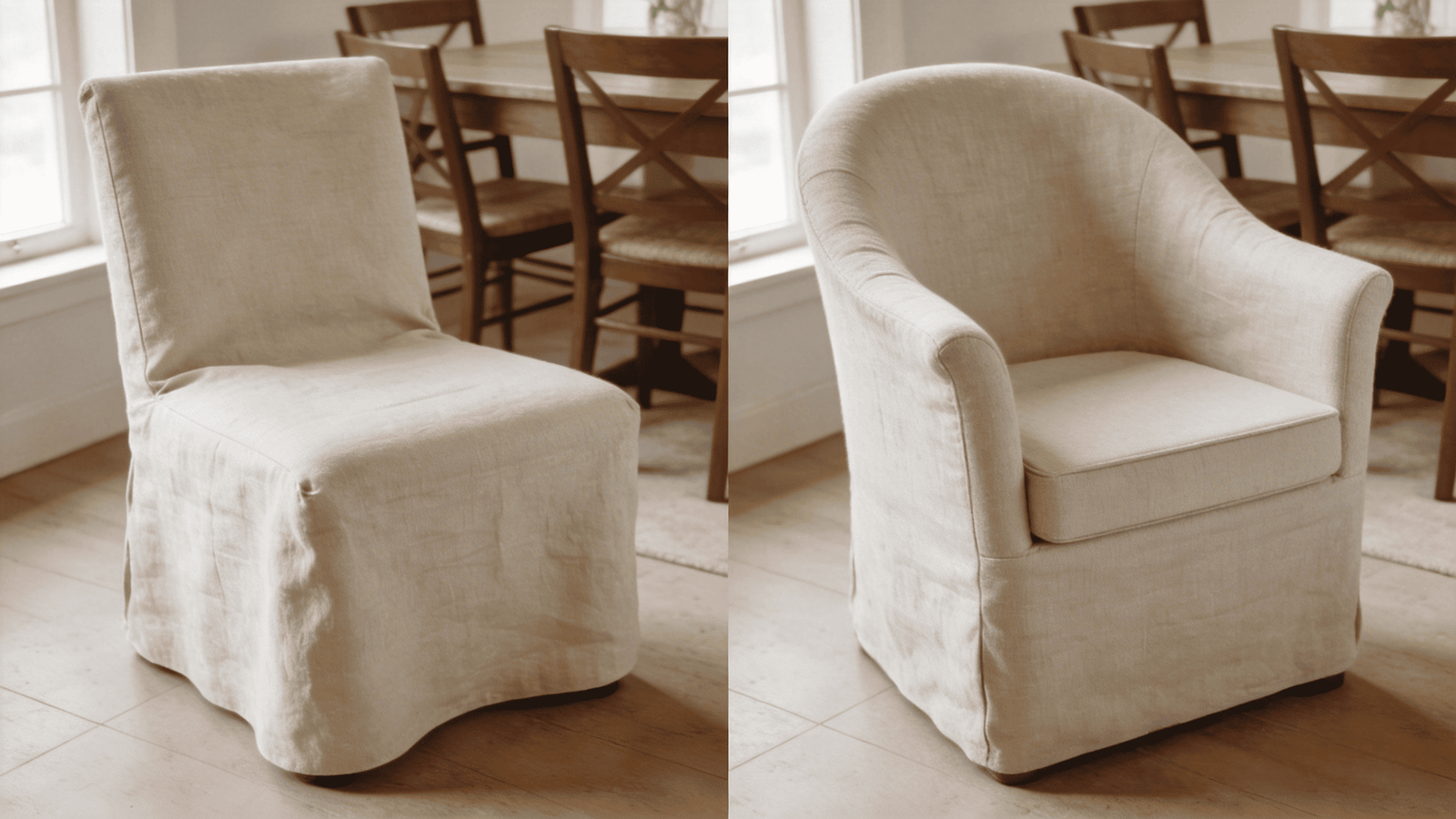
If you accept a soft, relaxed outline, a slipcovered body is viable. If you need crisp lines, hold complex zones fixed. Make only cushions and simple panels removable. Treat removability as a spectrum, not a switch.
What relaxes
A slipcover sits over form. It accepts tiny shifts. Seams have allowance. Zippers need space. Linen moves with humidity.1 These facts soften the outline.
Where to keep fixed
I keep the chaise return, deep corner transitions, tight arms, and sharp front rails fixed when a crisp look matters. I allow removable seats, backs, and straight panels.
Spectrum options table
| Option | Body | Cushions | Complex zones (chaise, corners) | Look | Cleaning ease |
|---|---|---|---|---|---|
| Fully slipcovered | Removable | Removable | Removable | Relaxed | Highest |
| Hybrid | Fixed | Removable | Fixed | Controlled | High |
| Mostly fixed | Fixed | Removable | Fixed | Crisp | Moderate |
I used this map on a villa project in Santa Monica. The client first wanted a full slipcover. She later said she needed tight corners for a gallery view. We kept the corner and chaise fixed and slipcovered the straight body. She still removed seat and back covers for cleaning. She accepted light wrinkling on seat edges. She kept the sightlines she cared about.
What really changes when you make a sofa removable?
You expect the same outline with bonus zippers. Then you see softer lines and a slightly cushier seat. This is normal. I set this expectation before we cut.
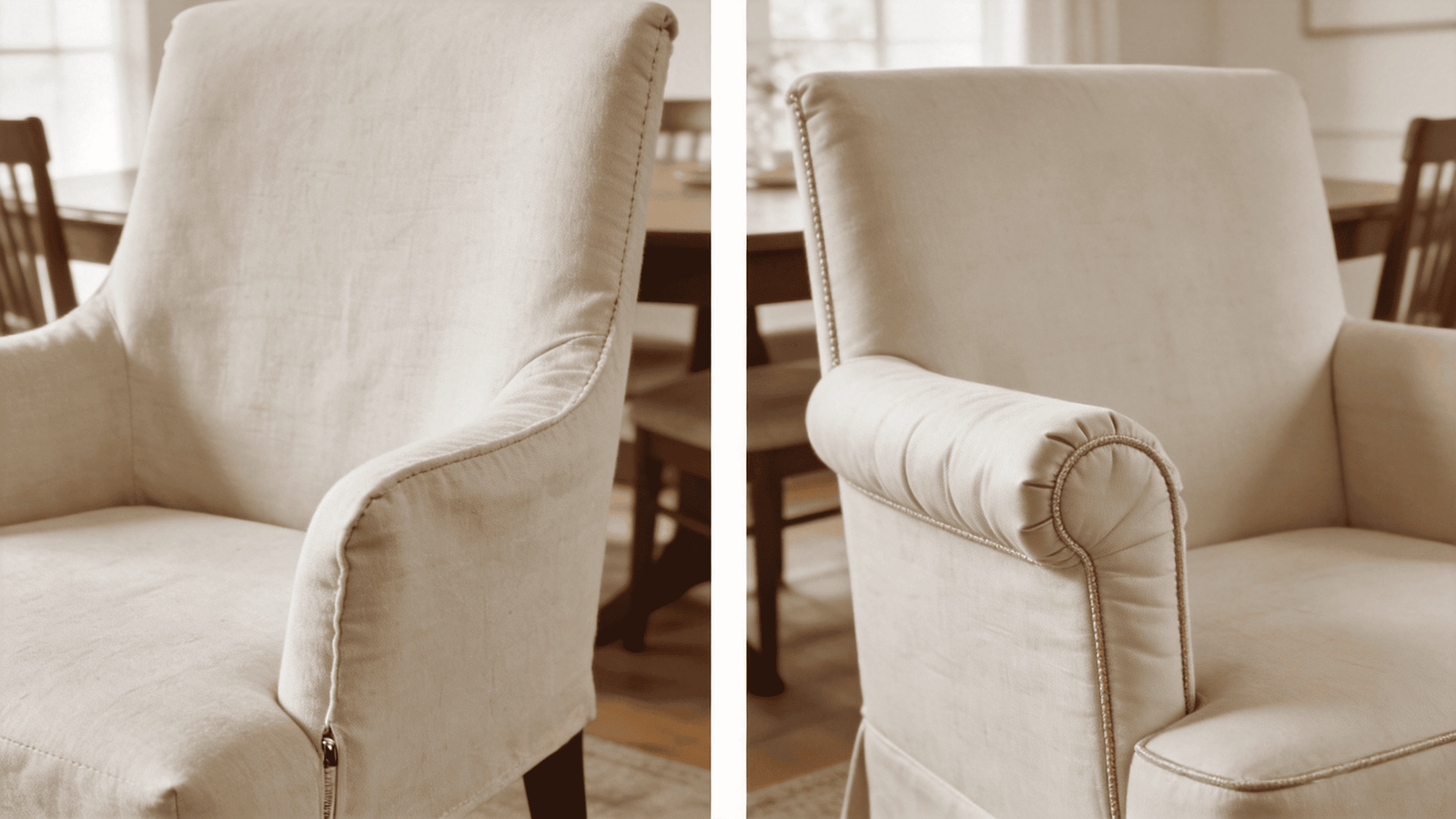
Removable builds adjust seam allowance, zipper placement, and attachment. The outline relaxes. The seat can feel a touch softer. Piping and sculpted arms hold better when fixed. Do not promise razor-sharp lines with full removability.
Design elements that shift
- Seam allowance: a little extra helps reassembly.2
- Zippers: need access, so placements may show.3
- Attachments: Velcro, ties, and anchors add tolerance.
- Cushion casings: lining and ease affect sit.
A/B comparison table (same model, our project)
| Element | Fixed upholstery | Tailored removable upholstery |
|---|---|---|
| Front rail line | Very crisp, stays tight | Slightly softer edge after use |
| Seat feel | Firmer, more immediate | Slightly cushier due to casing ease |
| Arm shape (sculpted) | Sharp and consistent | Holds shape if fixed; softens if removable |
| Piping definition | Sharp | Good, but relaxes at joins |
| Service access | Low | High |
In a Napa project, we built two versions of the same linen sofa. One was fully fixed. One had a removable body and cushion covers. The removable version looked great on day one, but the front rail softened after a week with a family of four. The fixed version kept a knife-like line. The client with the removable one accepted the change, since she liked the easy cleaning after a muddy dog visit. I now tell every designer: removability shifts the feel and outline. Pick which change you accept.
Which linen fabrics and care rules prevent reassembly failures?
You want a washable life. You fear that post-wash panic: “It shrank. I cannot zip it.” I have walked into that room. The fix begins before the cut, and it ends with care.
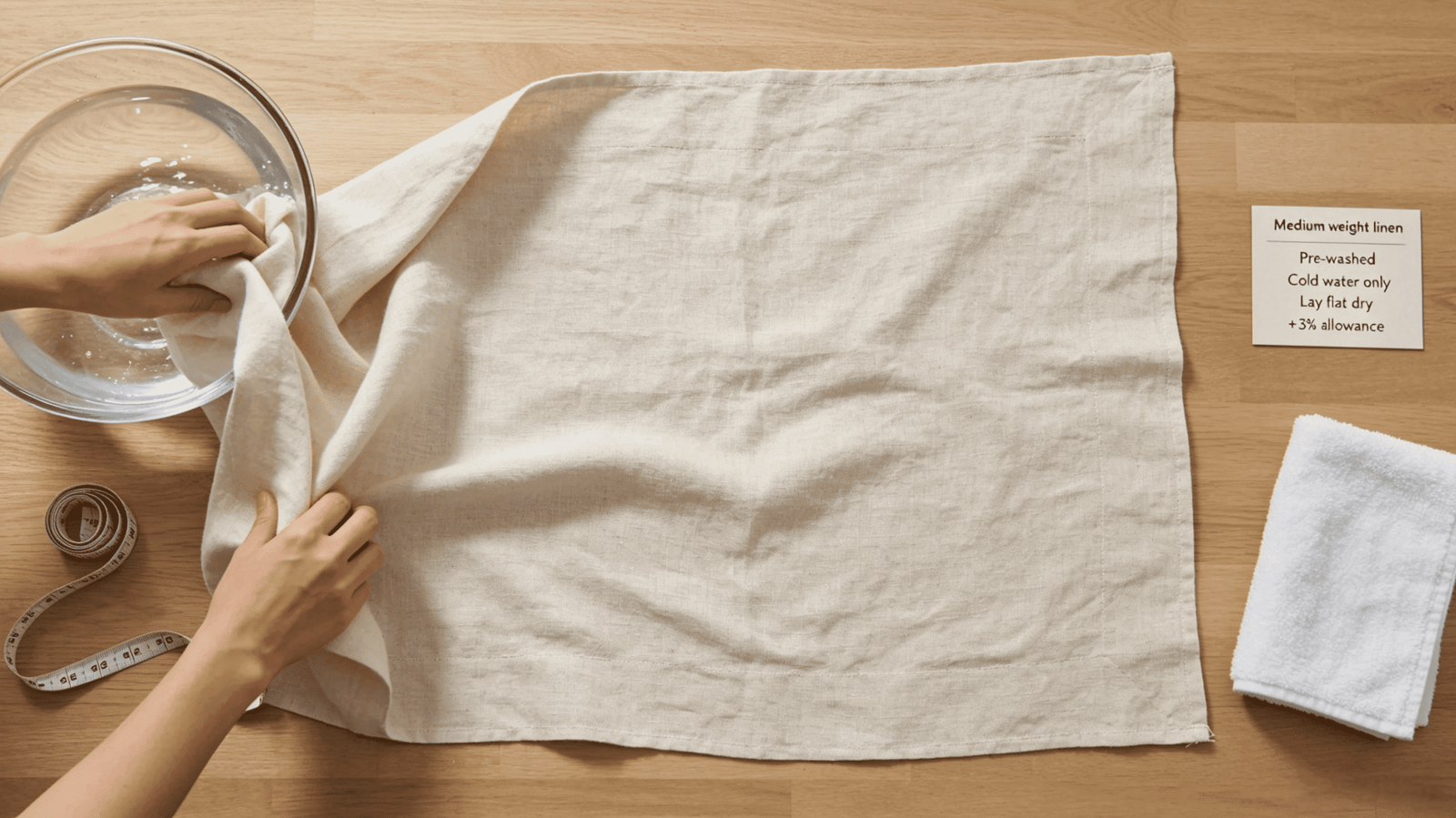
Choose pre-washed, mid-weight linen.4 Use cold hand-wash5 or professional dry clean. Never tumble dry.6 Air dry flat7. Write a reassembly tolerance into the spec. These steps cut shrinkage and misfit risk.
Fabric choices that help
- Mid-weight (not sheer, not heavy canvas)
- Pre-washed/preshrunk linen
- Tight plain weave, not loose open weave8
- Consistent dye lot
Care boundaries table
| Action | Risk to fit | Notes |
|---|---|---|
| Cold hand-wash | Low | Support with gentle detergent |
| Professional dry clean9 | Low | Best for large panels |
| Machine cold gentle | Medium | Only if label allows; more risk |
| Tumble dry (any) | High | Causes shrinkage and wrinkling set-in10 |
| Hot wash/steam | High | Can fix creases and reduce size11 |
| Air dry flat | Low | Shape while damp |
A few years ago, a client machine-washed and tumble-dried a chaise slipcover. It shrank just enough to make the corner radius impossible to seat. We could not refit without stress. If the linen had been pre-washed mid-weight, and if they had skipped the dryer, we would have made it. Now I write this into handover notes: cold hand-wash or professional dry clean, no tumble dry, air dry flat, and expect a small change in tightness that does not affect function. I also tag each cover with fit direction arrows. That alone saves ten minutes per piece during reassembly.
How should you scope removability in homes with pets, kids, or red wine?
You want to protect the investment. You fear a constant laundry cycle. You need a plan that does not break the look or your time.
If you like a relaxed look, choose a slipcovered body. If you need crisp lines, keep complex sections fixed and make high-touch parts removable. This reduces maintenance while keeping the look controlled.
Risk map by zone
- Highest risk: seat cushions, arm tops, chaise seats
- Medium risk: back cushions, front rails
- Lower risk: tight backs, outside arms, outside backs
Zones and decisions table
| Zone | Risk | Removable? | Why |
|---|---|---|---|
| Seat cushions | High | Yes | Most spills and wear |
| Back cushions | Medium | Yes | Oils and hair contact |
| Chaise platform | High | Often no | Complex to refit; keep fixed for shape |
| Tight arms | Medium | Often no | Sharpness matters |
| Outside back/arms | Low | Optional | Less contact; keep lines crisp |
In a Brooklyn townhouse with a toddler and a labrador, the designer wanted full slipcovers. I advised a hybrid. We kept the chaise fixed. We made seat and back covers removable. We added a second set of seat covers in a darker tone. Cleaning focused on what gets dirty. The outline stayed predictable. The client used the spare covers during cleaning cycles. Their time cost went down, and they did not lose the crisp arm line they loved. This kind of scope sets a family up to succeed rather than to wrestle a corner slipcover at 10 pm.
What handover notes and installation steps save you later?
You want the project to run smooth on day one and day 100. You fear the “can’t put it back on” call. I write the handover like a checklist.
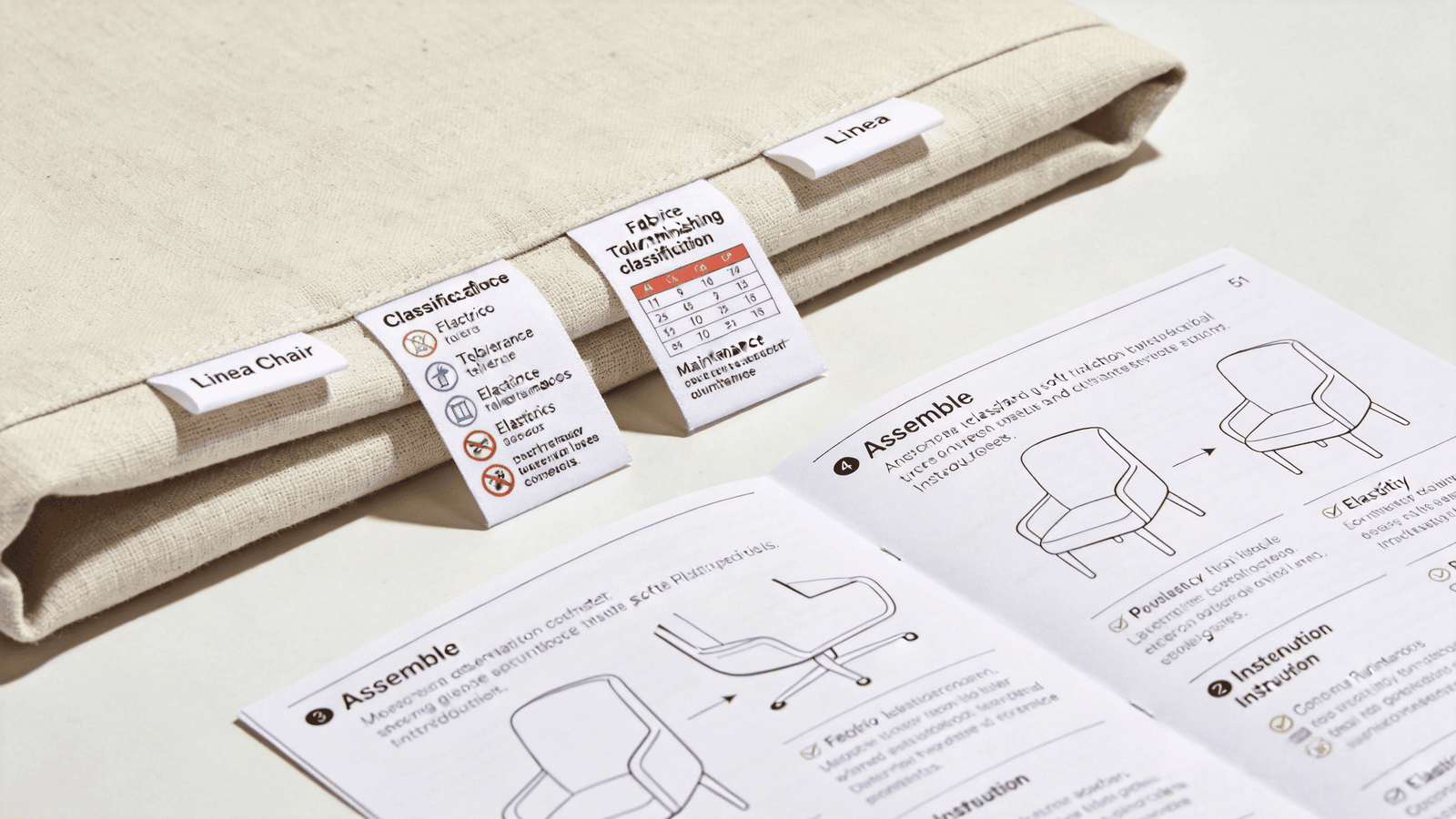
Label every cover. Define the reassembly order. State care boundaries. Note acceptable tightness change. Include a simple install guide with photos. These small steps prevent most post-wash failures.
The practical checklist
- Label: module, position, orientation arrow
- Order: body covers first, then seats, then backs
- Care: cold hand-wash or professional dry clean, no tumble dry
- Drying: air dry flat, shape while damp
- Tolerance: “Slight tightness change is acceptable”
- Tools: soft mallet, plastic bone folder, cotton gloves
Handover table
| Item | What I provide | Why it matters |
|---|---|---|
| Photo install guide | Step-by-step with arrows | Cuts reassembly time |
| Label set | Heat-printed tags | Stops mix-ups |
| Fabric spec sheet | Weight, weave, pre-wash notes | Sets care rules |
| Care card | Dos and don’ts in bold | Prevents dryer mistakes |
| Spare fasteners | Velcro, ties, zipper pulls | Fixes minor issues fast |
One lakehouse project taught me the value of arrows. The team tried to install a left-hand chaise cover on a right-hand unit. It almost fit, which made it worse. With clear labels, that does not happen. I also show how to “walk” fabric onto a radius with a bone folder. It saves fingers and stitches. This kind of simple prep saves everyone a service visit.
How do I set expectations with clients without killing the excitement?
You want a happy reveal and a calm aftercare. You fear sounding negative. I speak in ranges and trade-offs. I keep the tone real and hopeful.
Say this: removable covers make cleaning easier, not maintenance-free. The look will be softer than fixed. If you accept that, we proceed. If not, we keep complex sections fixed and add removable cushions.
Phrases I use that work
- “Removable is a strategy, not a promise.”
- “Slipcovers look relaxed. Fixed stays crisp.12”
- “We choose where to be removable.”
- “Care is simple, but strict.”
- “We write the tolerance into the spec.”
Expectation map table
| Topic | What I say | Client takeaway |
|---|---|---|
| Look | “Relaxed vs crisp is a choice.” | They choose the silhouette |
| Effort | “Cleaning is easier, not zero.” | They plan time |
| Risk | “Dryers cause shrinkage.” | They avoid the trap |
| Scope | “Chaise and corners often stay fixed.” | They accept a hybrid |
| Fit change | “Slight tightness after wash is ok.” | They do not panic |
This approach kept one Malibu project on track. The designer had a client who wanted “hotel-sharp” lines and full removability. I said that mix does not exist in linen the way they imagine. We agreed to a fixed body with removable cushions and an extra cushion set. The result looked sharp every day, and the practical parts came off for cleaning. The client later thanked us for not selling a dream that would have failed in week two.
Conclusion
Removable covers work when you accept a softer look, define strict care, and scope removability by zone. Treat it as a strategy, set boundaries, and write everything into the handover.
If you’re an interior designer sourcing custom removable linen sofas for US residential & family projects, our 13-year Foshan factory provides three customizable layouts: fully slipcovered, hybrid fixed+removable, and fully tailored fixed upholstery. All linen fabrics come factory pre-washed & pre-shrunk with medium tight weave. We supply free linen swatches, printed installation & care guides, and bulk discounts. Message us via WhatsApp to request fabric catalogs, custom sofa quotations or zone-based layout planning support.https://linenworld.pro
"Stay Cool: Top Fabrics to Wear to Survive the Summer Heat", https://www.gatech.edu/news/2024/07/02/stay-cool-top-fabrics-wear-survive-summer-heat. Textile science references report that flax/linen is highly absorbent with significant moisture regain, and hygroscopic uptake can influence dimensional stability and drape, which helps explain humidity-related changes in outline. Evidence role: mechanism; source type: education. Supports: That linen (flax) fibers are hygroscopic, have notable moisture regain, and can experience dimensional change with humidity.. Scope note: Most sources quantify moisture regain rather than directly measuring sofa outline changes, so the linkage to visual softening is inferential. ↩
"Seam (sewing) - Wikipedia", https://en.wikipedia.org/wiki/Seam_(sewing). Reference works define seam allowance as extra fabric beyond the seam line intended for joining and adjustment, supporting the idea that additional allowance can accommodate reassembly tolerances. Evidence role: definition; source type: encyclopedia. Supports: That seam allowance provides extra fabric for joining and fitting adjustments, allowing for ease and minor corrections.. Scope note: General definitions do not address sofa covers specifically; application to upholstery is by analogy. ↩
"[PDF] EC61-422 Easy Zipper Methods - DigitalCommons@UNL", https://digitalcommons.unl.edu/cgi/viewcontent.cgi?article=4526&context=extensionhist. Standard references distinguish exposed and invisible zipper applications, indicating that installation choices affect visibility and may require access allowances. Evidence role: general_support; source type: encyclopedia. Supports: That zippers can be installed visibly (exposed) or concealed, with construction choices affecting visibility.. Scope note: Most sources discuss apparel; upholstery applications are analogous rather than directly tested. ↩
"Correct way to size fabric with Rabbit Skin Glue?", https://sites.udel.edu/cas-mitra/correct-way-to-size-fabric-with-rabbit-skin-glue/. Sewing and textile-care guides commonly advise preshrinking linen to minimize later dimensional change and favor medium-weight fabrics for slipcovers due to better durability and handling than sheer or very heavy options. Evidence role: expert_consensus; source type: education. Supports: That preshrinking/prewashing cellulose fabrics like linen reduces residual shrinkage, and that medium-weight fabrics are commonly recommended for slipcovers for durability and handling.. Scope note: Recommendations are practice-based rather than derived from a single controlled study, and exact weight ranges vary by source. ↩
"How to Wash Clothes Without a Washing Machine: Easy Hand ...", https://imba.missouri.edu/how-to-wash-clothes-without-a-washing-machine-2305907765.html. Textile-care education materials indicate that cooler water and reduced agitation decrease the likelihood of relaxation shrinkage and mechanical distortion in cellulosic fabrics, supporting cold hand washing as a lower-risk method. Evidence role: mechanism; source type: education. Supports: That lowering wash temperature and mechanical agitation reduces the risk of dimensional change and damage in cellulosic fabrics like linen.. Scope note: Effectiveness varies by specific linen fabric and finishes; always subordinate to manufacturer care labels. ↩
"[PDF] Recommendations for Cleaning Garments and Textiles - ctahr", https://www.ctahr.hawaii.edu/oc/freepubs/pdf/AT-1.pdf. Conservation and textile-care institutions caution that the combined heat and agitation of tumble drying can promote shrinkage and set wrinkles in cellulosic fabrics, recommending air drying for safer dimensional outcomes. Evidence role: general_support; source type: institution. Supports: That heat and mechanical action in tumble dryers can cause or exacerbate shrinkage and set wrinkles in cellulosic textiles like linen, making air drying preferable.. Scope note: Some modern linens are finished to permit low-heat machine drying; guidance may vary by specific fabric and label. ↩
"10 Types of Fabric Every Fashion Design Student Should Know", https://www.istitutomarangonimiami.edu/blog/10-textiles-to-use-in-your-next-design/. Conservation and clothing-care guidance commonly recommend flat air drying to minimize mechanical distortion and stretching, supporting the practice for maintaining shape after washing. Evidence role: general_support; source type: institution. Supports: That laying textiles flat to dry reduces distortion and stretching compared with hanging or tumble drying.. Scope note: Guidance is general and may be adapted depending on fabric weight and construction. ↩
"Influence of Woven Fabric Construction on Seam Thread Slippage", https://www.academia.edu/71418853/Influence_of_Woven_Fabric_Construction_on_Seam_Thread_Slippage. Experimental textile studies show that increasing weave density in plain weaves typically improves dimensional stability and reduces seam slippage, supporting the preference for tighter weaves in applications that must maintain shape. Evidence role: mechanism; source type: paper. Supports: That higher weave density in plain weaves improves dimensional stability and reduces seam slippage/snagging risk compared with more open constructions.. Scope note: Findings are fabric-specific and may not generalize to all linen constructions or finishes. ↩
"[PDF] Recommendations for Cleaning Garments and Textiles - ctahr", https://www.ctahr.hawaii.edu/oc/freepubs/pdf/AT-1.pdf. Institutional textile-care guidance notes that dry cleaning minimizes water-related shrinkage risks in cellulosic fabrics and that professional handling can be advantageous for large or bulky panels. Evidence role: general_support; source type: institution. Supports: That dry cleaning avoids water-induced relaxation shrinkage typical of cellulosic fibers and can be appropriate for large, heavy textiles requiring specialized handling.. Scope note: Solvent choice and mechanical action in dry cleaning can still affect textiles; suitability depends on fabric construction and trims. ↩
"Regenerated cellulose by the Lyocell process, a brief review of the ...", https://bioresources.cnr.ncsu.edu/resources/regenerated-cellulose-by-the-lyocell-process-a-brief-review-of-the-process-and-properties/. Textile research describes that thermal exposure and mechanical action during tumble drying can increase relaxation or thermal shrinkage and promote heat-setting of creases, consistent with observed shrinkage and wrinkle setting. Evidence role: mechanism; source type: research. Supports: That thermal and mechanical stresses during tumble drying contribute to dimensional change and heat-setting of creases in cellulosic textiles.. Scope note: Quantitative effects depend on specific dryer conditions and fabric finishes, so magnitude varies. ↩
"[PDF] Laundering Guide - Pratt County Extension Office", https://www.pratt.k-state.edu/docs/facs/laundering-guide.pdf. Educational textile sources note that heat/steam can set creases in cellulosic fabrics and that higher-temperature laundering tends to increase dimensional change in linen compared with cooler processes. Evidence role: mechanism; source type: education. Supports: That heat and steam can set creases in cellulosic fabrics and that higher wash temperatures can increase dimensional change in linen.. Scope note: Exact temperature thresholds and shrinkage amounts vary by fabric construction and finishing. ↩
"Slipcover - Wikipedia", https://en.wikipedia.org/wiki/Slipcover. Encyclopedic entries describe slipcovers as removable fitted covers and often note their informal or relaxed character relative to tight upholstery, supporting the aesthetic distinction. Evidence role: definition; source type: encyclopedia. Supports: That slipcovers are removable fitted covers often associated with a casual/relaxed appearance compared to tight upholstery.. Scope note: Aesthetic descriptors are generalized; individual designs and tailoring can vary. ↩


