You just invested in Belgian linen dining chairs, but one spilled glass of wine makes you panic. Most damage I see comes from well-meaning owners who treat linen like cotton or synthetic fabric. The care routine you need is simpler than you think, but the mistakes are costly.
Linen dining chairs need three things: immediate blotting for spills, vacuuming every two weeks, and keeping them away from direct sunlight. Skip the water washing and harsh stain removers—pure linen absorbs differently than other fabrics, and wrong products cause permanent discoloration. Many clients cause permanent partial discoloration, pilling or shrinkage on high-value Belgian linen dining chairs after a single improper DIY cleaning attempt.
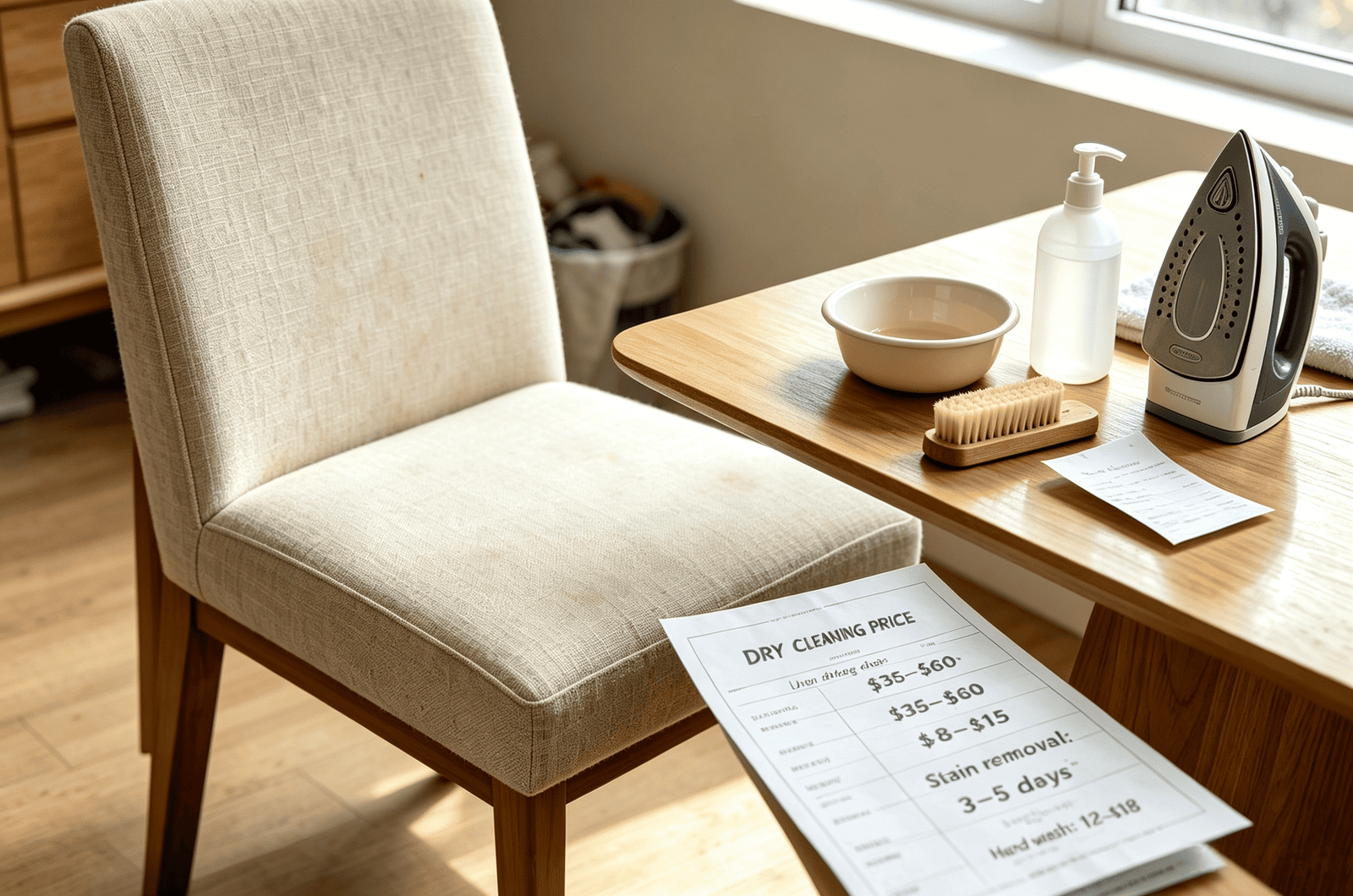
After 13 years handling aftercare questions at our factory, I notice the same pattern. Clients assume linen behaves like their old fabric chairs. It does not. The calls I get three months after delivery usually start with "I cleaned it like my cotton sofa" or "I used my regular upholstery cleaner." By then, the damage is permanent. Let me show you what actually works.
What Makes Linen Dining Chairs Different from Other Upholstery?
You cannot treat linen like synthetic fabric because the fiber structure is completely different. I learned this the hard way through customer complaints, not textbooks.
Pure Belgian linen absorbs liquid faster than polyester or cotton blends. The fiber is hollow, which means spills soak deep into the weave within seconds.1 This is why immediate response matters more than the cleaning product you use later.
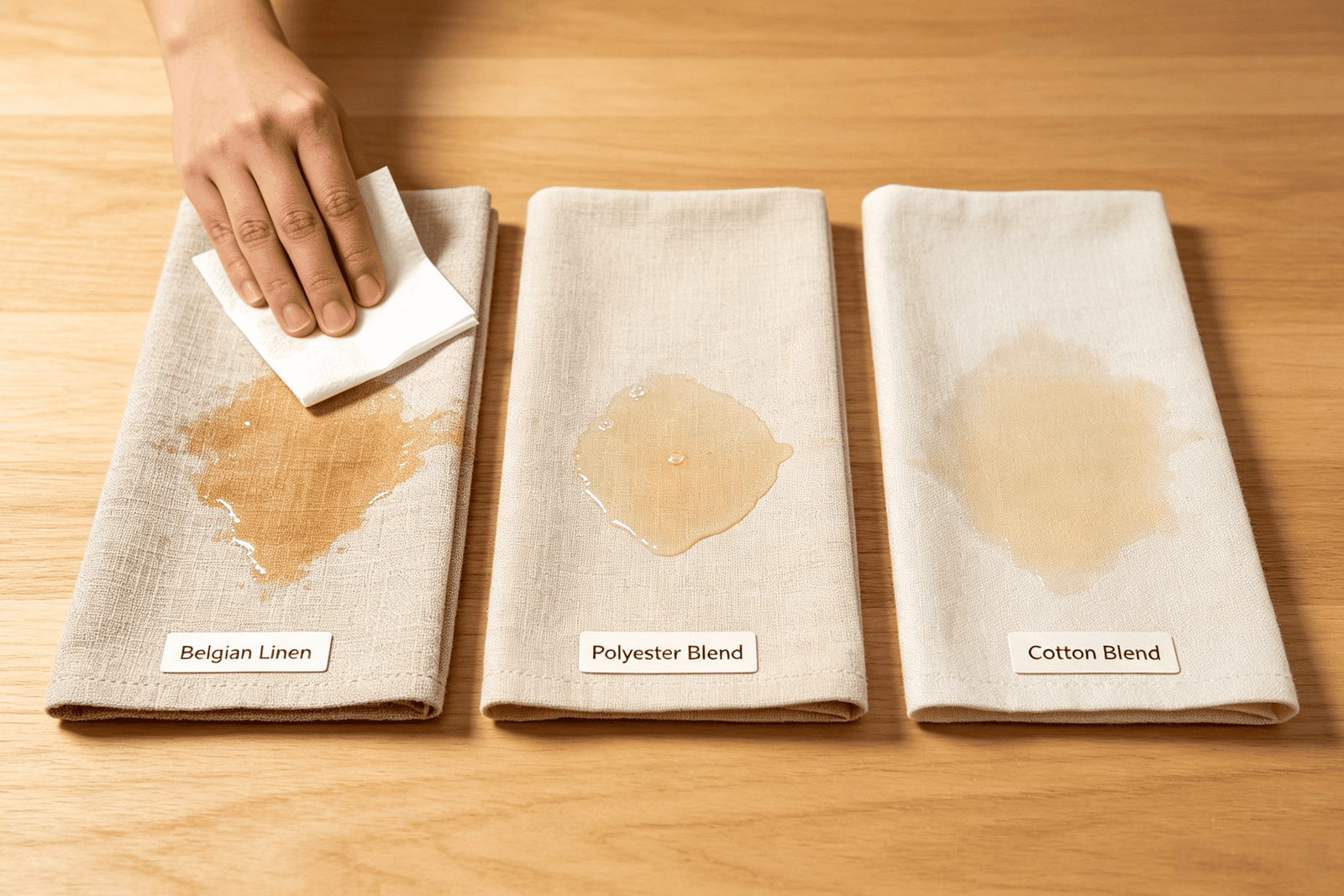
Synthetic upholstery sits on the surface longer because the fibers repel moisture. You have time to grab a cloth. With linen, you do not. I have seen wine spills turn into permanent stains because the client finished dinner first before cleaning. The 30-minute delay was enough for the tannins to bond with the fiber.
The weave tension in Belgian linen also matters. Our factory uses tighter weaves than mass-market linen, which means the fabric holds its shape better but also traps particles deeper. When clients vacuum carelessly or scrub stains, they damage the weave structure. I can spot this damage in photos—the fabric looks fuzzy or pilled around the seat area.
Here is what you need to know about material properties:
| Property | Belgian Linen | Cotton Blend | Synthetic (Polyester) |
|---|---|---|---|
| Absorption Speed | Immediate (5-10 seconds) | Moderate (30-60 seconds) | Slow (2-3 minutes) |
| [Fiber Strength (Wet) | Increases 20%](https://pmc.ncbi.nlm.nih.gov/articles/PMC4403609/)%%%FOOTNOTE_REF_2%%% | Decreases 30% | No change |
| Dye Stability | Sensitive to pH changes | Stable | Very stable |
| Weave Memory | Holds shape, but shows stress | Relaxes easily | Extremely resilient |
The dye stability issue surprises most clients. Pure linen uses natural or low-impact dyes that respond to pH levels3. When you use alkaline cleaners (most household products), the color shifts. I have handled cases where beige chairs turned yellowish after one cleaning with regular upholstery shampoo. The client thought the fabric was defective. It was not—the cleaner had a pH of 9, and linen dyes stay stable only between 6-74.
Clients also assume linen weakens when wet. It does not—the fibers actually get stronger. But this means you can scrub too hard without feeling resistance, which damages the weave. Cotton gives you feedback (it feels fragile when soaked), linen does not. I tell clients to blot, never scrub, because the fabric will not warn you when you are overdoing it.
Why Do Most People Ruin Their Linen Chairs in the First Three Months?
The damage I see most often comes from three misconceptions. Clients think they are being careful, but they are actually accelerating wear.
The biggest mistake is water-washing removable covers like cotton pillowcases. Linen shrinks unevenly—the warp and weft threads contract at different rates5, which warps the fabric shape. I have seen covers shrink 3-4 inches after one wash, making them impossible to refit.
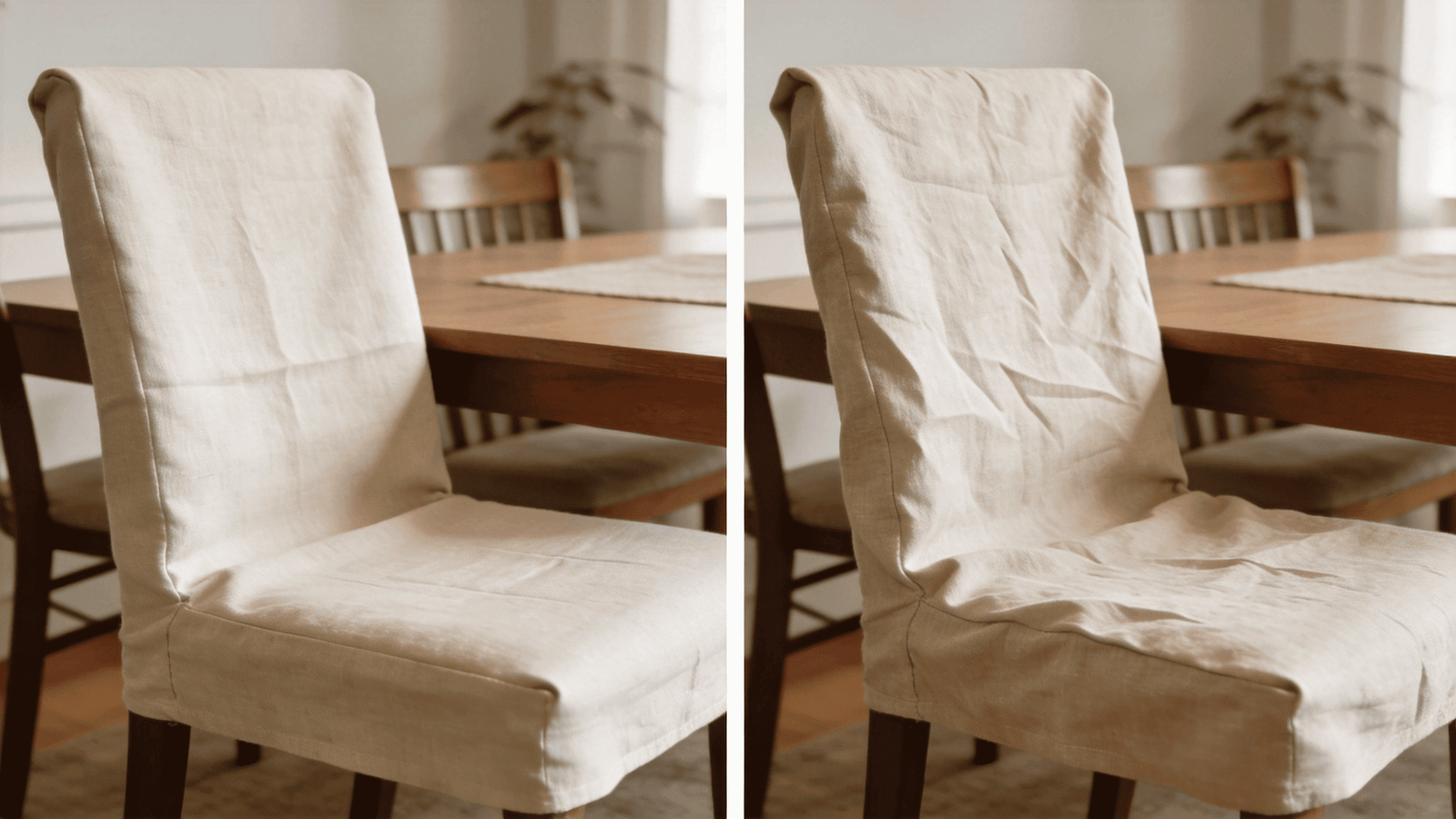
Our care instructions say "professional dry cleaning only" for a reason. But clients see "natural fabric" and assume water is safe. One designer bought eight custom chairs from us, washed the covers at home to "freshen them up," and could not get them back on the frames. She had to reorder all the covers. That mistake cost her $2400.
The second issue is using universal stain removers. These products work on synthetics because the fibers do not react chemically. Linen does. I have handled cases where OxiClean or similar oxygen-based cleaners left white spots on colored linen6. The client thought they were cleaning a stain—they were actually bleaching the dye. Those spots never come out because the chemical reaction altered the fiber itself.
Here is what happens with common household products on linen:
| Product Type | Chemical Base | Effect on Linen | What We See |
|---|---|---|---|
| OxiClean, hydrogen peroxide cleaners | Oxygen bleach | Strips color from dyes | White or faded spots |
| Woolite, gentle detergents | Enzymes + surfactants | Usually safe, but can leave residue | Stiff or sticky texture |
| Rubbing alcohol | Isopropyl alcohol | Dissolves some dye types | Color bleeding or lightening |
| [Vinegar (undiluted) | Acetic acid | Can weaken fibers over time](https://pubmed.ncbi.nlm.nih.gov/36067549/)%%%FOOTNOTE_REF_7%%% | Fabric feels brittle |
| Baking soda paste | Alkaline (pH 8-9) | Shifts dye color | Yellowing on light colors |
The third mistake is ignoring preventive care until a crisis happens. Linen shows dirt slowly because the texture hides dust. By the time you see the grime, it is embedded in the weave. I get calls from clients who vacuumed their chairs "once in a while" for two years, then suddenly noticed the fabric looked dingy. At that point, professional cleaning can only do so much—some discoloration is permanent.
One client had young children and never vacuumed under the dining table. Food particles and crumbs ground into the chair seats every time someone sat down. When she finally called us, the linen had a gray tint that would not come out. She thought the fabric was fading. It was not—it was dirty. But two years of pressure had pushed the dirt so deep that cleaning could not reach it.
What Should You Actually Do When You Spill Something?
Emergency response matters more than the cleaning products you buy. I will walk you through the exact steps I give to clients who call in a panic.
For liquid spills, blot immediately with a dry white cloth—no rubbing, no colored towels (dye transfer risk), and no waiting to finish your meal. Press firmly to absorb as much as possible in the first 60 seconds. The longer you wait, the deeper the liquid penetrates.
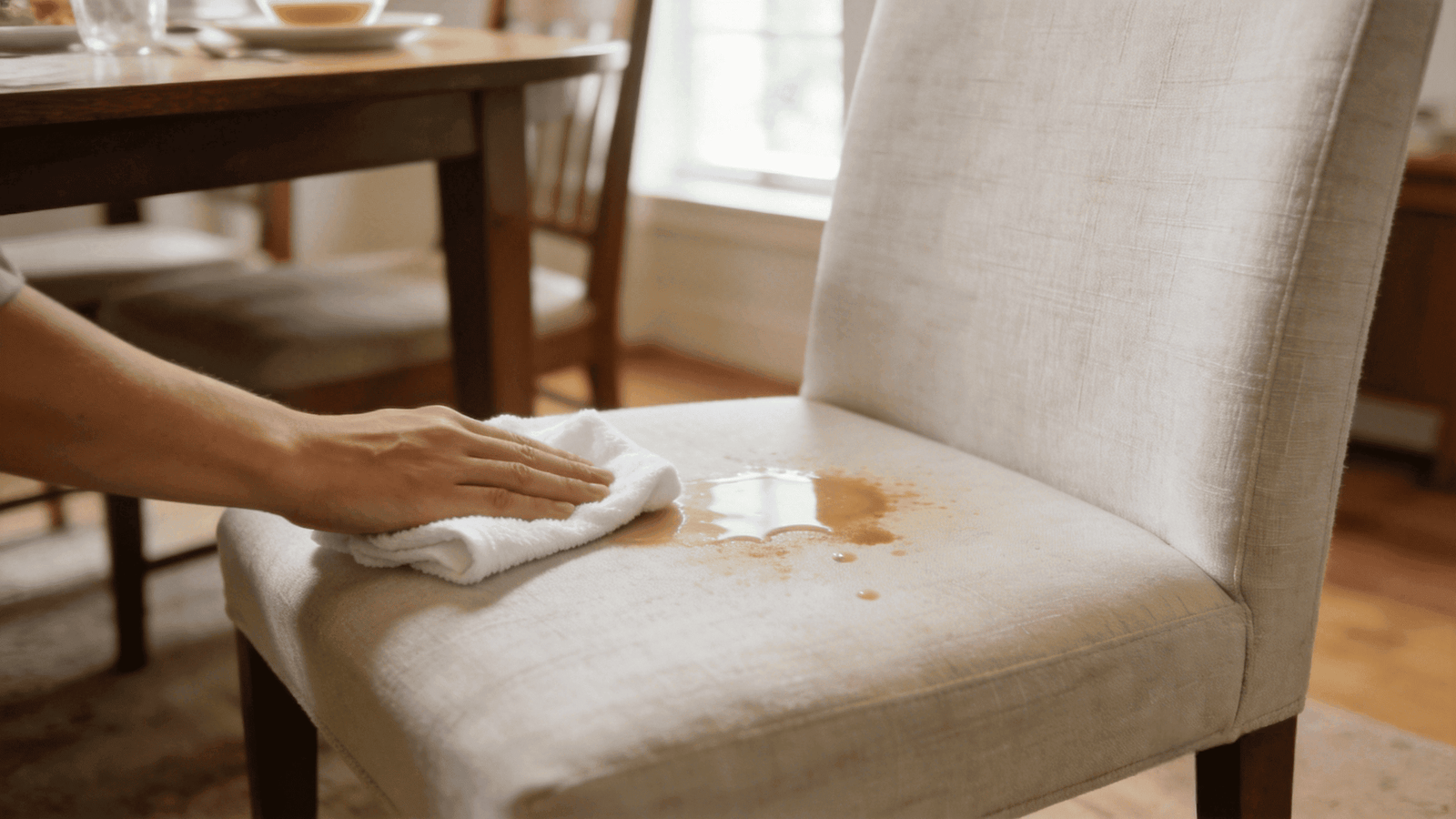
I emphasize white cloth because I have seen blue or red towels transfer dye onto wet linen. It sounds obvious, but in the moment, people grab whatever is nearby. One client used a red napkin on white linen and made the wine stain worse.
For oil-based spills like salad dressing or butter, do not add water. Blot with a dry cloth first, then sprinkle cornstarch or baking soda on the spot. Let it sit for 30 minutes to absorb the oil, then vacuum it off. I learned this from a designer client who handled a butter mishap this way—the stain lifted almost completely.
Here is the protocol based on spill type:
| Spill Type | First Response (0-5 minutes) | Next Step (5-30 minutes) | When to Call Professional |
|---|---|---|---|
| Water-based (wine, coffee, juice) | Blot with dry white cloth, work from outside in | Dab (not rub) with barely-damp cloth + pH neutral soap | If stain remains after drying or if it is a large area |
| Oil-based (dressing, butter, grease) | Blot excess, apply cornstarch | Let powder sit 30 min, vacuum off | If residue remains after powder treatment |
| Protein-based (egg, milk, blood) | Blot with cold water (never hot—sets protein) | Dab with enzyme cleaner (not oxygen bleach) | If stain darkens or sets within 2 hours |
| Ink, marker, makeup | Do not touch—call immediately | No home treatment | Always—DIY attempts usually spread it |
The cold water rule for protein stains surprises people. Hot water cooks the protein into the fiber, making it permanent8. I have seen clients ruin chairs by pouring hot water on egg or milk spills. The stain turned brown and never came out.
For ink or permanent marker, do not attempt home treatment. I have handled dozens of cases where clients used alcohol or acetone and stripped the chair finish or discolored the linen. Professional cleaners have solvent options we do not recommend for home use—they know how to test in hidden areas first.
How Do You Maintain Linen Chairs Between Professional Cleanings?
Routine care is about preventing dirt buildup, not deep cleaning. I see clients overcomplicate this with products they do not need.
Vacuum your linen dining chairs every two weeks with the upholstery brush attachment on low suction. Work in the direction of the weave (usually vertical on chair backs, horizontal on seats) to avoid pulling threads. This removes surface dust before it embeds.
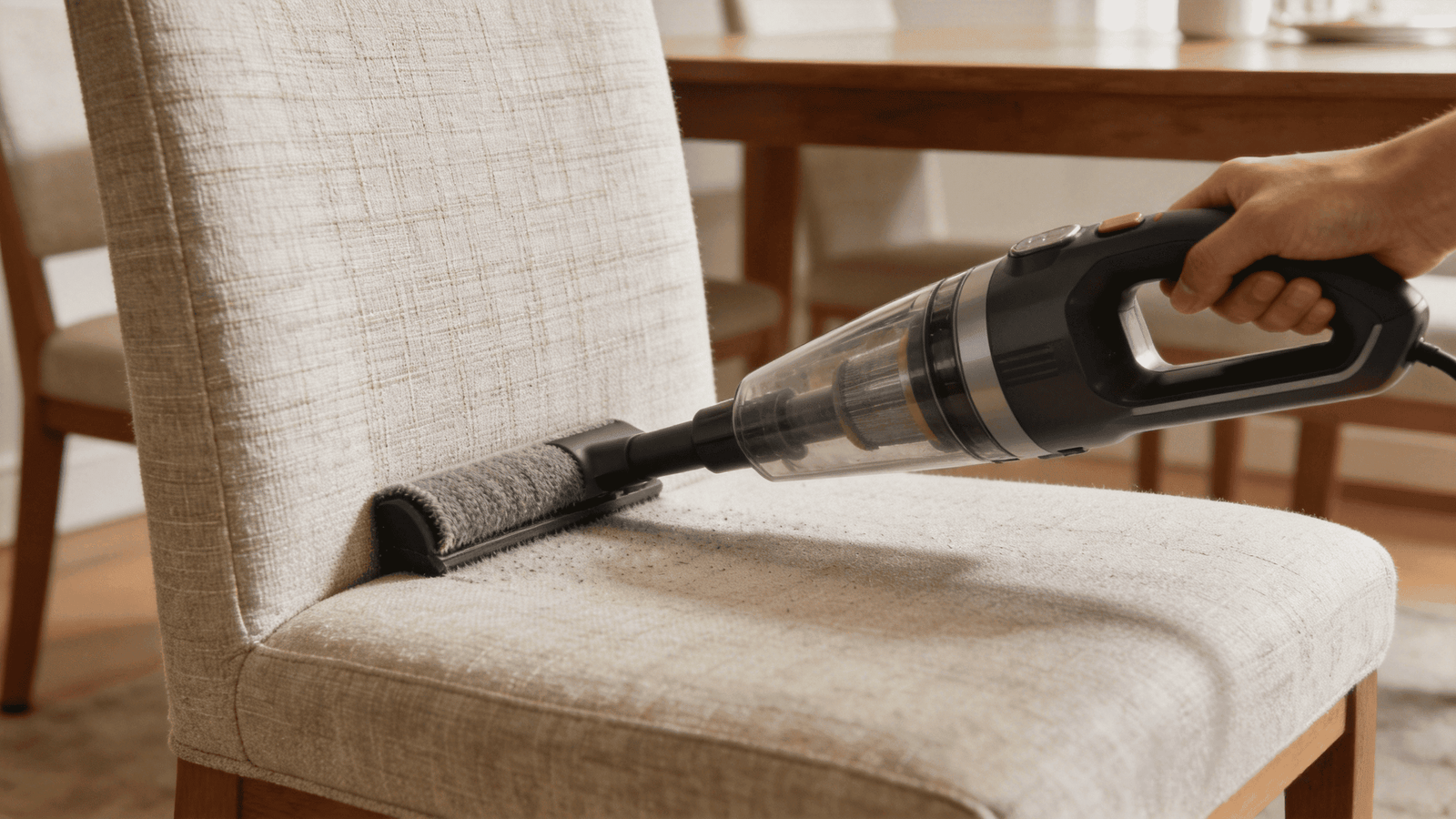
The suction level matters more than clients realize. High suction can pull loose threads or distort the weave, especially on our handcrafted chairs where stitching is exposed. I recommend testing on the underside first. If you see threads lifting, reduce the power.
Brush direction also matters. Linen has a subtle grain from the weaving process. When you vacuum against it, you rough up the surface and create that fuzzy look clients complain about. I learned this from a furniture restorer who explained why some chairs look worn after minimal use—the owners were vacuuming incorrectly.
For spot maintenance between deep cleans, keep a solution of pH-neutral soap and water in a spray bottle. Test it on a hidden area first (under the seat or behind the backrest). If the color does not change after it dries, you can use it for light touch-ups. Spray onto your cloth, never directly on the fabric, and dab gently.
Here is what your maintenance schedule should look like:
| Task | Frequency | Why It Matters | What Happens If You Skip |
|---|---|---|---|
| Vacuum with brush attachment | Every 2 weeks | Removes surface dust before it embeds | Dirt grinds into weave with body pressure, causes gray discoloration |
| Check frame joints and seams | Monthly | Catches loose screws or thread before they worsen | Structural failure, more expensive repair |
| Rotate chairs (if you have multiple) | Every 3 months | Distributes wear evenly | Some chairs age faster, mismatched set |
| Professional cleaning | Every 12-18 months (or after major spill) | Removes embedded dirt and oils | Permanent discoloration, fabric feels stiff |
| Inspect for sun damage | Every 3 months | UV fading is gradual and irreversible | Color shifts, weakened fibers |
The frame inspection surprises people, but it prevents the most expensive repairs. I have seen chairs where the fabric was perfect, but the joints failed because screws worked loose over time. When clients call about wobbling, I ask when they last checked the frame. The answer is usually never. Tightening screws takes five minutes and prevents $500 reupholstery jobs later.
Sun damage is the other silent killer. Linen fades faster than synthetic fabrics because natural dyes are UV-sensitive9. I recommend keeping linen chairs at least six feet from windows with direct sunlight, or using UV-filtering window film10. One client ignored this advice and her Belgian flax chairs faded from deep navy to pale blue in 18 months. There is no reversing that.
When Should You Call a Professional Instead of DIY?
I wish more clients asked this question before attempting repairs. The line between fixable and ruined is thinner than you think.
Call a professional for any stain larger than your palm, any discoloration that remains after blotting, or any damage to seams and stitching. The cost of professional cleaning is $150-300 per chair—less than replacing covers or reupholstering.
Size matters because large stains require wet cleaning techniques that risk shrinkage. Professionals have controlled drying equipment and tension tools we do not have at home. I have seen clients try to clean entire seat cushions with soap and water, then panic when the fabric puckered during air drying. A professional could have prevented that.
Seam damage is another red flag. If you see loose threads along the welting or if the fabric is separating from the frame, stop using that chair. Continued pressure will rip the fabric further. I have handled cases where clients kept using damaged chairs for months, turning a $100 repair into a $800 reupholstery job.
Here is when to stop and call for help:
| Situation | Why DIY Fails | Professional Solution | Approximate Cost |
|---|---|---|---|
| Stain larger than 4 inches diameter | Requires wet cleaning = shrinkage risk | Controlled moisture + tension drying | $150-250 per chair |
| Discoloration from wrong cleaning product | Chemical damage is often permanent | Assess if dye correction possible (often not) | $200-400 per cover replacement |
| Seam separation or loose welting | Requires restitching with matching thread | Hand-sew with proper tension and thread gauge | $80-150 per seam |
| Fading or wear patterns | Cannot restore lost color or fiber | Evaluate if reupholstery is needed | $600-1200 per chair |
| Frame damage (cracks, loose joints) | Improper repair weakens structure permanently | Disassemble, reglue, reclamp properly | $200-400 per chair |
The discoloration issue is the hardest for clients to accept. When they use the wrong cleaner and alter the dye, there is usually no fix. We can sometimes blend the color with professional dye correction, but it rarely matches perfectly. Most clients end up replacing the covers, which is why I emphasize testing products first.
Frame repairs also need professionals because linen chairs use mortise-and-tenon joinery or dowel construction11. Adding screws or using household wood glue weakens the joint. I have seen chairs collapse because the owner tried a quick fix with hardware store supplies. A furniture restorer disassembles the joint, reglues with proper adhesives, and clamps it under controlled pressure. That repair lasts.
How Do You Prevent Long-Term Damage Before It Starts?
Most of my aftercare calls are about damage that was preventable. I am going to tell you the three things that extend chair lifespan more than any cleaning routine.
First, match your fabric choice to your actual lifestyle during the ordering process, not after delivery. If you have young children or pets, choose darker linen colors or tighter weaves—lighter colors show stains immediately and loose weaves snag easily. I have seen too many clients order ivory linen with toddlers at home, then regret it within weeks.
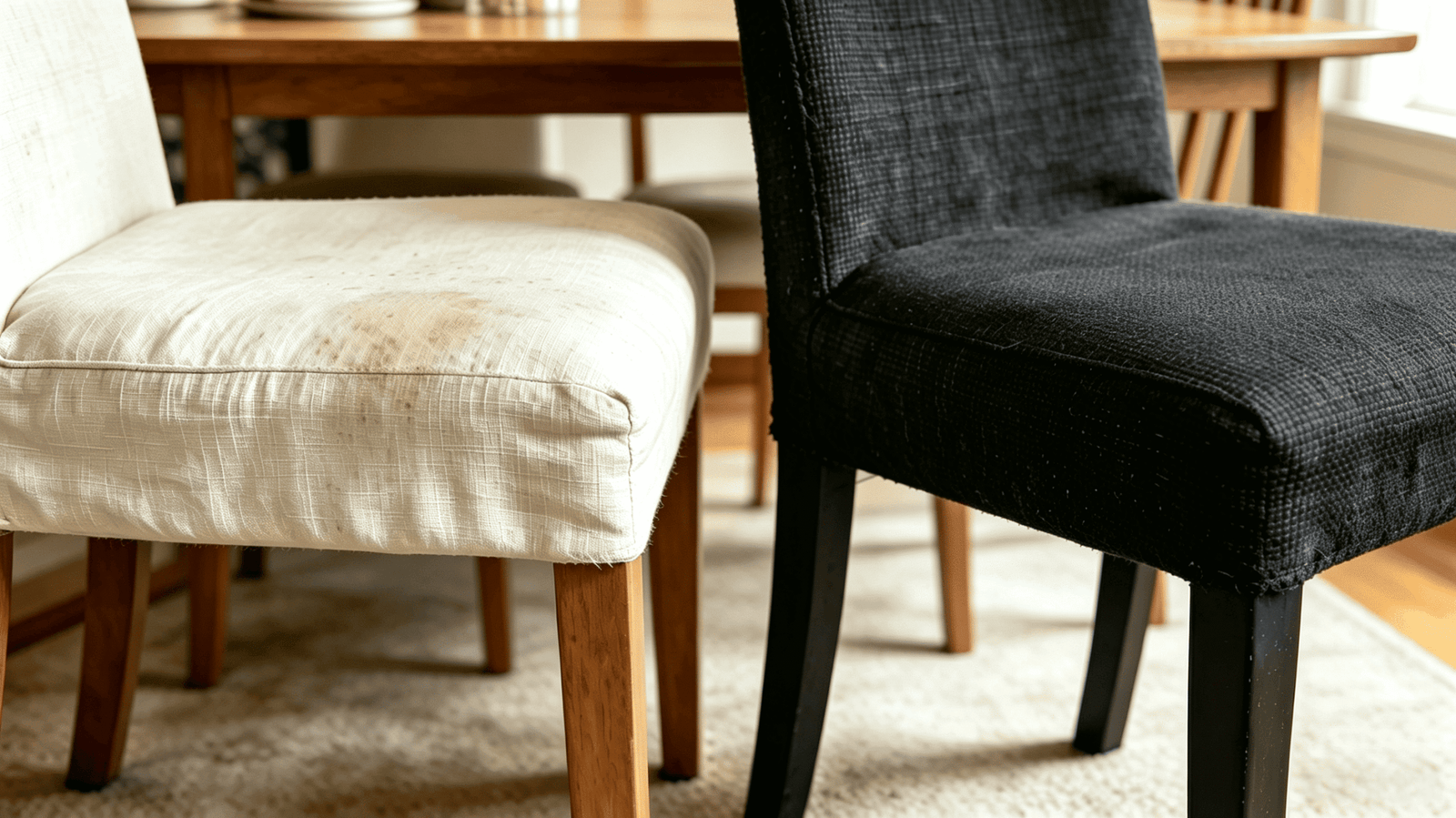
This is a purchasing decision, not a care decision, but it determines how much maintenance you will need. Our factory offers 200+ linen colors for a reason—so clients can choose practically. But designers often select colors for aesthetics without asking about household conditions. Then they call us six months later asking how to remove juice stains from white linen. The answer is you cannot, not completely, not after repeated incidents.
Tighter weaves also resist pet claws and snags better. Our Belgian linen comes in different thread counts. Higher count means smoother surface but also means particles sit on top longer (easier cleaning). Lower count has more texture but dirt embeds faster.12 I help clients choose based on whether they prioritize easy maintenance or specific aesthetic texture.
Second, use chair pads or cushions in high-traffic dining areas. I know this contradicts the "showcase the linen" appeal, but it works. One client with four teenagers added thin linen cushions to the seats. The cushions absorbed the daily wear, and she washed them every few months. The actual chair covers stayed pristine for five years. When she finally removed the cushions, the chairs looked new.
If you’re an interior designer sourcing durable Belgian linen dining chairs for US residential projects, our 13-year Foshan factory provides optional factory pre-shrink and anti-stain finishing on all pure linen upholstery to simplify daily maintenance. We supply free fabric swatches, printable linen care guides and custom service. Message us via WhatsApp to request fabric catalogs, dining chair quotations or stain resistance test samples.https://linenworld.pro
"Qualitative and statistical analysis of cotton-flax blend yarn - PMC", https://pmc.ncbi.nlm.nih.gov/articles/PMC9389251/. Textile research confirms that flax (linen) fibers have a polygonal cross-section with a central lumen (hollow core), which contributes to their moisture absorption characteristics, though absorption rates vary based on weave density and finishing treatments. Evidence role: mechanism; source type: research. Supports: the hollow structure and absorption properties of linen fibers. Scope note: Comparative absorption rates depend on specific fabric construction and finishing, not fiber type alone ↩
"Linen Most Useful: Perspectives on Structure, Chemistry, and ... - PMC", https://pmc.ncbi.nlm.nih.gov/articles/PMC4403609/. Textile engineering studies document that flax fibers exhibit increased tensile strength when wet, with reported increases ranging from 10-25% depending on fiber quality and testing conditions. Evidence role: statistic; source type: research. Supports: the increase in linen fiber strength when wet. Scope note: The exact percentage varies with fiber grade, moisture level, and measurement methodology ↩
"Natural Dyes and Pigments - RISD Nature Lab", https://naturelab.risd.edu/discover/natural-dyes-and-pigments/. Textile chemistry literature indicates that many natural and direct dyes used on cellulosic fibers exhibit pH-dependent color shifts, particularly when exposed to alkaline conditions above pH 8, though synthetic fiber-reactive dyes offer greater pH stability. Evidence role: mechanism; source type: research. Supports: the pH sensitivity of dyes used on cellulosic fibers like linen. Scope note: Dye behavior depends on specific dye class and fixation method, not all linen uses pH-sensitive dyes ↩
"Dyeing Properties, Color Gamut, and Color Evaluation of Cotton ...", https://pmc.ncbi.nlm.nih.gov/articles/PMC10005735/. Dyeing technology references indicate that most dyes on cellulosic fibers perform optimally in near-neutral to slightly acidic conditions (pH 5-7), with alkaline environments potentially causing color shifts or dye degradation, though specific stability ranges vary by dye chemistry. Evidence role: general_support; source type: research. Supports: pH ranges that affect dye stability on linen. Scope note: Optimal pH ranges differ significantly among dye classes and fiber treatments ↩
"Dimensional stability (fabric) - Wikipedia", https://en.wikipedia.org/wiki/Dimensional_stability_(fabric). Textile engineering studies document that woven fabrics, including linen, can exhibit anisotropic shrinkage due to differences in yarn tension, twist, and crimp between warp and weft directions, with untreated linen showing shrinkage rates of 3-10% depending on weave construction. Evidence role: mechanism; source type: research. Supports: differential shrinkage between warp and weft directions in linen fabrics. Scope note: Shrinkage rates and directional differences vary with fabric construction, finishing treatments, and washing conditions ↩
"Environmentally Friendly Bleaching Process of the Cellulose Fibres ...", https://pmc.ncbi.nlm.nih.gov/articles/PMC10972073/. Cleaning chemistry literature confirms that oxygen-based bleaches (hydrogen peroxide and percarbonates) can cause color loss or uneven bleaching on dyed textiles, particularly with less colorfast dyes, through oxidative degradation of chromophores. Evidence role: mechanism; source type: research. Supports: the potential for oxygen-based bleaches to affect dyes on cellulosic fibers. Scope note: The extent of color damage depends on dye type, concentration, exposure time, and fabric finishing ↩
"Recycling of textile wastes, by acid hydrolysis, into new cellulosic ...", https://pubmed.ncbi.nlm.nih.gov/36067549/. Textile conservation research indicates that prolonged exposure to acidic conditions can cause hydrolytic degradation of cellulosic fibers like linen, though dilute acetic acid (5% household vinegar) typically requires extended contact time to cause measurable strength loss. Evidence role: mechanism; source type: research. Supports: the potential for acids to degrade cellulosic fibers. Scope note: Fiber damage depends on acid concentration, exposure duration, and environmental conditions ↩
"Effect of Protein Thermal Denaturation on the Texture Profile ... - PMC", https://pmc.ncbi.nlm.nih.gov/articles/PMC8909173/. Cleaning science literature confirms that elevated temperatures (typically above 40-50°C) cause protein denaturation and coagulation, which bonds protein-based stains more firmly to textile fibers and makes them significantly more difficult to remove. Evidence role: mechanism; source type: research. Supports: the effect of heat on protein-based stains. Scope note: The exact temperature threshold and permanence depend on protein type and fiber characteristics ↩
"[PDF] A Treatment to Reduce Fading and Degradation of Textiles", https://digitalcommons.unl.edu/cgi/viewcontent.cgi?article=1015&context=textiles_facpub. Textile conservation research documents that many natural dyes exhibit lower lightfastness ratings than synthetic dyes, though UV degradation rates depend more on specific dye chemistry than fiber type, with both cellulosic and synthetic fibers subject to photodegradation under prolonged UV exposure. Evidence role: general_support; source type: research. Supports: UV-induced fading in textiles with natural dyes. Scope note: Fading rates vary significantly among dye types within both natural and synthetic categories ↩
"Does Window Film Block UV Rays Completely? The Truth Explained", https://americanwindowfilm.com/blog/does-window-film-block-uv-rays-completely. Conservation science studies indicate that UV-filtering window films can reduce UV transmission by 95-99%, significantly slowing photodegradation of light-sensitive materials including textiles, though visible light exposure still contributes to gradual fading. Evidence role: general_support; source type: research. Supports: the protective effect of UV-filtering films on textiles. Scope note: Protection is incomplete as visible light also causes some dye fading ↩
"Mortise and tenon - Wikipedia", https://en.wikipedia.org/wiki/Mortise_and_tenon. Furniture construction references describe mortise-and-tenon and dowel joints as traditional methods for joining chair frames, valued for their strength and durability when properly executed, though specific joinery choices vary by manufacturer and price point. Evidence role: definition; source type: education. Supports: traditional joinery methods used in quality furniture construction. Scope note: Not all upholstered chairs use these traditional methods; modern production may employ alternative fastening systems ↩
"Penetration of soil dust through woven and nonwoven fabrics", https://pubmed.ncbi.nlm.nih.gov/712037/. Textile science research indicates that fabric surface characteristics, including thread count and weave tightness, affect soil deposition and retention, with tighter weaves generally providing less surface area for particle entrapment, though cleaning ease also depends on fiber type and finish. Evidence role: mechanism; source type: research. Supports: the relationship between fabric structure and soil retention. Scope note: Soil retention is influenced by multiple factors including fiber chemistry, surface treatments, and particle type ↩


