
You ordered a sofa. It arrived. It didn't fit through the door. That's not a rare story — we hear versions of it from buyers every month.
A sectional is a fixed multi-seat piece built as one configuration. A modular sofa is made of independent units you can rearrange. They look similar in a showroom photo, but they commit you to very different things — and mixing them up is one of the most expensive ordering mistakes a buyer can make1.
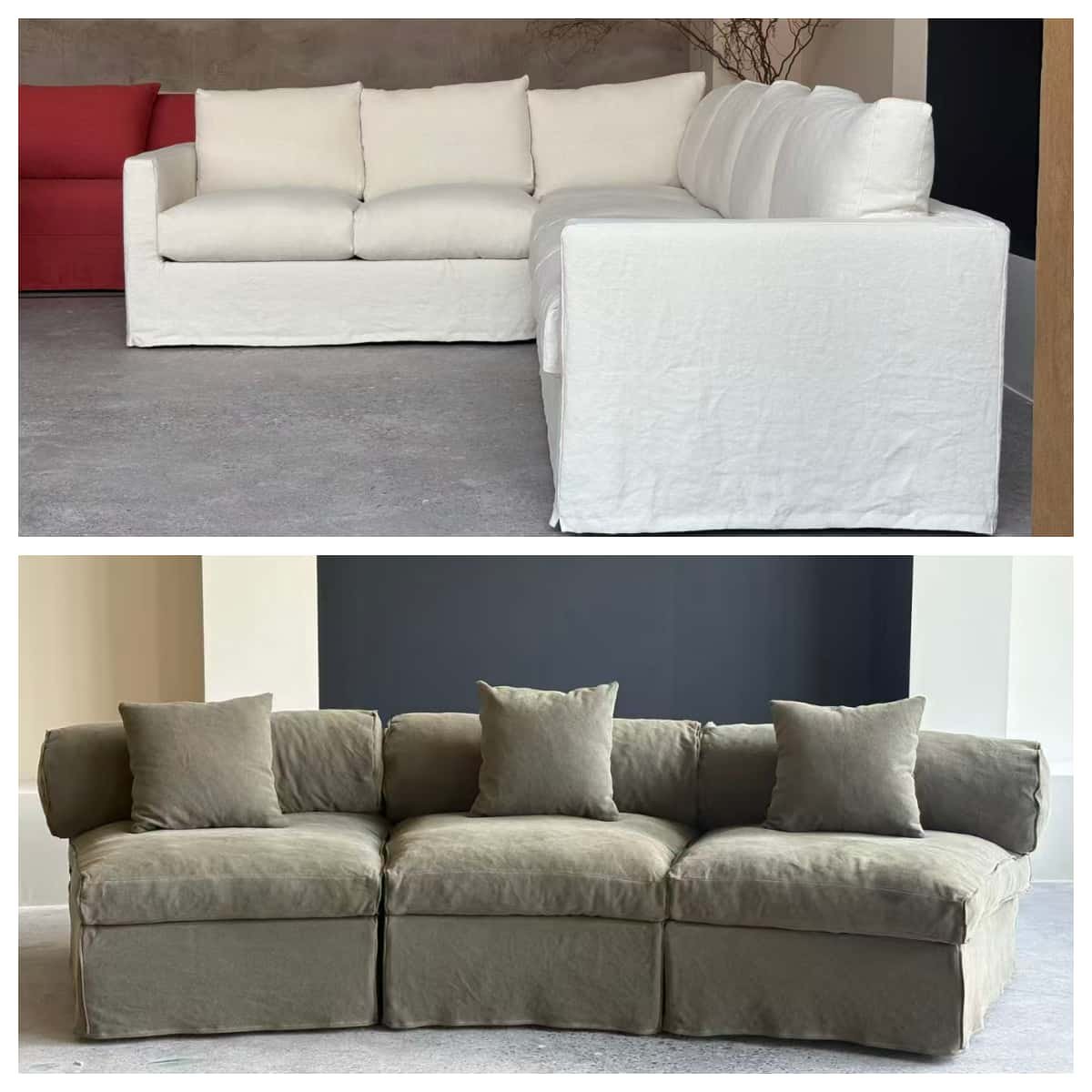
Most buyers use "modular" and "sectional" as if they mean the same thing. They don't. And once a custom piece is in production, it's too late to change your mind. Before you finalize any order, you need to know exactly which type you're buying — and why that choice matters for your specific room.
What Is a Sectional Sofa — and When Does the Label Actually Matter?
You've seen the term everywhere. But does knowing the definition actually change what you order?
A sectional sofa is a single, pre-set configuration — usually an L-shape or U-shape — made of joined pieces that are meant to stay in one arrangement.2 The units are designed to work together as a complete set, not to be split up or rearranged into a different layout.
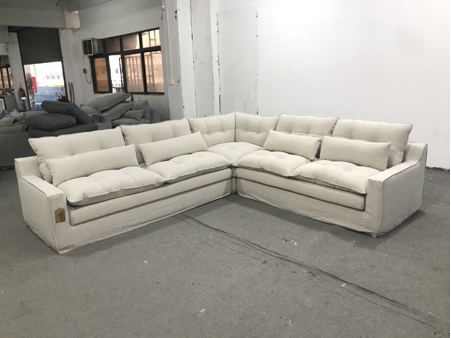
When buyers treat "sectional" as just another word for "big sofa," they skip the question that matters most: will this configuration still work if anything about this room changes? That's where the label stops being a style category and starts being a commitment.
What a sectional does well
A sectional is the right choice when you have a stable, open-plan space and a fixed floor plan that won't change.3 The design is unified — the arms, the back heights, the seat depths all flow as a single piece. There's no visual break between units, and no risk of one unit drifting out of alignment over time.
In our experience reviewing floor plans before production, sectionals work best in these situations:
| Room Condition | Sectional Performance |
|---|---|
| Large, open living area with no awkward angles | Excellent — the fixed shape fills the space cleanly |
| Primary residence with no planned moves or renovations | Strong fit — no future reconfiguration needed |
| Buyer wants a seamless, furniture-as-architecture look | Good match — unified silhouette, no visible unit breaks |
| Tight hallways or narrow doorways on delivery route | Risk — large fixed pieces are harder to maneuver |
| Room layout likely to change within 3–5 years | Poor fit — the configuration cannot adapt |
The single biggest downside of a sectional has nothing to do with comfort or aesthetics. It has to do with what happens on delivery day and what happens if you move. A fixed L-shape that spans 3.5 meters cannot be reassembled in a different layout.4 It arrives as one shape, and it stays that shape.
We're frequently asked by designers whether a sectional can be "split" later if the client moves. For most production-built sectionals, the honest answer is no — or not without visible gaps, mismatched upholstery wear, or connector hardware that was never designed for freestanding use. If there's any chance the room or the client's living situation will change, this question needs to be asked before ordering, not after delivery.
What Is a Modular Sofa — and Does "Reconfigurable" Always Mean What It Says?
Modular sounds like freedom. But is it actually?
A modular sofa is built from independent seat, corner, and end units that connect together.5 Because each unit stands alone, the buyer can rearrange the layout — adding units, removing them, or switching from an L-shape to a straight run — as the room changes.
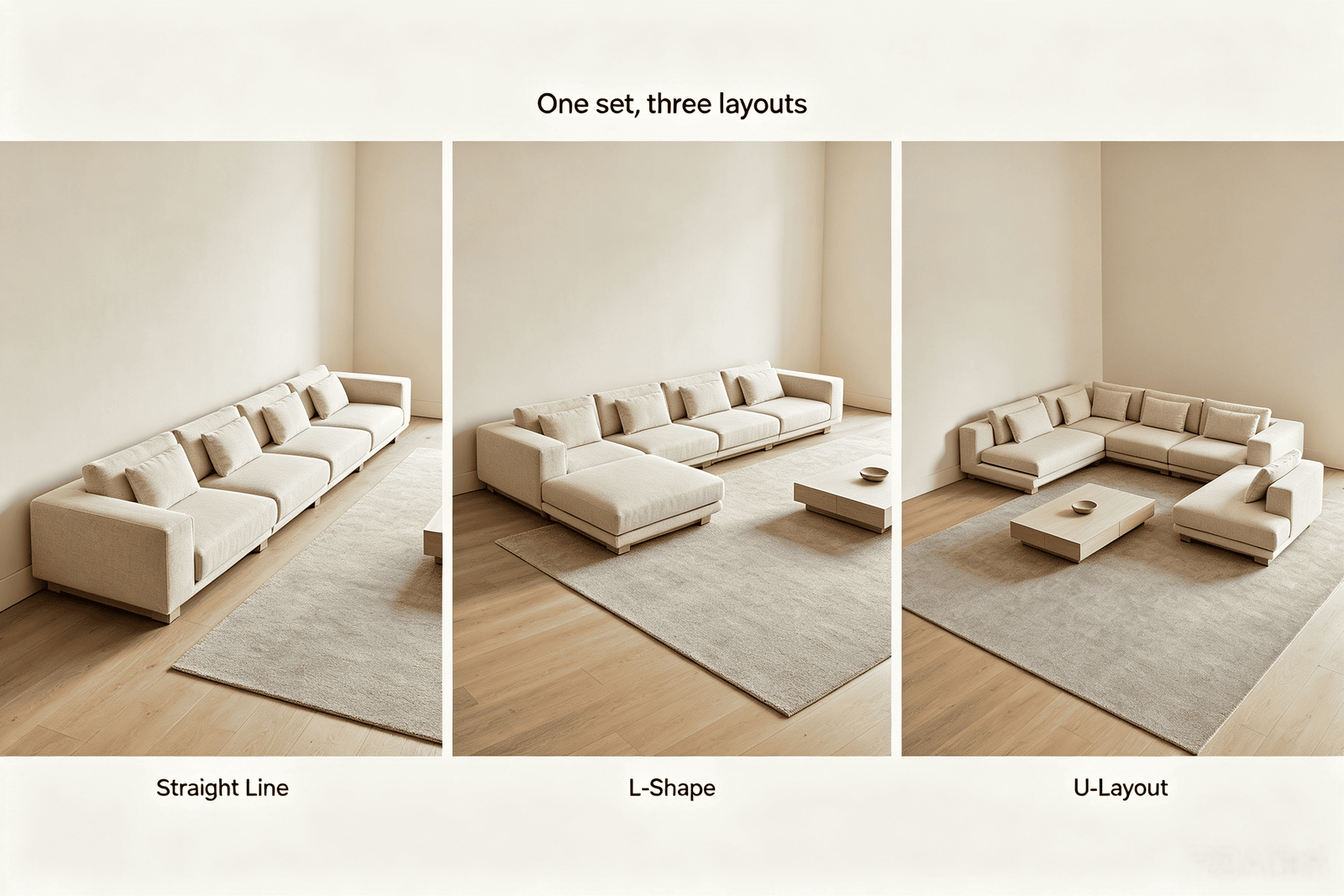
The word "modular" has become a marketing label that gets applied loosely. We see buyers order a "modular" sofa expecting full reconfigurability, then discover the units only connect one way, or that reordering a single additional unit years later isn't possible because the fabric or connector spec has changed6. The label is not a guarantee.
What "truly modular" actually requires
For a modular sofa to work as advertised — meaning you can genuinely rearrange, extend, or partially reorder it — the production has to support three specific things:
| Requirement | Why It Matters |
|---|---|
| Compatible connector system across all units | Without this, units won't align or stay stable when rearranged |
| Consistent unit depth across seat, corner, and end pieces | Mismatched depths mean visible height and alignment gaps between units |
| Reorder availability for individual units over time | If you want to add a chaise in two years, the unit has to still be orderable in the same fabric, same depth, same connector spec |
When we review a floor plan before quoting a modular configuration, these are the three questions we ask ourselves before we ask the buyer anything about fabric or finish. If the connector system isn't confirmed, none of the other decisions matter.
Modular works best in rooms with irregular shapes, tight delivery routes, or buyers who know their living situation may shift. A client who might renovate, relocate, or simply want to rearrange the room in three years is a strong candidate for modular — as long as they ask explicit questions about connector compatibility and reorder availability before signing off on the order.
How Does Room Size and Shape Change the Decision?
Room condition is the one factor most buyers underweight. Does it actually override personal preference?
Room geometry — not budget or style preference — is often the most reliable guide to which sofa type is the safer choice. Irregular shapes, narrow doorways, and floor plans that may change in the near future tend to favor modular. Stable, large, open spaces with no planned changes often work well with either type.
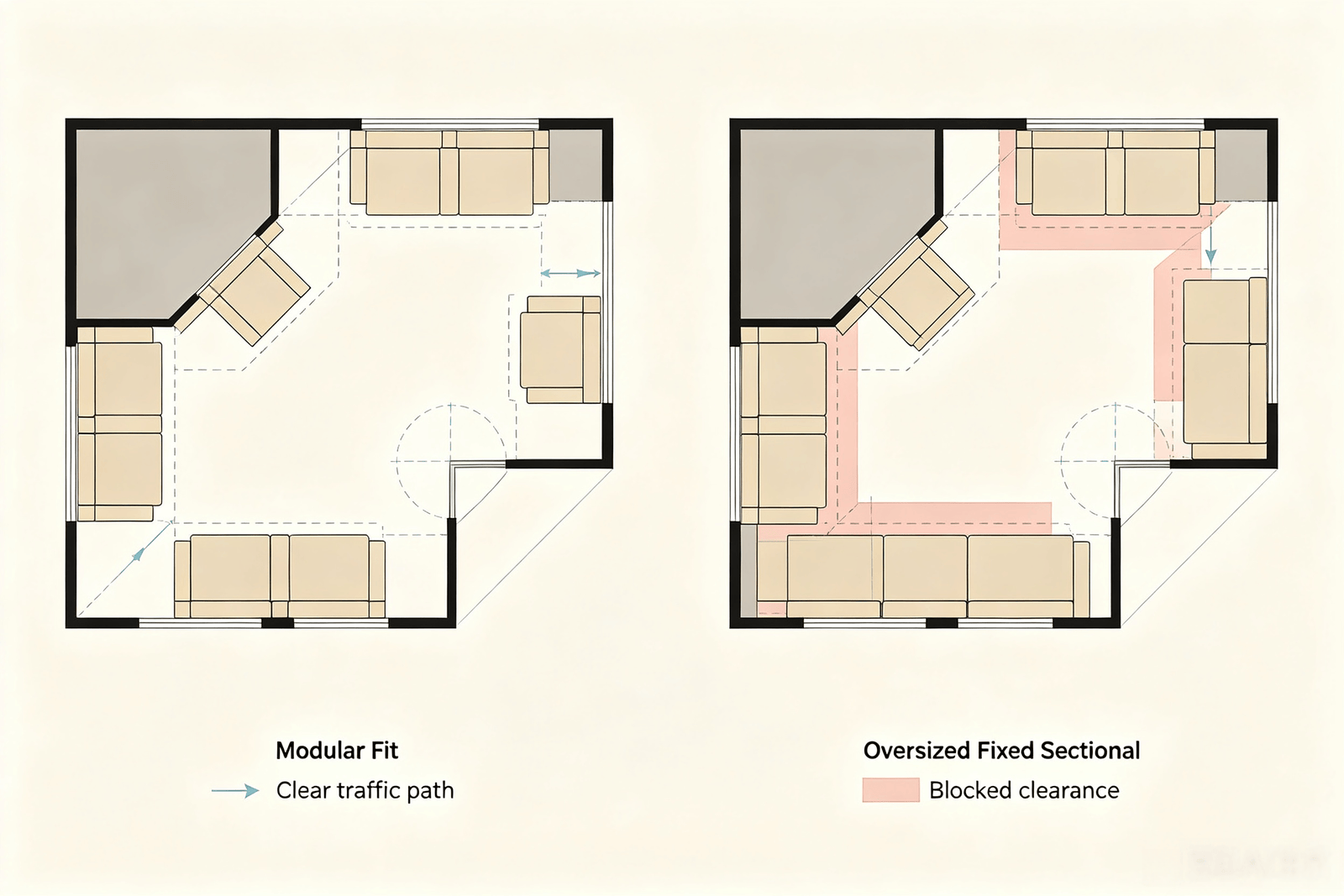
Buyers often assume the choice is about aesthetics or status. In reality, the first filter is almost always physical. Can the piece be delivered? Can it be positioned correctly once inside? And will that position still make sense in two years?
Matching sofa type to room reality
The table below reflects patterns we see repeatedly across custom orders from US and European buyers. It is not a rule — it is a starting framework for the conversation a designer should have with a client before any configuration is finalized.
| Room Condition | Recommended Starting Point | Reason |
|---|---|---|
| Large, square or rectangular open-plan room, no planned moves | Sectional or modular — either works | Fixed shape fills the space; reconfigurability isn't needed |
| Irregularly shaped room with alcoves or angles7 | Modular preferred | Individual units can be positioned to follow the room's geometry |
| Narrow hallways or tight stairwells on the delivery route | Modular preferred | Smaller individual units are easier to carry and position |
| Buyer may relocate or renovate within 3–5 years8 | Modular strongly preferred | Sections can move independently; layout adapts to new space |
| Client wants a built-in, furniture-as-architecture feel | Sectional preferred | Unified silhouette reads as a single design element |
| Client is adding one or two seats to an existing layout | Modular required | Sectionals cannot be extended without replacing the whole piece |
One thing we notice consistently: designers who measure doorways and hallways before finalizing a configuration almost never run into delivery problems. Designers who skip that step and rely on the client's estimate occasionally do. It takes one extra question to avoid a significant problem.
Room size matters too, but not always in the direction buyers expect. A very large room with a fixed, permanent layout can work beautifully with a sectional. A medium-sized room with an awkward corner or a client who tends to redecorate often is almost always better served by modular, even if the room could technically fit either.
Is Future Flexibility Worth Paying Attention to Before You Order?
Most buyers don't ask about it upfront. Does that matter?
Future flexibility — whether the sofa can be rearranged, moved, or extended as life changes — is the most commonly overlooked factor in a high-stakes custom sofa order. Buyers who skip this question often realize its importance only after they've committed to a configuration they can no longer adapt.

We're frequently asked, after the fact, whether a sectional can be repurposed for a new room after a renovation or a move. The honest answer is often uncomfortable: not easily, and sometimes not at all. The better time to ask the flexibility question is before the order is placed.
The questions that surface the real decision
When we work through a custom order with a designer or a buyer, a few questions almost always clarify whether modular or sectional is the right direction:
| Question | What the Answer Reveals |
|---|---|
| Is this a primary residence with no planned moves? | If yes, a sectional carries almost no risk from a flexibility standpoint |
| Is the client likely to renovate or redecorate in the next 3–5 years? | If yes, modular is the safer default — reconfiguration avoids a full replacement |
| Will the client want to add seats later? | Only modular supports this without starting over |
| Is the delivery route confirmed and measured? | If not, modular's smaller units reduce delivery risk significantly |
| Has the designer used this factory's modular connector system before? | If not, explicit confirmation of compatibility is required before ordering |
The designers we work with who ask these questions upfront consistently end up with fewer post-delivery problems and fewer clients who regret their configuration choice six months later. It's not a complicated conversation — it just needs to happen before production starts, not after.
One more thing worth saying directly: the choice between modular and sectional is not a question of which type is better9. It is a question of which type fits this room and this buyer's life. We support both at Linen World, with fully custom configurations, 200+ linen fabric options, and made-to-order flexibility for either approach — but the right answer still depends on the room, the delivery route, and what the buyer's life looks like three years from now.
Conclusion
Modular and sectional are not the same thing. The right choice depends on your room's shape, your delivery route, and how likely your layout is to change — not on which term sounds better.
If you are an interior designer sourcing custom linen upholstery for high-end residential projects, our 13-year custom upholstery factory in Foshan provides free room layout & delivery corridor measurement consultation, physical certified Belgian linen swatch kits, CAD furniture drawing service and long-term modular unit reorder guarantee. We supply both fixed sectionals and fully reconfigurable modular sofas with over 200 neutral & earth tone linen color selections. Reach out via WhatsApp to request fabric samples or full project specification support.https://linenworld.pro
"[PDF] Furniture and Mattresses - Attorney General of Maryland", https://oag.maryland.gov/resources-info/Documents/pdfs/CPD%20Publications/Furniture_and_Mattresses.pdf. Consumer protection and retail industry reports document furniture as a category with elevated return and dispute rates, often linked to product misrepresentation or buyer misunderstanding of specifications prior to purchase. Evidence role: statistic; source type: institution. Supports: Data on the frequency or cost of furniture ordering errors, including misidentification of product type, among consumers.. Scope note: Publicly available data on furniture return rates may not isolate modular-versus-sectional misidentification as a specific cause. ↩
"Sectional - Wikipedia", https://en.wikipedia.org/wiki/Sectional. The term 'sectional sofa' is broadly defined in furniture literature as a seating unit composed of multiple joined pieces intended to form a single, fixed configuration, typically an L- or U-shape, and not designed for independent rearrangement. Evidence role: definition; source type: encyclopedia. Supports: The standard industry definition of a sectional sofa as a fixed, multi-piece configuration designed to remain in one arrangement.. Scope note: General reference sources may not distinguish between sectional and modular with the same precision used in trade or manufacturing contexts. ↩
"22 Open Floor Plan Decorating Ideas Straight From Designers", https://au.pinterest.com/pin/22-open-floor-plan-decorating-ideas-straight-from-designers--307089268360678281/. Interior design and space planning literature identifies open-plan living areas with stable layouts as the most suitable context for large fixed-configuration seating, as the absence of spatial constraints removes the primary disadvantages of non-reconfigurable furniture. Evidence role: expert_consensus; source type: education. Supports: Interior design principles that recommend fixed-configuration large seating for stable, open-plan residential spaces.. Scope note: This principle is drawn from general space planning guidance; empirical studies comparing sectional performance across room types are not available in the published literature. ↩
"How to Connect and Disconnect Your Sectional - YouTube",
. Furniture engineering literature indicates that sectional sofa units are typically joined using hardware and upholstery finishing methods designed for a single fixed configuration, making post-manufacture reconfiguration structurally impractical without visible damage or misalignment. Evidence role: mechanism; source type: other. Supports: The structural and manufacturing reasons why production-built sectional sofas cannot be reconfigured into alternative layouts.. Scope note: This claim may vary by manufacturer; some higher-end sectionals use reversible connectors, so the limitation is not universal. ↩"Modular design - Wikipedia", https://en.wikipedia.org/wiki/Modular_design. Modular furniture is defined in design literature as a system of standardized, independent units that can be arranged and rearranged in multiple configurations, distinguishing it from fixed or integrated seating systems. Evidence role: definition; source type: encyclopedia. Supports: The definition of modular furniture as a system of independent, interchangeable units that can be reconfigured.. Scope note: Encyclopedic definitions of modular furniture may address the broader category rather than upholstered seating specifically. ↩
"Comprehensive life cycle assessment of 25 furniture pieces across ...", https://pmc.ncbi.nlm.nih.gov/articles/PMC12015272/. Consumer advocacy and product lifecycle literature notes that furniture manufacturers regularly update or discontinue product lines, fabric ranges, and component specifications, creating documented risks for buyers seeking to extend or replace modular systems purchased in prior years. Evidence role: general_support; source type: institution. Supports: The risk that furniture manufacturers discontinue specific unit configurations, fabrics, or connector systems over time, limiting future reorder compatibility.. Scope note: Systematic data on the rate at which modular sofa components are discontinued is not publicly available; this claim is supported by general product lifecycle principles rather than furniture-specific empirical evidence. ↩
"How To Arrange Your Furniture (7 Layout Mistakes To Avoid)",
. Interior design and space planning curricula identify room geometry as a primary determinant of furniture selection, noting that modular or freestanding units offer greater adaptability in rooms with alcoves, angles, or irregular boundaries compared to fixed-configuration pieces. Evidence role: general_support; source type: education. Supports: Space planning principles that support using reconfigurable or independent furniture units in rooms with non-standard geometry.. Scope note: Academic space planning guidance addresses the general principle; direct empirical comparison of modular versus sectional performance in irregular rooms is not well documented in published research. ↩"United States Migration/Geographic Mobility At A Glance", https://www.census.gov/topics/population/migration/guidance/acs-1yr.html. US Census Bureau data on residential mobility indicates that a meaningful proportion of American households relocate within any given five-year period, lending empirical support to the use of a 3–5 year horizon as a practical planning threshold for durable goods purchases. Evidence role: statistic; source type: government. Supports: Data on residential mobility rates that establish how frequently households relocate, supporting the relevance of a 3–5 year planning horizon for furniture decisions.. Scope note: Mobility statistics reflect population averages and do not account for demographic variation; individual relocation likelihood may differ substantially from aggregate rates. ↩
"Sustainable Material Selection for Interior Design Furniture - PMC", https://pmc.ncbi.nlm.nih.gov/articles/PMC12072337/. Research in environmental psychology and interior design practice supports the principle that furniture selection outcomes are mediated by spatial, behavioral, and lifestyle variables rather than product category alone. Evidence role: expert_consensus; source type: research. Supports: That furniture selection outcomes depend on contextual factors such as room geometry, lifestyle, and use patterns rather than inherent product superiority.. Scope note: Direct comparative research specifically on modular versus sectional sofa satisfaction is limited; broader furniture selection research is used as contextual support. ↩


