
There's a real cost to getting this wrong. You pay a lot for a piece, it looks great on delivery, and six months later the seat sags or the frame creaks. Or you walk away from a supplier who was actually offering something solid, because you didn't know what to look for.
The short answer is: there is no single test. Good quality depends on how the piece will be used, where it will live, and whether the construction signals match what the supplier is telling you. But there are physical checks — things you can do without a lab — that separate genuine quality from surface-level presentation.
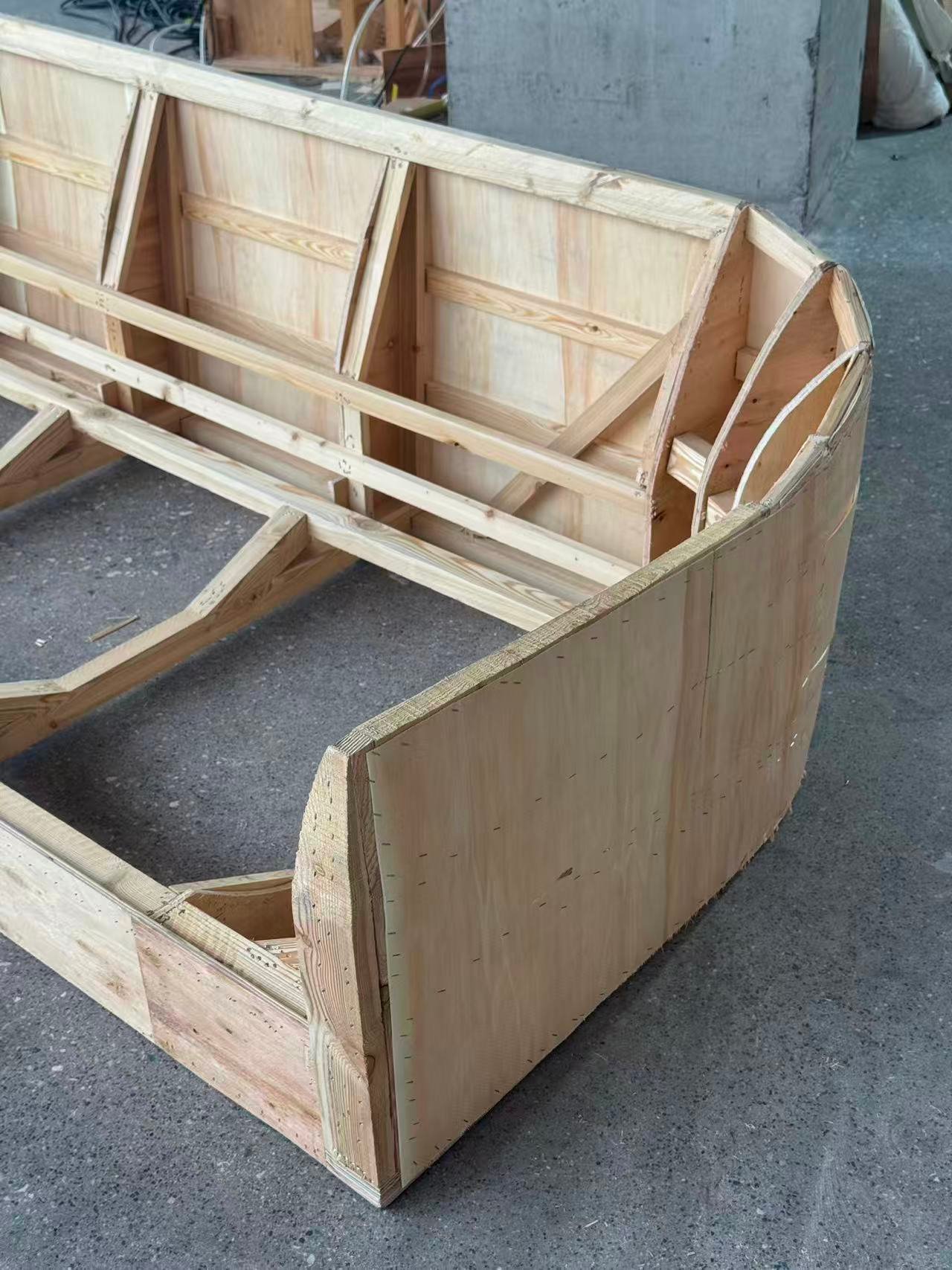
Most buyers go into this looking for a checklist. A set of numbers or spec thresholds that tells them: yes, this piece is good. That instinct makes sense. But a sofa that is perfect for a formal sitting room used twice a week is not the same as a sofa that needs to survive a family with two kids and a dog. The signals matter, but only when you read them against the right context. That is what this article is about.
Does the Frame Actually Tell You How Long a Sofa Will Last?
Customers ask us this more than anything else. They want to know: if I am spending serious money, what does the frame have to be?
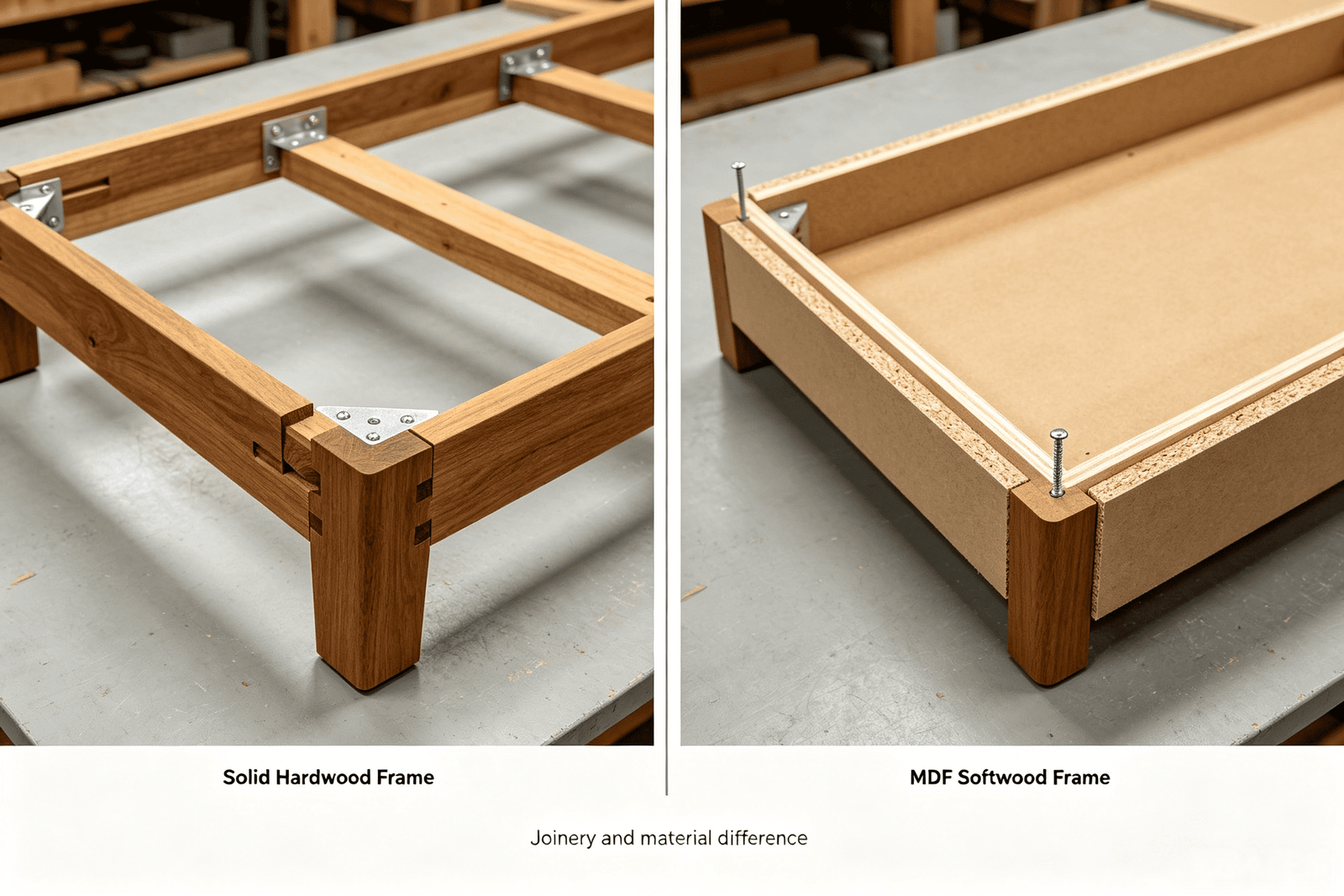
The frame is the single most reliable indicator of long-term durability. A well-jointed solid hardwood frame in a low-traffic formal room can last decades.1 The same frame in a high-use family space is table stakes, not a premium. What matters is whether the frame construction matches the load it will carry.
What does a good frame actually feel like?
Weight is the first thing we check. A solid hardwood frame has real mass. When you lift a corner of the sofa, it should feel dense. If it feels light — lighter than you expect — that is worth paying attention to. Lightweight frames are not automatically bad, but they carry more risk under repeated, heavy use.
Then check for wobble. Put both hands on the top back rail and apply light lateral pressure, side to side. A well-constructed frame barely moves. A frame with loose joinery or weak corner blocks will shift. That small movement is the early signal of what becomes a major structural problem after a year or two of use.
The joinery method matters too. Corner blocks — small triangular pieces glued and screwed into the inner corners of the frame — are a meaningful sign of care in construction.2 Not every buyer can see them, but you can sometimes feel them by pressing into the inside corners of the seat frame. When a manufacturer uses corner blocks, it tells you they are building for longevity, not just for the initial sale.
| Signal | What to Check | What It Tells You |
|---|---|---|
| Weight | Lift a corner | Dense = solid hardwood likely used |
| Wobble test | Press top rail laterally | Movement = weak joinery |
| Corner blocks | Press inner seat corners | Present = built for durability |
| Joinery visibility | Look under/inside frame if possible | Glue + dowel + screw = higher quality |
One more thing: if a supplier says "solid wood frame," ask if you can see the joinery. A confident manufacturer will show you. A supplier who deflects or sends you a spec sheet instead of a photo of the actual frame joint is worth being cautious about. In our production experience, buyers who ask to see the frame before ordering almost always make better decisions than those who take the claim at face value.
Can You Judge Linen Fabric Quality Without Sending It to a Lab?
You can. Most buyers do not know how, so they either trust the supplier's material description or they focus on visual appeal. Neither is enough.
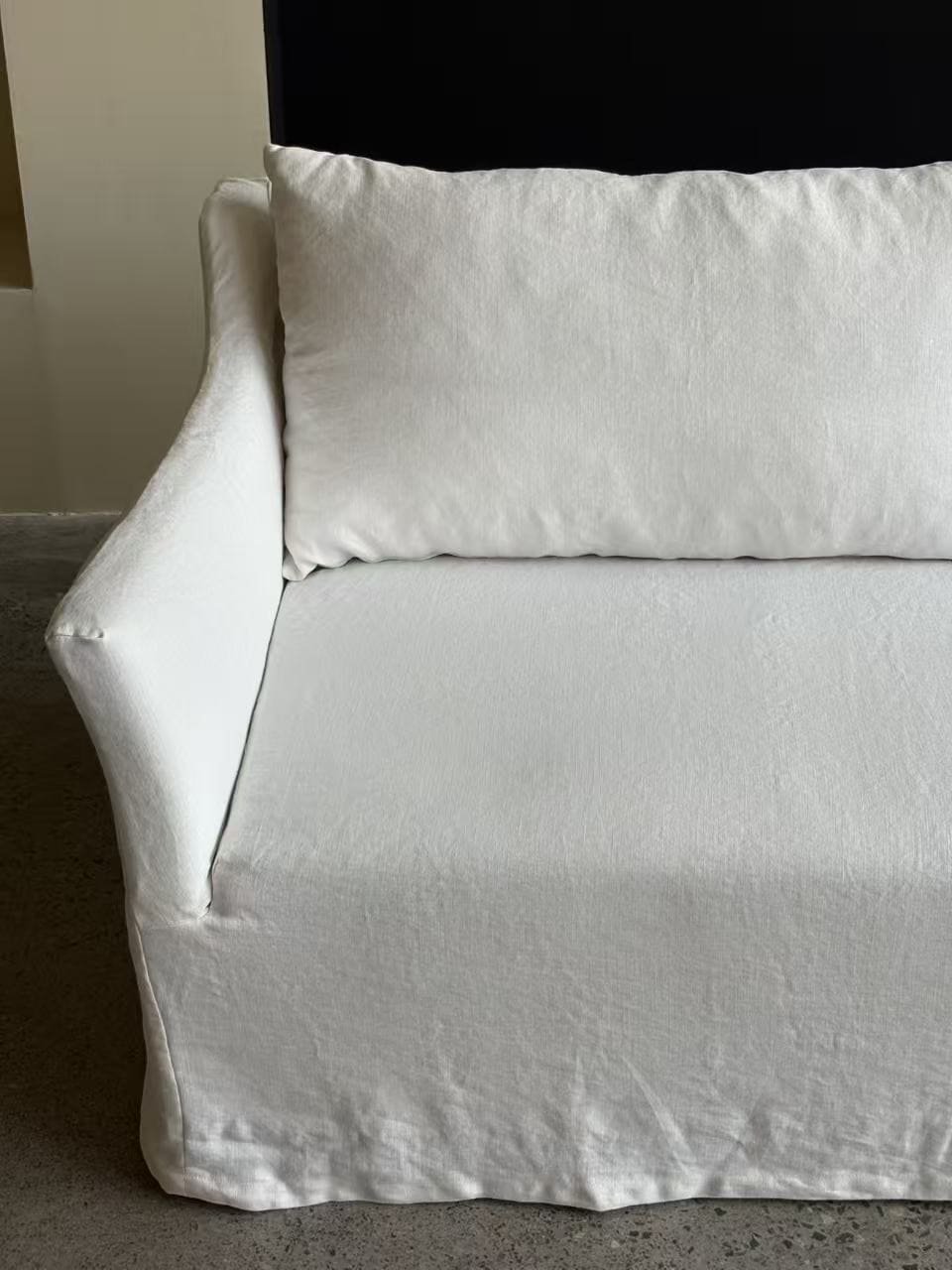
You can assess linen upholstery quality through three physical checks: how the fabric responds to a tug-stretch test, the thread density at the seams, and whether the hand-feel is consistent across different panels3 of the same piece. These checks do not require equipment — just your hands and attention.
How do you actually test linen fabric by hand?
Start with the tug-stretch test. Grip a section of the upholstered surface between two hands — not a seam, but the middle of a panel — and apply a slow, firm stretch. Good linen has a slight give and then resistance. It recovers its shape when you release. If it stretches easily and does not pull back, the weave is loose or the fabric weight is low. That matters a lot in high-contact areas like seat fronts and armrests.
Next, look at the seams. Run your finger along a visible seam line on the back or underside of the piece. The stitching should be tight, even, and straight. Count the stitches per inch if you can — more stitches per inch means more structural integrity at the seam.4 A seam that shows skipped stitches, uneven spacing, or puckering is a direct signal of inconsistent production. In upholstered furniture, seams fail before the fabric does. A weak seam under a seat cushion becomes a visible tear within months.
Then check panel consistency. Run your hand across the seat front, then the side panel, then the back. The texture and weight should feel the same. In commodity upholstery, panels are sometimes cut from different fabric rolls or different parts of a roll. The difference in feel is subtle but real. For a piece where aesthetic consistency matters — which it does for any designer application — uneven panels will show under different lighting conditions and become more obvious over time.
| Fabric Check | How to Do It | What You Are Looking For |
|---|---|---|
| Tug-stretch test | Stretch mid-panel firmly | Slight give, full recovery |
| Seam inspection | Finger-trace seam lines | Tight, even, no skips |
| Panel consistency | Hand across multiple panels | Same texture and weight throughout |
| Fabric weight | Fold a loose edge | Heavier fabric = denser weave |
One thing we see frequently in customer consultations: buyers focus heavily on color and pattern and almost not at all on fabric structure. Both matter. A beautiful color in a weak weave will pill, pull, or fade faster than a well-woven neutral.5 When you are choosing upholstery for a high-end project, the fabric's structural integrity should carry equal weight to its visual qualities.
How Do You Know If a Supplier's Claims Are Actually True?
This is the question most buyers do not know they should be asking. Spec sheets and product descriptions are written to sell. They are not written to help you verify anything. The gap between what is claimed and what is delivered is where most buyer regret lives.
The most reliable way to cross-check a supplier's claims is to ask for physical evidence of the specific thing they are claiming — not a catalog, not a certificate, but a photo of the joinery, a material swatch you can stretch, or a sample cushion you can compress and time. If the supplier cannot provide this, that gap is information.

What do experienced buyers actually ask for?
When a supplier claims a solid wood frame, the first question to ask is: what species, and can I see a photo of the corner joinery — not the finished piece, but the raw frame construction? A supplier who manufactures the way they claim will have this photo readily available. If they send you a marketing render or a finished product photo instead, you have not received an answer.
When a supplier claims high-density foam, ask what density in kg/m³ and what the ILD (indentation load deflection) rating is6. Then ask them to show you how you can verify this on receipt. A good supplier will explain that you can compress the cushion to half its height, hold for ten seconds, and time the recovery. A cushion that recovers fully in under three seconds is a basic quality signal.7 One that stays compressed or recovers slowly has lower resilience foam regardless of what the spec sheet says.
When a supplier claims handcrafted construction, ask what "handcrafted" means in their production process. It is not a protected term. In our production experience, handcrafted genuinely means that skilled workers are applying fabric over the frame by hand — cutting, stretching, and stapling — rather than using automated upholstery machinery8. The signal in the finished piece is in the corners. Machine upholstery produces consistent but sometimes stiff corners. Hand upholstery allows the fabric to be worked more carefully around curves and joints, which shows in the finish quality on visible edges.9
| Supplier Claim | What to Ask For | Physical Verification |
|---|---|---|
| Solid wood frame | Photo of raw joinery, not finished piece | Weight test, wobble test on arrival |
| High-density foam | Density (kg/m³) and ILD figure | Compress to half height, time recovery |
| Handcrafted upholstery | What specifically is done by hand | Inspect corner wrap and edge finish |
| Premium linen fabric | Fabric weight (gsm) and origin | Tug-stretch test, seam inspection on sample |
There is one more thing worth naming directly. A supplier who becomes defensive or vague when you ask verification questions is not necessarily hiding something — sometimes they simply have not been asked before, and the question catches them off guard. But a supplier who has been producing quality work for years will almost always be able to answer these questions without hesitation. They have the photos, the material data, and the process knowledge. The willingness to answer clearly is itself a quality signal.
Does Price Actually Reflect Quality in Upholstered Furniture?
Not automatically. Price reflects a lot of things — brand margin, retail markup, import costs, location overhead — many of which have nothing to do with construction quality. A £600 sofa and a £3,000 sofa can be made with identical frame construction and foam specification. The difference is often in finishing, fabric grade, and who is selling it.
Price is a context signal, not a quality guarantee. The question is not whether a piece is expensive but whether the price reflects genuine material and construction value — and the only way to know that is to check the construction signals directly, not to use price as a shortcut.
Where does the real cost difference come from in a high-quality sofa?
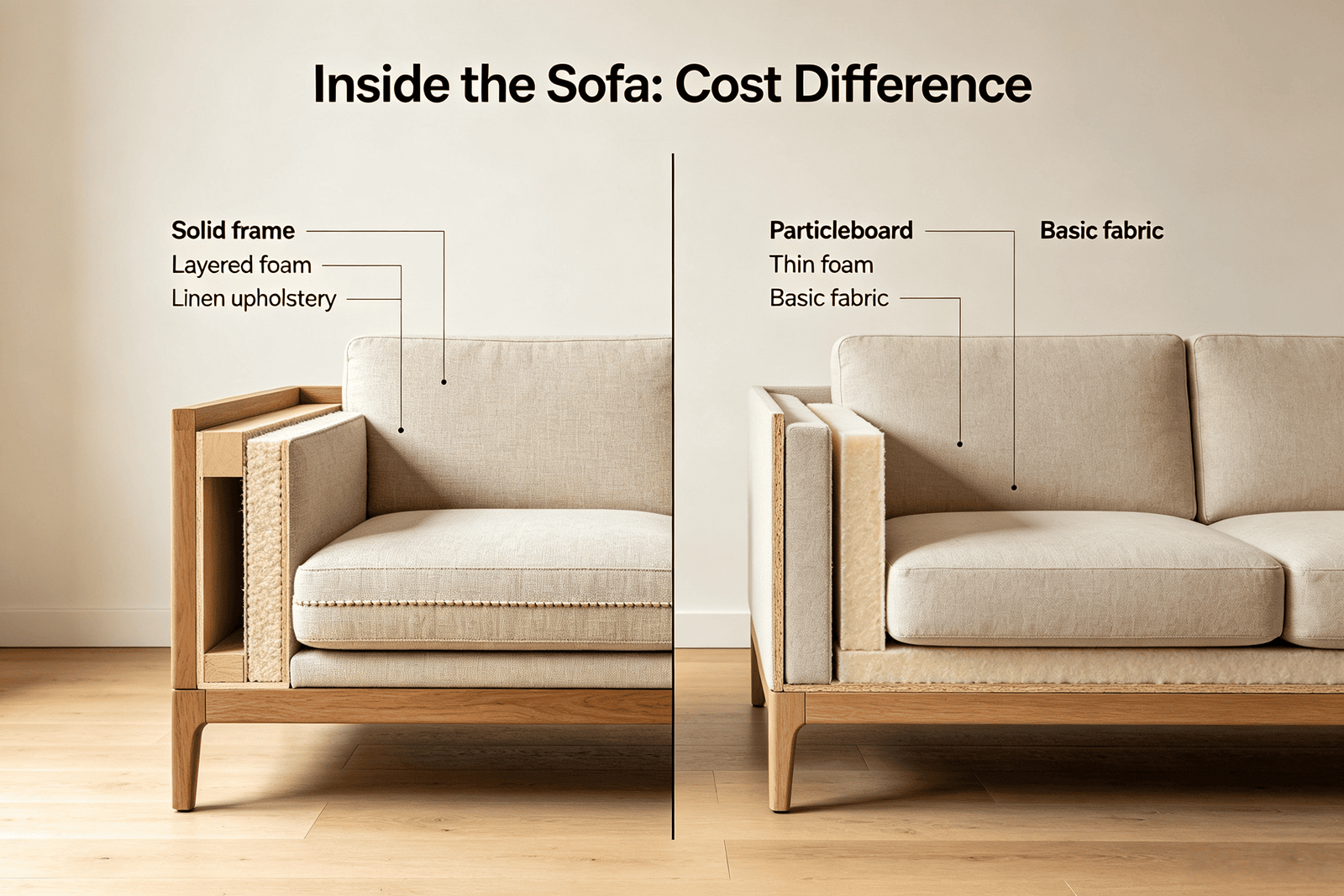
In our experience working with designers and buyers across different budget levels, the real cost difference between a genuinely high-quality piece and a mid-range one comes down to three things: the frame material and joinery, the foam grade and layering, and the labor time in upholstery.
Frame material and joinery is the biggest driver of long-term value. A frame built from kiln-dried hardwood with glued and screwed joinery takes more material cost and more skilled labor to produce than one built from MDF or fast-grown softwood10 with staple-and-glue joinery. The difference in the raw material cost alone can be significant. But that difference does not always reach the buyer as a proportional price difference — a well-known retail brand may charge a high price for a frame that is no better than a mid-range one, while a direct manufacturer may offer a hardwood frame at a much lower landed price.
Foam grade and layering is the second major cost driver. High-resilience foam — the kind that recovers quickly, maintains its height over years of use, and does not develop pressure channels — costs more than standard polyurethane foam.11 Many premium pieces also use a layered construction: a high-resilience foam core wrapped in a softer top layer for comfort. This layering takes more material and more time to assemble. You can check for this on delivery by sitting in the same spot repeatedly and checking whether the cushion is recovering fully. If it is not recovering after one week of use, the foam grade does not match the price.
Labor time in upholstery is the hardest to price-check but often the most visible in the finished piece. Hand-upholstered furniture takes longer. The corners are worked more carefully. The fabric tension is adjusted panel by panel. This shows most clearly in how the piece looks from different angles and in different light — particularly in the corners and the transition points where flat panels meet curves.
| Cost Component | What Drives the Price | How to Verify |
|---|---|---|
| Frame | Hardwood species, joinery method | Weight, wobble test, ask for raw frame photo |
| Foam | Density, ILD rating, layering | Compression recovery test |
| Upholstery labor | Hand vs. machine, skilled finishing | Corner inspection, panel tension consistency |
| Fabric | Weave density, fiber content, gsm | Tug-stretch, seam inspection, hand-feel |
Price becomes meaningful only when you can connect it to one of these components. A high price with vague spec information is a risk. A moderate price with clear, verifiable construction data is worth serious consideration.
Conclusion
Good quality in a sofa or chair is not a single standard — it is a match between construction signals, use context, and verified supplier claims. Check the frame, test the fabric, and ask for physical evidence.
If you are an interior designer sourcing custom linen upholstery for high-end residential projects, our 13-year custom upholstery factory in Foshan provides free furniture construction quality consultation, physical certified Belgian linen swatch kits, raw wood frame & foam sample photos for pre-order verification. We supply kiln-dried hardwood frame, layered high-resilience foam and hand-upholstered linen sofas & accent chairs with over 200 neutral & earth tone linen color selections. Reach out via WhatsApp to request fabric samples or full furniture specification support.https://linenworld.pro
"[PDF] Natural Durability of Wood: A Worldwide Checklist of Species". Research on wood material properties and furniture durability supports the association between dense hardwood species and extended structural service life under normal use conditions, though specific lifespan figures vary with species, joinery method, and load. Evidence role: general_support; source type: research. Supports: That solid hardwood frame construction is associated with significantly longer furniture service life compared to alternative materials.. Scope note: Most wood durability literature addresses structural timber rather than upholstered furniture frames specifically; extrapolation to sofa construction is contextual. ↩
"Furniture and Related Product Manufacturing: NAICS 337", https://www.bls.gov/iag/tgs/iag337.htm. Industry guidance on upholstered furniture construction identifies corner blocks as a reinforcement technique that distributes stress at frame joints, reducing the likelihood of racking failure under repeated lateral loads. Evidence role: expert_consensus; source type: institution. Supports: That corner blocks are a recognized construction feature associated with improved frame rigidity and longevity in upholstered furniture.. Scope note: Formal published standards on this specific feature are limited; the claim reflects widespread trade practice rather than a single citable standard. ↩
"Subjective Evaluation of Fabric Hand - Wilson College of Textiles", https://textiles.ncsu.edu/tpacc/comfort-performance/subjective-evaluation-of-fabric-hand/. Textile quality control practice incorporates hand-evaluation techniques including stretch-recovery assessment and seam inspection as preliminary indicators of fabric construction quality; these methods are recognized in textile education and trade guidance as accessible alternatives to laboratory testing for field evaluation. Evidence role: general_support; source type: institution. Supports: That physical hand-evaluation methods including stretch recovery and seam inspection are used in textile quality assessment as proxies for fabric structural integrity.. Scope note: Hand-evaluation methods are subjective and less precise than standardized laboratory tests such as ASTM D5034 (grab tensile strength) or ISO 13934; they are best understood as screening tools rather than definitive quality measures. ↩
"Effect of Different Sewing Parameters on Lockstitch Seam Strength ...", https://www.academia.edu/67471432/Effect_of_Different_Sewing_Parameters_on_Lockstitch_Seam_Strength_for_Denim_Fabric. Textile engineering literature documents a positive relationship between stitch density and seam strength up to an optimum threshold, beyond which fabric damage from needle penetration can reduce integrity; this principle applies to upholstery seam construction. Evidence role: mechanism; source type: paper. Supports: That stitch density is positively correlated with seam tensile strength in sewn textile assemblies.. Scope note: Optimal stitch density varies by thread type, fabric weight, and needle gauge, so a universal 'more is better' interpretation requires qualification. ↩
"The Influence of the Upholstery Textiles Structure on Their ... - PMC", https://pmc.ncbi.nlm.nih.gov/articles/PMC12654245/. Textile science literature links fabric pilling propensity to fiber type, yarn twist, and weave tightness, with looser weaves and lower-twist yarns showing greater susceptibility to surface fiber migration and pilling under abrasion; upholstery testing standards such as the Martindale abrasion test assess these failure modes under simulated use conditions. Evidence role: mechanism; source type: paper. Supports: That fabric weave density and yarn structure influence resistance to pilling, abrasion, and color degradation in upholstery textiles.. Scope note: Fading is primarily governed by dye chemistry and UV exposure rather than weave structure alone; the article's grouping of all three failure modes under weave quality is a simplification. ↩
"Indentation force-deflection - Wikipedia", https://en.wikipedia.org/wiki/Indentation_force-deflection. ASTM D3574 defines test methods for flexible cellular materials including indentation force deflection (IFD, equivalent to ILD) and density; these metrics are widely used in furniture manufacturing specifications to characterize foam firmness and mass per unit volume. Evidence role: definition; source type: institution. Supports: That foam density and ILD are standardized, independently defined metrics used to specify and compare upholstery foam performance.. Scope note: Acceptable value ranges for residential upholstery vary by application and are not universally standardized across manufacturers or markets. ↩
"Performances of green velvet material (PLON) used in upholstered ...", https://bioresources.cnr.ncsu.edu/resources/performances-of-green-velvet-material-plon-used-in-upholstered-furniture/. Foam industry testing protocols, including those referencing ASTM D3574, assess resilience through ball rebound and compression recovery measurements; rapid recovery is associated with high-resilience (HR) foam grades used in quality upholstered furniture. Evidence role: definition; source type: institution. Supports: That foam resilience is measurable through compression recovery time and that recovery rate is used as a quality indicator in furniture foam specifications.. Scope note: The specific three-second threshold cited in the article is a practical heuristic rather than a figure drawn directly from a published standard. ↩
"[PDF] CALIFORNIA UPHOLSTERED FURNITURE AND BEDDING LAWS". Consumer protection and trade labeling frameworks in major markets do not provide a standardized legal definition of 'handcrafted' for furniture; the term is applied inconsistently across manufacturers, making producer-specific clarification of the production process necessary for meaningful evaluation. Evidence role: definition; source type: institution. Supports: That 'handcrafted' is not a legally protected or uniformly defined term in furniture manufacturing, and its meaning varies by producer.. Scope note: This citation supports the absence of a universal definition rather than directly validating the article's specific characterization of hand upholstery processes. ↩
"The Best Portable Carpet and Upholstery Cleaner", https://www.nytimes.com/wirecutter/reviews/best-portable-carpet-and-upholstery-cleaner/. Upholstery trade literature and craft training resources describe hand application as enabling real-time tension adjustment around irregular forms, a capability that automated upholstery equipment addresses less flexibly, particularly on non-planar surfaces and tight corner radii. Evidence role: expert_consensus; source type: other. Supports: That manual upholstery techniques allow greater adaptability in fabric application around complex curves and joints compared to automated processes.. Scope note: Comparative quality assessments between hand and machine upholstery are largely qualitative and practitioner-reported; controlled empirical studies on this specific comparison are limited. ↩
"[PDF] Drying and Control of Moisture Content and Dimensional Changes", https://research.fs.usda.gov/download/treesearch/7143.pdf. Wood science literature establishes that kiln drying reduces moisture content and associated dimensional movement in timber, while hardwood species generally exhibit higher modulus of rupture and hardness values than fast-grown softwoods; MDF, lacking grain structure, has lower screw-holding strength relevant to joinery. Evidence role: mechanism; source type: education. Supports: That kiln-dried hardwood offers superior dimensional stability and mechanical strength compared to MDF and fast-grown softwood in structural furniture applications.. Scope note: Performance differences depend on specific species, drying schedule, and joinery design; the comparison is directional rather than absolute. ↩
"Enhancing the Fatigue Properties of Rigid Polyurethane Foam by ...", https://pmc.ncbi.nlm.nih.gov/articles/PMC11902567/. Polymer science and furniture testing literature indicates that high-resilience polyurethane foams, characterized by a higher ball rebound value and open-cell structure, demonstrate lower compression set under cyclic loading compared to conventional polyurethane foams, supporting their use in high-durability seating applications. Evidence role: mechanism; source type: paper. Supports: That high-resilience polyurethane foam exhibits lower compression set and better fatigue resistance than standard polyurethane foam under repeated loading.. Scope note: Specific performance differences depend on foam formulation, density, and test conditions; published comparative data for furniture-grade foams is more limited than for industrial applications. ↩


