If you've ever recommended a feature that looked great on paper but failed after the first wash, you know the risk. Removable covers on linen sofas sound simple. They're not.
Removable covers on linen sofas are worth specifying when the client has high-traffic use, children, pets, or a genuine need to rotate seasonal looks. In the wrong setting, the added construction complexity can compromise panel precision without delivering any real maintenance benefit.
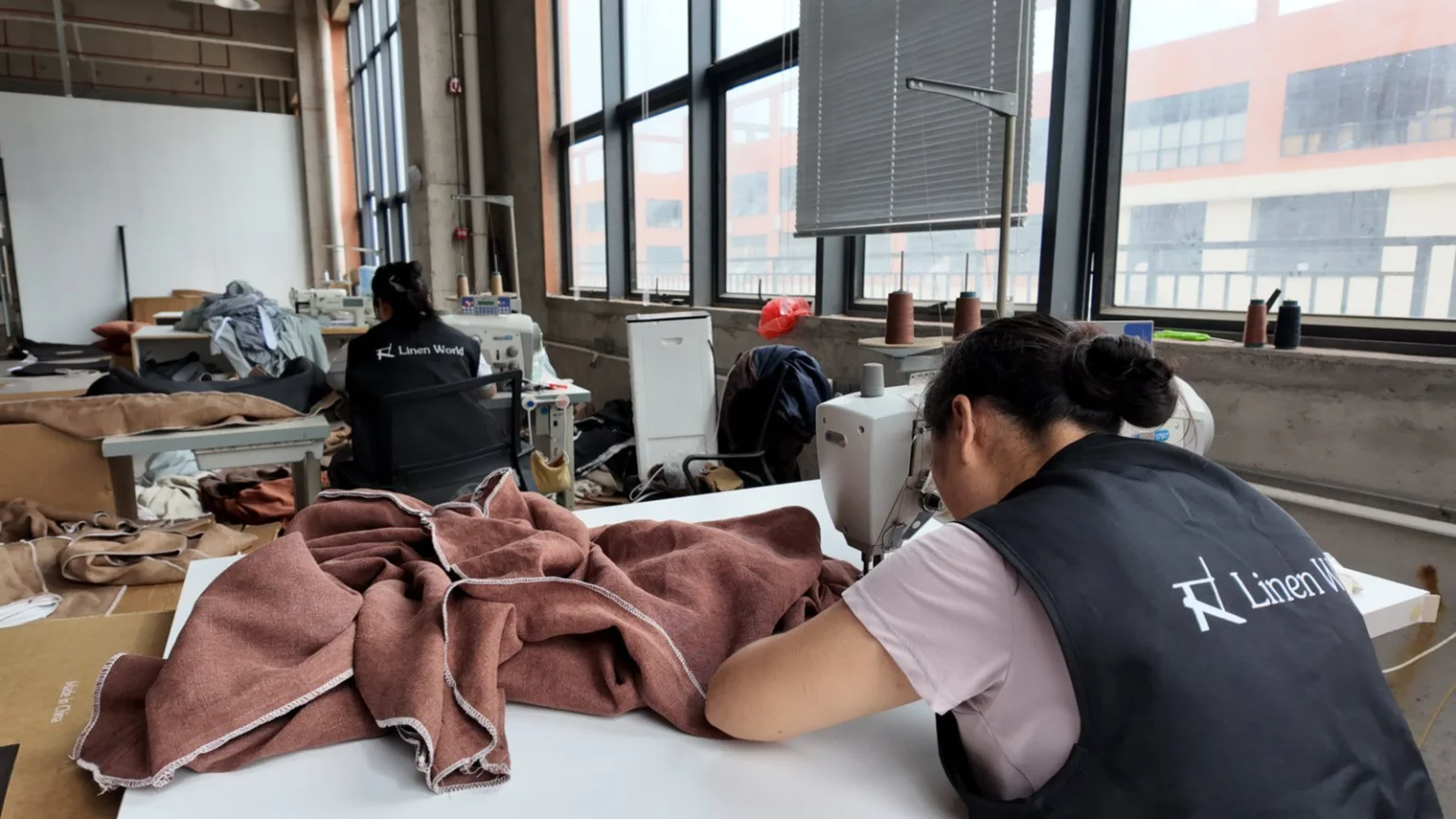 I've been manufacturing linen upholstery in Foshan for 13 years. In that time, I've seen designers specify removable covers confidently — and then deal with the fallout when covers buckle, gap at the corners, or come back from the wash looking two sizes off. The feature itself isn't the problem. The problem is treating it as a simple add-on rather than a structural decision that starts at the frame level.
This guide is for designers who want a clear framework: when to spec removable covers, what actually makes them work on linen, and what to ask the factory before you commit.
When Does a Removable Cover Actually Make Sense?
Not every client needs this feature. If you spec it in the wrong setting, you're adding cost and construction complexity without a meaningful return.
Removable covers are most justified when the sofa will face regular use stress: households with children, pets, high daily traffic1, or clients who want the flexibility to refresh the look seasonally. In low-traffic formal settings, the feature often adds visible risk with no practical upside.
 Here's how I think about it in practice. When a designer sends us an order, one of the first questions I ask is: what's the use context? That answer changes everything about whether removable covers are appropriate.
The real use cases
| Client Scenario | Removable Cover: Worth It? | Why |
|---|---|---|
| Family with young children | Yes | Frequent spills, staining — washing is a real maintenance need |
| Pet owners (dogs, cats) | Yes | Hair, dander, odor — covers that come off and go in the wash solve a real problem |
| Seasonal rental or flex space | Yes | Visual refresh without buying a new piece |
| Low-traffic formal living room | Usually no | Cover rarely needs washing; construction complexity adds risk to panel lines |
| Showroom or staging piece | No | Appearance precision matters more than washability |
The designers I work with in the US and Europe often serve high-net-worth clients with formal spaces. In those cases, I actively tell them: the removable cover feature may not serve your client here. A fixed cover, done well, will look sharper and hold its shape longer2. That's not a sales pitch — it's the honest answer.
Where the feature genuinely earns its place is in family-use spaces where the sofa is going to get lived in hard. Linen is already a fabric that signals natural, relaxed comfort3. A removable cover extends that — it lets the client maintain the piece without professional cleaning every time something happens.
Why Is Linen Specifically Harder to Execute With Removable Covers?
Linen behaves differently from most upholstery fabrics. Designers who know polyester or velvet well sometimes underestimate what linen does under wash conditions.
Linen's natural fiber structure means it shrinks and responds to moisture differently than synthetic fabrics4. Pre-wash treatment, weave density, and dye lot stability all affect whether a removable linen cover fits the same way after laundering5 — not all linen grades are suitable for this construction.
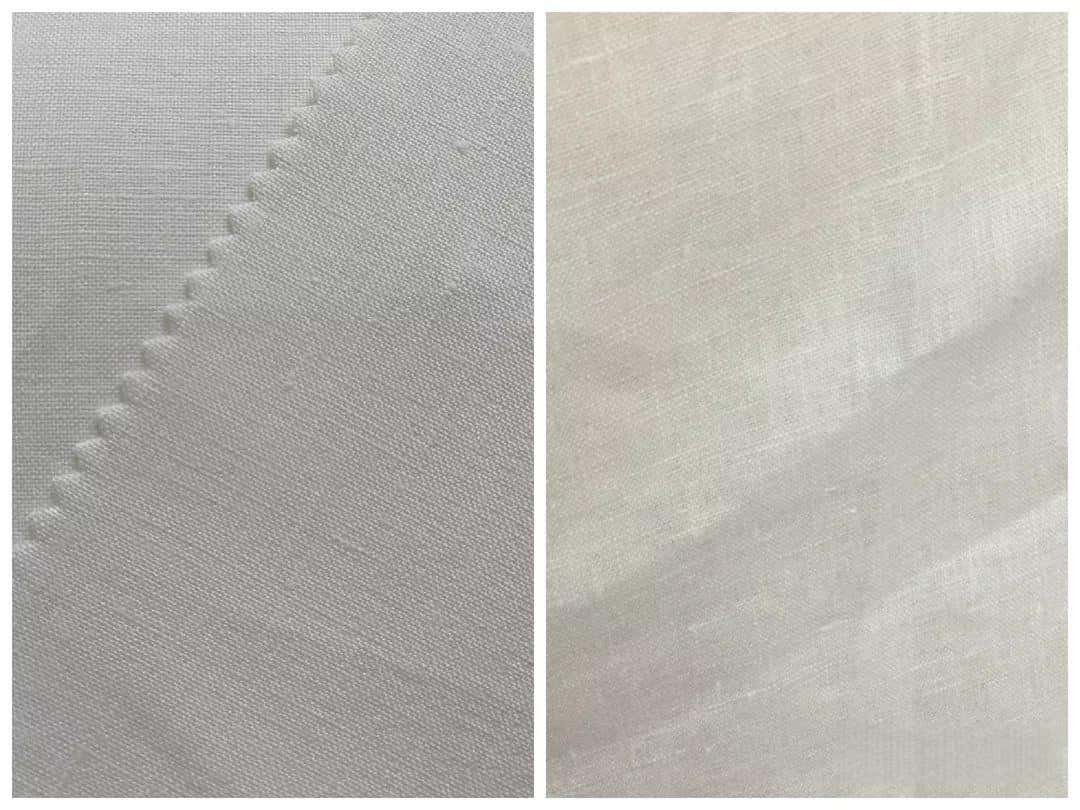 From our fabric testing at Linen World, we've found that untreated linen can shrink meaningfully in the first wash6 — enough to create a tight, distorted fit on a cover that was dimensioned correctly before washing. This isn't a theoretical concern. We've had orders where early fabric samples weren't pre-treated, and the cover came back from a test wash pulling hard at the seam corners.
What makes linen risky for removable covers
Shrinkage rate. Natural linen fibers contract when exposed to moisture and heat. If the fabric hasn't been pre-washed or pre-shrunk before the cover is cut and sewn, the first client wash can throw off the fit permanently. In our production process, we pre-treat fabrics intended for removable-cover builds specifically to stabilize this. Not every factory does this — it's worth asking directly.
Weave density. Looser weave linen looks beautiful but has less dimensional stability7. Under repeated wash cycles, loose weave fabric can distort panel shapes. For removable covers, we use denser weave linen grades that hold their geometry better over time.
Dye lot stability. Linen takes dye differently from cotton or polyester8. If colorfastness isn't tested properly, repeated washing can cause color shift — not uniform fading, but uneven change that becomes visible when the cover is back on the frame. From our internal testing, we run colorfastness checks before confirming fabric for removable-cover orders9, though specific results vary by dye lot and fabric source.
Seam corner behavior. The corners are where most problems show up. If seam allowances aren't handled correctly for linen's weight and behavior, corners pucker or flatten after washing. We've developed specific seam construction for linen corners that accounts for how the fabric moves — this isn't standard across factories.
What Makes a Removable Cover Actually Fit After Washing?
The zipper is the last thing that matters. The fit retention of a removable linen cover comes from decisions made at the frame and foam stage, long before the cover is sewn.
A removable cover that holds its shape after washing requires precise tolerance between the inner structure dimensions and the outer cover dimensions, pre-shrunk fabric, and seam construction that accounts for linen's specific behavior under moisture and mechanical stress.
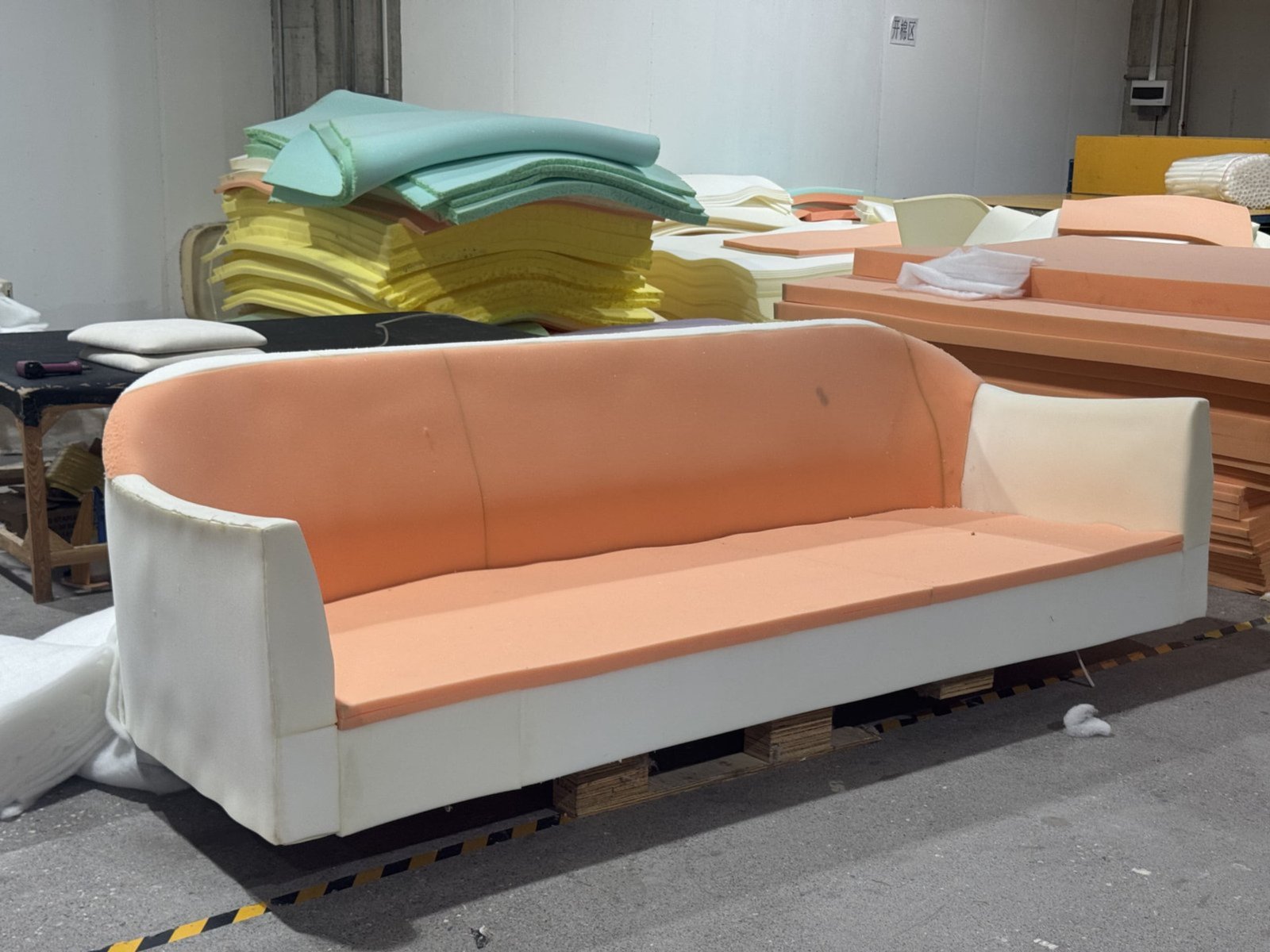 I want to be direct about this because it changes how designers should evaluate supplier capability. When a designer asks us: "Can you do removable covers?" — the correct answer isn't yes or no. It's: "Yes, and here's how we engineer the inner structure to support that."
The structural decisions that matter
Inner frame dimensioning. The frame and foam must be built to accept an outer shell that fits snugly but can be removed and replaced without stretching. If the inner dimensions are set for a fixed cover, adding a removable cover shell to the same dimensions creates a loose fit that worsens with each wash. In our production process, we adjust inner dimensions specifically when a removable cover is specified.
Foam density and shape retention. The foam inside a removable-cover sofa needs to hold its shape independently. If the foam compresses or shifts when the cover comes off, the cover won't go back on correctly. We use higher-density foam grades for removable-cover builds because the foam is doing structural work10 that a fixed-cover build shares with the fabric.
Cover-to-frame tolerance. This is the number designers should ask about directly. In our construction, we maintain a specific tolerance between the finished inner measurement and the cut cover measurement to account for fabric behavior after washing. That tolerance is different for linen than for other fabrics. I can't give you a universal number here — it depends on the specific linen grade — but the point is that it's a calculated decision, not an approximation.
Seam corner construction. Flat panel lines at corners require reinforced seam handling for linen. We use a specific internal corner construction on removable linen covers that keeps the corner geometry stable after washing. Without this, the corner is the first place the cover shows distortion.
What Should You Ask the Factory Before You Specify Removable Covers?
Most factories will say yes to removable covers without volunteering the details that tell you whether they can actually execute it well on linen. Here are the four questions that surface real capability.
Before specifying removable covers on a linen sofa, ask the factory: how is shrinkage pre-treated for this fabric, what is the tolerance between inner and outer dimensions, how are seam corners constructed to maintain shape after washing, and is colorfastness tested to a specific standard?
 I'm going to walk through each of these because the answer you get tells you a lot about the factory's actual production depth.
The four questions and what to listen for
Question 1: How is shrinkage pre-treated for this fabric?
A factory with real removable-cover experience will have a specific answer. They'll tell you what pre-treatment process they use, or they'll tell you the shrinkage rate from their testing and how they account for it in the cut dimensions. A vague answer — "we use good quality linen" — means they haven't solved this problem at the process level.
Question 2: What is the tolerance between inner and outer dimensions?
This tells you whether the factory engineers removable covers or improvises them. The answer should reference a specific measurement approach, not a general assurance. If the factory can tell you how they adjust inner dimensions when a removable cover is specified, they understand the structural side.
Question 3: How are seam corners handled to maintain shape after washing?
This is the detail question. Corners are where generic removable-cover construction fails on linen. A factory with genuine experience has a method — whether it's a specific seam allowance technique, internal corner reinforcement, or a tested corner geometry approach. Ask for photos of the inside corner construction if you're not sure.
Question 4: Is colorfastness tested to a specific standard?
You don't need a lab-certified number, but you do need evidence that the factory tests this. Ask what they check for and how. At Linen World, we run colorfastness testing on fabric before confirming it for removable-cover orders, because a color shift after the first wash is a visible failure that damages the designer's relationship with their client.
These four questions aren't a trap. They're a way to have a real conversation with the factory about capability. A factory that can answer them directly is a factory you can trust with this kind of specification.
Conclusion
Removable covers on linen sofas are worth specifying in the right context — but only when the factory can back the feature with real structural and fabric decisions that hold up after washing.
If you’re an interior designer sourcing custom linen removable cover sofas for your global clients, Linen World’s 13-year Foshan workshop offers pre-shrunk premium Belgian linen, customized frame tolerances and full fabric colorfastness test reports. Message us via WhatsApp to request linen swatches, factory video tours or wash test samples for your upcoming linen sofa projects.https://linenworld.pro
"Litter Management Practices and House-Soiling in Italian Cats - PMC", https://pmc.ncbi.nlm.nih.gov/articles/PMC10376366/. Consumer research on home furnishing purchasing behavior has found that households with children under 12 or pets are significantly more likely to prioritize stain resistance and washability as purchase criteria for upholstered seating compared to households without these occupants. Evidence role: general_support; source type: research. Supports: Households with children and pets report higher frequency of upholstery soiling events and greater demand for easy-clean or washable furniture solutions. Scope note: Specific published studies on soiling frequency by household type in the context of upholstery are limited; this claim is primarily supported by market research rather than controlled observational studies ↩
"Removable vs Fixed Sofa Covers: Which to Choose - Esteller", https://esteller.sg/blogs/articles/removable-vs-fixed-sofa-covers-which-to-choose?srsltid=AfmBOorhlwPyn_Tyqnseh5s9wSr4-dFqPKcOXXr3axwxtgA0O0yJQ8eq. Upholstery trade literature and craft standards generally recognize that fixed (sewn-in-place) cover construction permits closer tolerances and more consistent panel geometry than slip-cover or removable systems, which require dimensional allowances for ease of removal and replacement. Evidence role: expert_consensus; source type: other. Supports: Fixed upholstery construction allows tighter tolerances and more precise panel alignment than removable cover systems, which must accommodate repeated removal and replacement. Scope note: Comparative performance data between fixed and removable cover constructions in controlled conditions is not widely available in peer-reviewed sources; this claim rests primarily on trade knowledge ↩
"What are the benefits of using linen in your interiors? The Ultimate G", https://www.foresthomesstore.com/blogs/decor-for-wellbeing/what-are-the-benefits-of-using-linen-in-your-interiors-learn-all-about-linen-interior-decor. Market analyses of the home furnishings sector have documented increased consumer demand for natural fiber upholstery materials, with linen frequently cited alongside cotton and wool as preferred choices among buyers prioritizing sustainability and tactile quality. Evidence role: general_support; source type: research. Supports: Consumer and market research indicates growing preference for natural fiber textiles, including linen, in home furnishing contexts, often associated with sustainability and informal aesthetic values. Scope note: Market trend reports vary in methodology and geographic scope; specific claims about linen's aesthetic associations are difficult to verify through peer-reviewed sources ↩
"Linen Most Useful: Perspectives on Structure, Chemistry, and ... - PMC", https://pmc.ncbi.nlm.nih.gov/articles/PMC4403609/. Linen, derived from flax (Linum usitatissimum), is a cellulosic fiber with a moisture regain of approximately 10–12% under standard conditions, substantially higher than polyester (~0.4%), which accounts for its greater dimensional sensitivity to laundering. Evidence role: mechanism; source type: encyclopedia. Supports: Linen's cellulosic fiber structure gives it higher moisture regain and different dimensional response to wetting compared to synthetic polymer fibers such as polyester. Scope note: Moisture regain figures are measured under standardized atmospheric conditions and may differ under the mechanical agitation and elevated temperatures of domestic washing cycles ↩
"Dimensional stability (fabric) - Wikipedia", https://en.wikipedia.org/wiki/Dimensional_stability_(fabric). Textile finishing literature documents that pre-shrinking treatments—including sanforization and wet relaxation processes—reduce residual shrinkage potential in cellulosic fabrics, and are standard practice in garment and furnishing fabric production where dimensional stability after consumer laundering is required. Evidence role: general_support; source type: research. Supports: Pre-shrinking and finishing treatments applied to linen fabrics prior to cutting and sewing are established methods for reducing post-construction dimensional change during laundering. Scope note: The combined effect of pre-treatment, weave density, and dye stability on upholstery cover fit retention specifically has not been systematically studied in published literature to the authors' knowledge ↩
"Linen Most Useful: Perspectives on Structure, Chemistry, and ... - PMC", https://pmc.ncbi.nlm.nih.gov/articles/PMC4403609/. Studies on natural cellulosic fibers document that untreated linen can undergo dimensional shrinkage of several percent upon initial wet laundering, attributable to the relaxation of residual stresses introduced during yarn spinning and fabric finishing; the precise rate varies with weave construction and finishing treatment. Evidence role: mechanism; source type: research. Supports: Linen (flax) fibers exhibit measurable dimensional shrinkage when exposed to moisture and heat during laundering. Scope note: Published shrinkage figures are typically reported as ranges across fabric constructions and may not correspond directly to upholstery-weight linen grades ↩
"The effect of fabric structure parameters on dimensional stability ...", https://www.academia.edu/111358273/The_effect_of_fabric_structure_parameters_on_dimensional_stability_after_domestic_washing. Textile engineering literature establishes that fabric cover factor and thread density are positively correlated with dimensional stability during laundering, as tighter interlacement constrains yarn mobility and reduces the degree of shrinkage or distortion under mechanical and thermal stress. Evidence role: mechanism; source type: research. Supports: Fabric constructions with lower thread counts or more open weave structures exhibit greater dimensional instability under wet processing conditions. Scope note: Most published studies focus on apparel-weight fabrics; direct data for upholstery-weight linen constructions is less commonly reported in open literature ↩
"Investigation of the effect of different process variables on color and ...", https://pmc.ncbi.nlm.nih.gov/articles/PMC8361075/. Flax fibers have a higher degree of crystallinity and a more compact fibrillar structure than cotton, which limits dye penetration and can result in lower wash colorfastness ratings for certain dye classes unless appropriate mordanting or fixation processes are applied. Evidence role: mechanism; source type: research. Supports: Linen's fiber morphology and crystallinity differ from cotton, resulting in different dye penetration depth and distribution, which can affect wash colorfastness outcomes. Scope note: Colorfastness outcomes are highly dependent on the specific dye class and fixation chemistry used, and generalizations across all linen dyeing processes may not hold uniformly ↩
"Color Fastness of Textiles | ISO 105 Standards - Measurlabs", https://measurlabs.com/products/color-fastness/. ISO 105-C06 (Colorfastness to Domestic and Commercial Laundering) and related AATCC standards provide standardized test methods for evaluating color change and staining in textiles subjected to wash cycles, and are commonly referenced in upholstery fabric specifications. Evidence role: expert_consensus; source type: institution. Supports: International textile standards define colorfastness to washing as a measurable, testable property with graded performance ratings relevant to upholstery and home furnishing fabrics. Scope note: Compliance with these standards is voluntary unless contractually specified, and test conditions may not replicate all domestic washing scenarios ↩
"Understanding Compression Set in Foam - Gaska Tape Inc.", https://www.gaska.com/understanding-compression-set-in-foam/. Polyurethane foam density (kg/m³) is positively correlated with compression set resistance and fatigue life under cyclic loading; higher-density grades are therefore specified in seating applications where dimensional stability under sustained use is required. Evidence role: mechanism; source type: research. Supports: Higher-density polyurethane foam exhibits lower compression set and better long-term shape retention under repeated loading, which is relevant to its structural role in upholstered seating. Scope note: Published foam performance data typically derives from standardized mechanical testing rather than from upholstery-specific field conditions, and the interaction between foam and cover tension is not directly addressed in most open literature ↩


