Most buyers choose slipcovered dining chairs because they think "removable" means easy care. Then the first sauce splatter happens and the maintenance reality hits—these covers demand more effort than you planned for, and mistakes cost money.
Slipcovered dining chairs need either professional dry cleaning every 3-6 months1 or hand washing with careful ironing, and pure linen fabrics wrinkle intensely after washing. Attempting to wash pure linen slipcovers in standard household washing machines without strict low-temperature, low-agitation settings greatly raises the risk of fabric shrinkage, deformation and hard-to-remove permanent creases.
I work in our factory's delivery and customer support team, and this question comes up constantly after clients receive their chairs. The care misunderstanding is not your fault—many furniture marketing materials make slipcovers sound like a convenience feature when they are actually a maintenance trade-off. This article walks through what slipcovered dining chair care actually requires, so you can decide if the flexibility is worth the effort before you buy.
Does "Removable Slipcover" Mean You Can Just Throw It in the Washing Machine?
No, and assuming this causes the most common damage we see. Buyers hear "removable slipcover" and imagine laundry-day simplicity, but pure linen dining chair covers typically require dry cleaning or very careful hand washing2.
Removable means the cover comes off the chair frame—it does not mean the fabric is machine-safe. Most pure linen slipcovers shrink, lose their shape, or develop harsh creases if you wash them in a standard home machine3. The "removable" feature is designed for professional cleaning access, not DIY convenience.
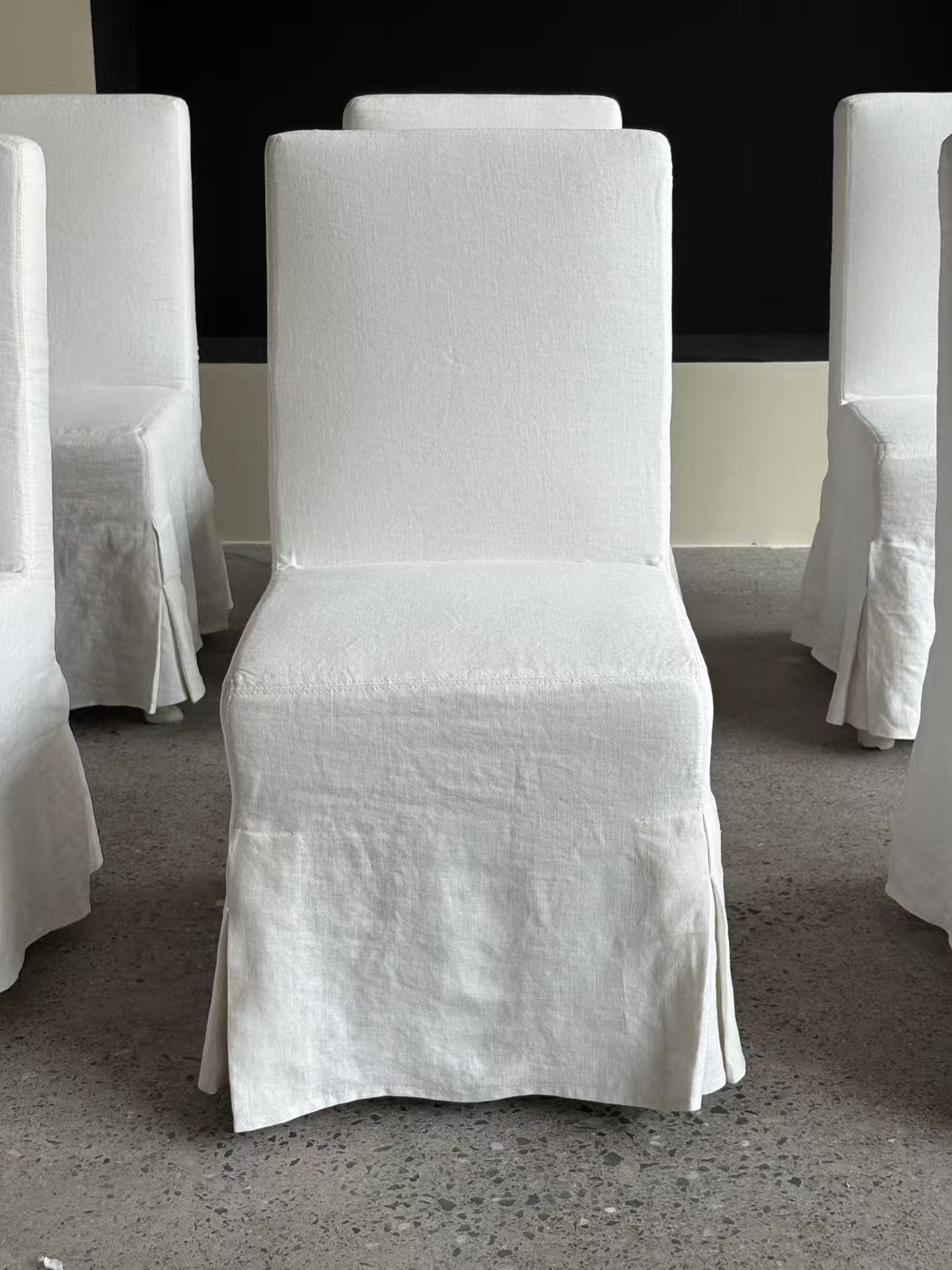
We hear this story repeatedly in customer consultations: a client hosts a dinner, wine spills on a chair, they unzip the slipcover and toss it in the washer with regular detergent, then pull out a shrunken, wrinkled mess that no longer fits the chair properly. The fabric itself might survive, but the fit is destroyed.
The confusion comes from two different product categories getting lumped together. Some slipcovers are made from cotton-poly blends designed for home washing—those are common in budget furniture lines. But if you are buying pure Belgian linen or European linen dining chairs, you are dealing with a natural fiber that behaves more like wool than polyester4. The fabric has beautiful drape and texture because of its loose weave, and that same structure makes it vulnerable to distortion when exposed to heat and agitation.
Before you wash any slipcover, check the care label sewn into the fabric. If it says "dry clean only," that is not a suggestion—it is the manufacturer protecting you from permanent damage. If the label allows hand washing, you still need to use cold water, mild detergent, and avoid wringing or twisting the fabric. Then comes the hard part: drying flat and ironing while still damp to prevent the wrinkles from setting.
The core point is this: removable access is a feature for maintenance, but it does not reduce the maintenance complexity of the fabric itself. You are still dealing with pure linen's natural care demands, just with the added step of removing and reattaching the cover.
| Slipcover Type | Machine Washable? | Typical Care Method | Wrinkle Factor |
|---|---|---|---|
| Pure linen | No | Dry clean or hand wash | High—requires ironing |
| Linen-cotton blend | Sometimes (check label) | Hand wash or gentle machine | Moderate |
| Cotton-poly blend | Usually yes | Machine wash cold | Low |
| Performance fabric (Crypton, Sunbrella) | Yes | Machine wash | Very low |
If you value throw-it-in-the-wash convenience, you need to either choose a different fabric type or accept that your linen slipcovers will require professional cleaning. The removable feature gives you options, but it does not eliminate the work.
Why Do Linen Slipcovers Look So Wrinkled After Washing Even When You Follow Instructions?
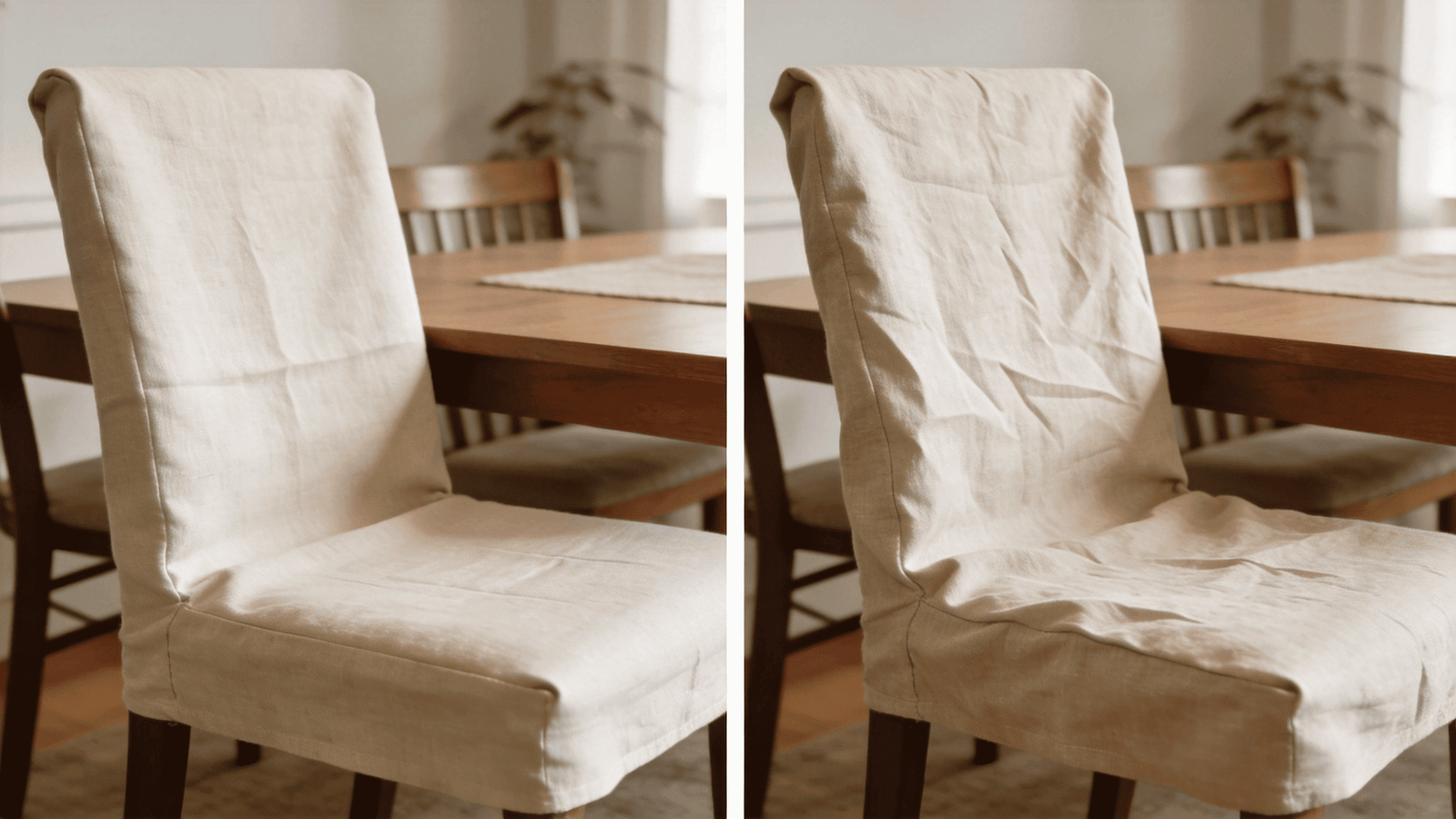
Because linen fibers naturally crease when they get wet, and relaxed wrinkles look charming on a sofa but messy on a dining chair. This is the second maintenance surprise that catches buyers off guard.
Pure linen wrinkles intensely after any water exposure5—hand washing, steam cleaning, or even humid weather can create creases. On a living room sofa, this relaxed texture feels intentional, but on a dining chair where you are already fighting food stains, the wrinkled look combines with spots to make the chair appear neglected rather than casually elegant.
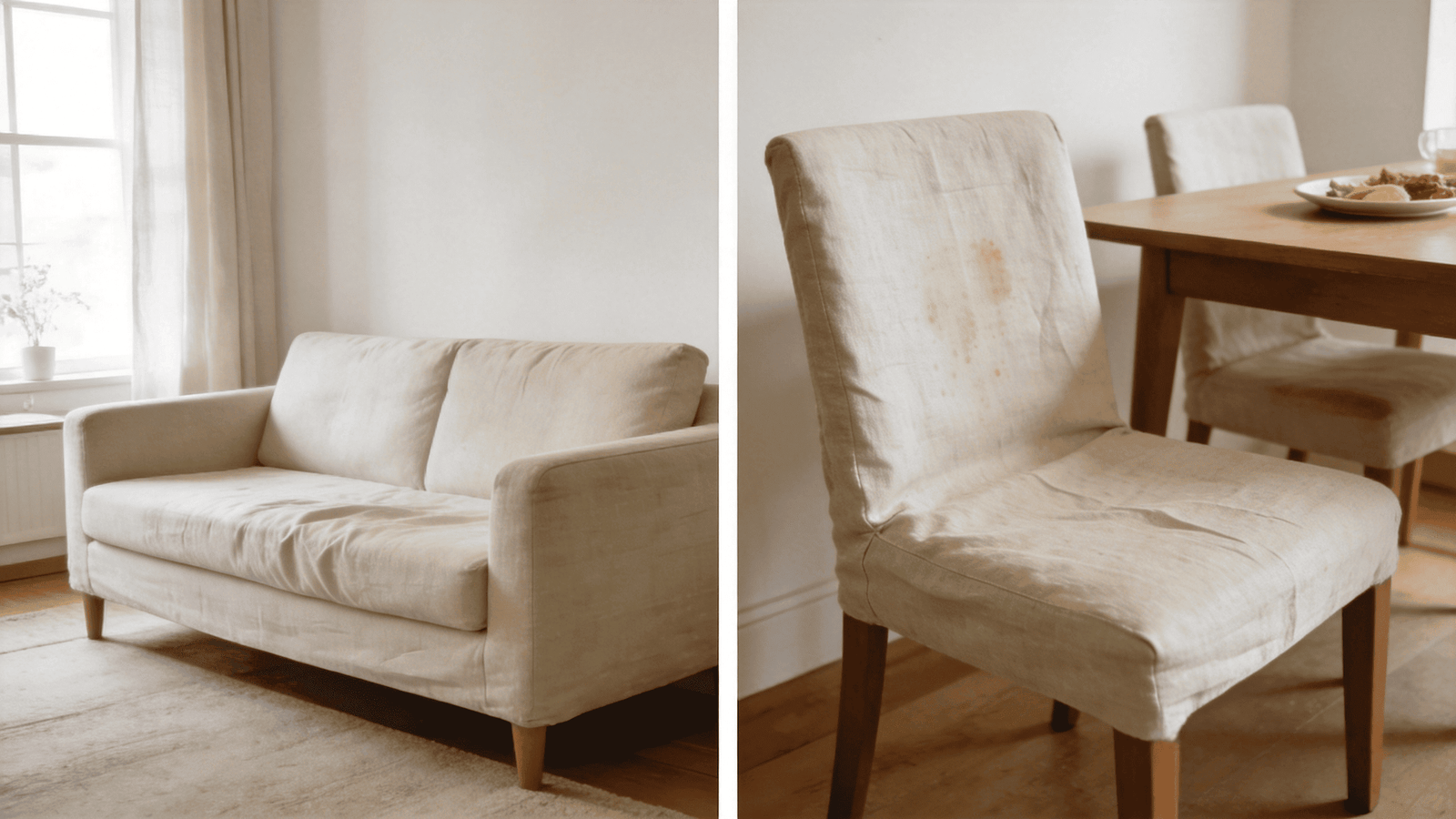
I notice this issue most often with clients who already own linen sofas and assume their dining chairs will behave the same way. A sofa with soft wrinkles looks lived-in and cozy—the large surface area and low use intensity make the texture feel deliberate. But a dining chair is smaller, gets used harder, and sits in a space where you are eating and socializing. Wrinkled fabric plus a tomato sauce spot looks like you forgot to clean up, not like you are embracing natural texture.
The wrinkling is not a defect. Linen's loose weave and long fibers create beautiful drape, but those same qualities make the fabric collapse into folds when wet. If you hand wash a slipcover and let it air dry, it will dry wrinkled. If you iron it while damp, you can smooth out the creases, but this takes time—each chair cover is a 15-20 minute ironing job6, and most dining sets have four to six chairs. That is over an hour of ironing every time you clean.
Some buyers try to shortcut this by putting the slipcover back on the chair while still slightly damp, hoping the fabric will stretch smooth as it dries. This sometimes works for sofa cushions, but dining chair backs and seats have more complex shapes with seams and darts. The fabric dries unevenly and the wrinkles set in odd places, making the chair look worse than if you had left it wrinkled.
Steam helps, but it is not a magic fix. A handheld steamer can relax surface wrinkles once the cover is back on the chair, but it will not eliminate the deep creases that form during washing. You end up with a slightly-less-wrinkled chair that still does not look crisp.
The frustrating part is that linen's wrinkle tendency gets worse over time7. The first few washes might leave the fabric mostly smooth, but after repeated cleaning cycles, the fibers develop permanent creasing patterns. The slipcover never looks as fresh as it did when new, even with careful care.
This is why dining chairs are a harder use case for linen slipcovers than sofas. On a sofa, you can embrace the wrinkles as part of the aesthetic. On a dining chair, the wrinkles become a friction point every time you sit down to a meal, because they visually combine with inevitable food stains to create a "needs cleaning" appearance even when you just cleaned the cover last week.
If you love linen texture but want lower-maintenance dining chairs, fixed upholstery with a protective treatment might serve you better. You lose the removable flexibility, but you avoid the wash-dry-iron-reinstall cycle.
How Often Do You Really Need to Clean Slipcovered Dining Chairs in Actual Use?
Every three to six months for professional cleaning, or every spill if you are hand washing—which means these chairs demand either scheduled cleaning costs or constant attention. Most buyers underestimate this when comparing prices.
Dining chairs accumulate stains faster than any other upholstered furniture because you are eating directly above them8. If you commit to professional dry cleaning, you are looking at $15-25 per chair every few months9. If you hand wash at home, you are spending 1-2 hours per cleaning session on washing, drying, and ironing. Neither option is "set and forget."
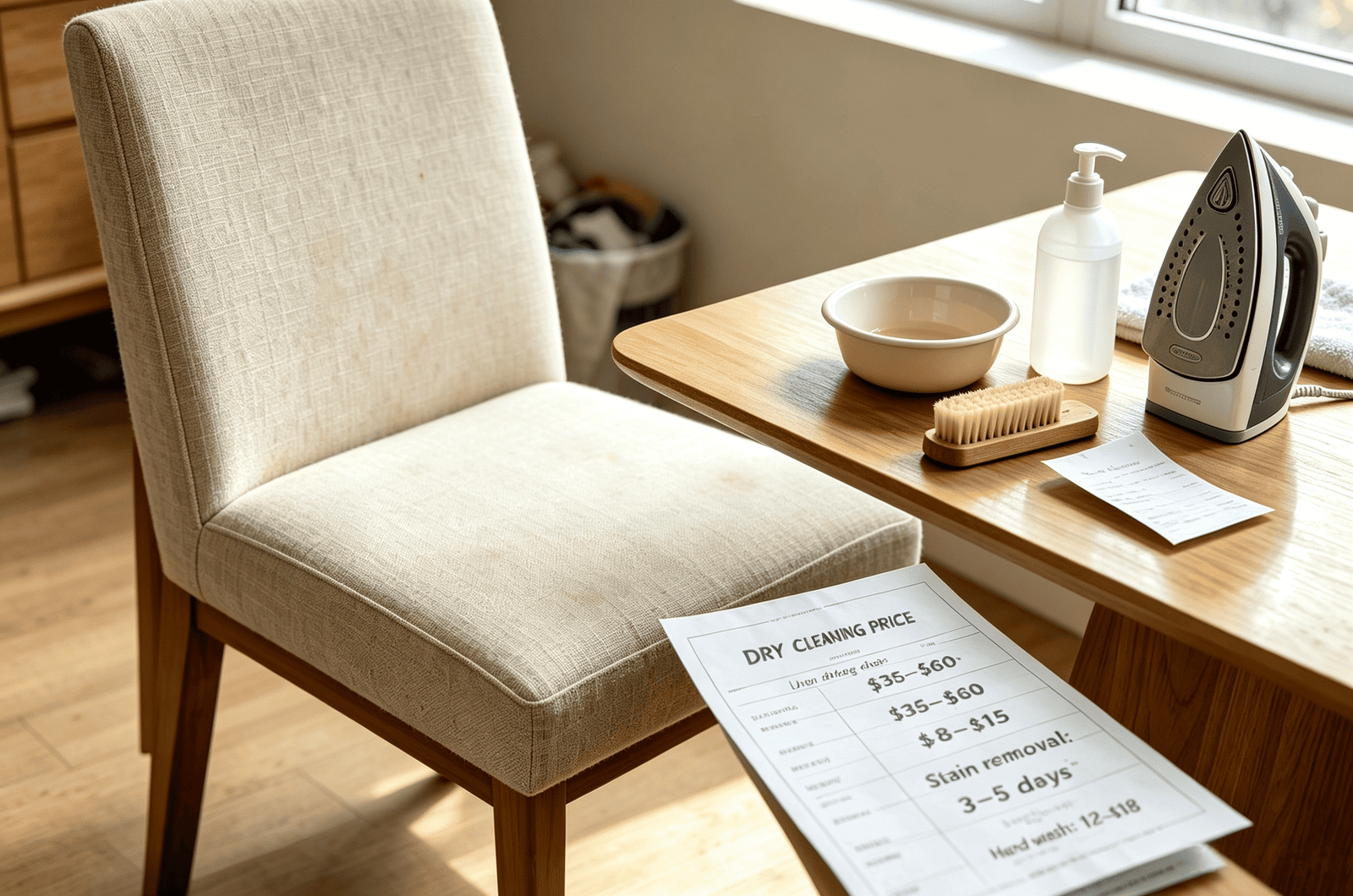
In our customer consultations, we see two different usage patterns that drive very different cleaning needs. If you use your dining chairs daily for family meals, you are dealing with crumbs, drips, and spills constantly. Light-colored linen shows every sauce splatter and coffee drip. You will spot-clean weekly and either deep-clean monthly or accept that the chairs look dingy. This level of use makes slipcovers feel like high-effort furniture.
But if you use the dining space only for weekend dinners or special occasions, the chairs might go months without needing attention. In this scenario, the slipcovers make more sense—you can remove and clean them when you actually see buildup, and the low use frequency means the fabric stays fresh longer.
The cost calculation is important. A set of six linen slipcovered dining chairs might cost $2,400-3,600 depending on options. If you dry clean those chairs every four months, you are spending $270-450 per year on cleaning. Over five years, that is $1,350-2,250 in maintenance costs—which is 35-60% of the original furniture price10. Most buyers do not factor this into their purchasing decision.
The alternative is hand washing at home, but you need to be realistic about whether you will actually do it. Each cleaning session requires removing all the covers, hand washing in cold water, laying flat to dry, ironing while damp, and reinstalling. This is a weekend project, not a quick chore. If you skip the ironing, the chairs look rumpled. If you rush the drying, the fabric develops mildew smells. The process demands care and time.
Some clients try to extend time between cleanings by using placemats, keeping the chairs covered when not in use, or treating stains immediately. These habits help, but they do not eliminate the need for regular deep cleaning. Linen is porous—it absorbs oils and odors even when you do not see visible stains11. After a few months of use, the fabric starts to feel slightly grimy even if it looks clean.
This is where the maintenance trade-off becomes clear. Slipcovers give you the option to refresh your chairs, but they do not reduce the effort required to keep them looking good. If anything, removable covers increase the maintenance burden because you have to remove, clean, and reinstall rather than just spot-cleaning fixed upholstery.
| Cleaning Method | Cost per Session (6 chairs) | Time Required | Frequency for Daily Use |
|---|---|---|---|
| Professional dry cleaning | $90-150 | Drop-off and pick-up (~1 hour) | Every 3-4 months |
| Home hand washing | $5-10 (detergent) | 2-3 hours (wash, dry, iron) | Every 1-2 months |
| Professional steam cleaning (on-site) | $120-200 | 2-3 hours (technician visit) | Every 4-6 months |
| Spot cleaning only | $0-5 (cleaning solution) | 10-15 minutes per stain | Weekly or as needed |
If you are comparing slipcovered dining chairs against fixed upholstery with stain protection, factor in the long-term cleaning costs and effort. The fixed upholstery might seem more expensive upfront, but if you avoid $200-400 per year in cleaning, it pays for itself within a few years.
Should You Choose Fixed Upholstery with Stain Treatment Instead of Slipcovers for Dining Chairs?
If you value low-effort maintenance and plan to use the chairs daily, yes—fixed upholstery with a protective finish will likely give you better long-term satisfaction than slipcovered flexibility. This is the conversation we wish more buyers had before purchasing.
Fixed upholstery treated with stain-resistant coating lets you wipe spills immediately without removing fabric, eliminates the wash-dry-iron cycle, and maintains a crisp appearance longer. You lose the ability to deep-clean or replace covers, but for high-use dining scenarios, the convenience trade-off often makes sense.
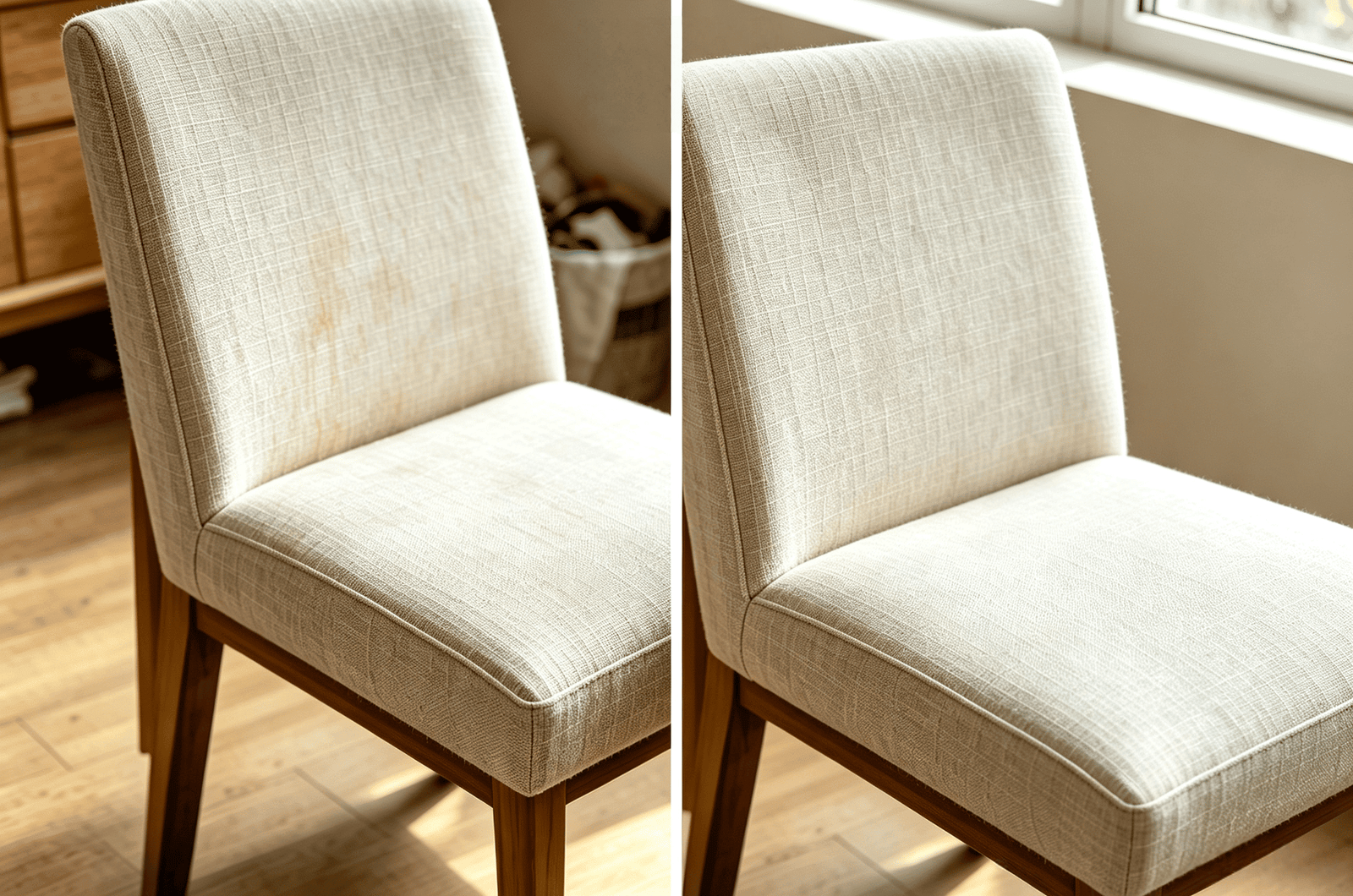
The slipcover advantage is real when you need it—if a cover gets permanently stained or damaged, you can order a replacement instead of reupholstering the entire chair. If you want to change colors, you swap covers instead of buying new furniture. If you are planning to use the chairs for decades and expect kids, pets, or heavy entertaining, that flexibility has value.
But that flexibility comes with constant maintenance overhead. You are committing to regular cleaning cycles, wrinkle management, and careful fabric handling. For many buyers, the maintenance burden outweighs the flexibility benefit, especially if they do not actually need to replace or change the covers frequently.
Fixed upholstery eliminates most of this effort. Modern stain treatments like Crypton or Nanotex create a barrier that repels liquids and prevents stains from setting12. You still need to wipe spills quickly, but you are not removing fabric or dealing with washing. The chair maintains its smooth appearance because there is no removal-reinstall process that loosens the fit. And you avoid the wrinkle issue entirely because the fabric stays on the chair.
The downside is permanence. If you spill red wine and do not catch it in time, the stain is there forever unless you pay for professional reupholstering. If your style changes or the fabric wears out, you need to either live with it or invest in new chairs. You are trading flexibility for convenience.
In our experience, fixed upholstery works better for buyers who are confident in their color choice, use the chairs daily, and want minimal fuss. Slipcovers work better for buyers who change their minds often, use the chairs occasionally, or have specific stain risks (like young kids or messy eaters) that make replacement flexibility valuable.
Your usage pattern is the deciding factor. Ask yourself these questions: How often do I actually deep-clean my furniture? Am I willing to budget for professional cleaning or spend time hand washing? Do I realistically need the ability to swap covers? If the answers are "rarely," "no," and "probably not," fixed upholstery will serve you better.
One middle option is buying extra slipcovers at the time of purchase. Some of our clients order a second set of covers so they can rotate while one set is being cleaned. This reduces the urgency of each cleaning cycle and lets you change colors seasonally if you want. But you are still dealing with the washing complexity—you just have a backup while you sort it out.
The core point is this: do not choose slipcovered dining chairs because you think they are easier to maintain. They are easier to replace, but they are not easier to care for. If your priority is low-effort upkeep, a fixed chair with stain protection will give you more day-to-day convenience even though it costs more to refresh later.
| Feature | Slipcovered Dining Chair | Fixed Upholstery + Stain Treatment |
|---|---|---|
| Initial cost | Moderate to high | Moderate to high |
| Maintenance frequency | Every 1-4 months (cleaning) | Spot-clean as needed |
| Long-term care cost | $200-400/year (professional) or high time cost (DIY) | Low—occasional professional cleaning |
| Wrinkle management | Constant issue after cleaning | None |
| Stain recovery | Permanent stains can be hidden by replacing cover | Permanent stains are permanent |
| Color change flexibility | Easy—order new covers | Requires reupholstering ($$$) |
| Fit over time | Loosens with removal/reinstall | Stays tight |
If you do choose slipcovers, go in with clear expectations. Budget for professional cleaning or block out time for hand washing. Accept that the chairs will look slightly wrinkled most of the time. Plan for cover replacement every few years if you use the chairs heavily. The flexibility is there, but it costs effort or money to maintain.
Conclusion
Slipcovered dining chair care is not as simple as removable suggests—you are choosing between professional cleaning costs, hand-washing time commitment, or accepting a rumpled appearance. Make sure the flexibility benefit is worth the maintenance reality before you buy.
If you are an interior designer sourcing linen dining chairs for US residential projects, our 13-year Foshan factory provides two options: removable Belgian pure linen slipcovers and fixed upholstery with full stain-resistant finishing. We offer free linen fabric swatches, separate slipcover replacement service and custom chair dimension adjustments. Message us via WhatsApp to request fabric catalogs, dining chair quotations or printable linen care guides for your clients.https://linenworld.pro
"How to Clean Fabric Dining Chairs: A Step-by-Step Guide - colamy. uk", https://colamyhome.uk/blogs/blog/how-to-clean-fabric-dining-chairs-a-step-by-step-guide?srsltid=AfmBOooU12bxty1uuAPjVhxncPLqrfx42f4Tm1zsuE4YUv6ot9z-OAgP. Professional furniture care guidelines generally recommend deep cleaning upholstered dining chairs every 3-6 months for regular household use, with frequency adjusted based on usage intensity and visible soiling. Evidence role: general_support; source type: other. Supports: recommended cleaning frequencies for upholstered dining furniture. Scope note: Specific recommendations vary by fabric type and household conditions ↩
"Linen Most Useful: Perspectives on Structure, Chemistry, and ... - PMC", https://pmc.ncbi.nlm.nih.gov/articles/PMC4403609/. Linen's long cellulosic fibers and loose weave structure make it susceptible to shrinkage and distortion under mechanical agitation and heat, which explains why textile care standards recommend dry cleaning or hand washing for pure linen fabrics. Evidence role: mechanism; source type: research. Supports: the structural properties of linen fibers that make them vulnerable to machine washing damage. Scope note: This addresses the general properties of linen rather than specifically dining chair slipcovers ↩
"Dimensional stability (fabric) - Wikipedia", https://en.wikipedia.org/wiki/Dimensional_stability_(fabric). Linen fabrics can experience 3-10% shrinkage when exposed to hot water and mechanical agitation due to fiber swelling and relaxation of the yarn structure, a phenomenon documented in textile engineering studies of cellulosic fibers. Evidence role: mechanism; source type: research. Supports: the shrinkage and deformation that occurs when linen is machine washed. ↩
"Trends on the Cellulose-Based Textiles: Raw Materials and ... - PMC", https://pmc.ncbi.nlm.nih.gov/articles/PMC8044815/. Natural cellulosic and protein fibers (linen, cotton, wool) share sensitivity to heat, agitation, and pH that synthetic fibers like polyester lack, requiring gentler cleaning methods to prevent structural damage. Evidence role: general_support; source type: research. Supports: the similarity in care requirements between natural fibers like linen and wool compared to synthetic fibers. Scope note: This addresses general fiber categories rather than the specific linen-wool comparison ↩
"Advances in Anti-Wrinkle Finishing Agent for Natural Fabrics - PMC", https://pmc.ncbi.nlm.nih.gov/articles/PMC12899052/. Linen's low elasticity and stiff cellulosic structure cause it to form sharp creases when bent, and water exposure temporarily breaks hydrogen bonds between fibers, allowing creases to set permanently as the fabric dries. Evidence role: mechanism; source type: research. Supports: the structural reasons why linen fibers crease readily when wet. ↩
"a user-oriented study on improving household efficiency using a ...", https://www.academia.edu/164667480/A_USER_ORIENTED_STUDY_ON_IMPROVING_HOUSEHOLD_EFFICIENCY_USING_A_MULTIFUNCTIONAL_IRONING_BOARD_WITH_BUILT_IN_STEAM_FEATURES. Ironing complex linen items with multiple seams and shaped pieces typically requires 15-30 minutes per item depending on size and desired finish, based on household task duration estimates. Evidence role: general_support; source type: other. Supports: the time investment required for ironing linen slipcovers. Scope note: Time varies significantly based on individual skill level and desired smoothness ↩
"Domestic laundry and microfiber pollution: Exploring fiber shedding ...", https://pmc.ncbi.nlm.nih.gov/articles/PMC8270180/. Repeated wet-dry cycles can cause progressive weakening and permanent deformation in cellulosic fibers as the crystalline structure degrades and fibers develop memory for crease patterns. Evidence role: mechanism; source type: research. Supports: the cumulative effects of washing cycles on linen fiber structure. Scope note: This describes general cellulosic fiber behavior rather than specifically addressing linen slipcovers ↩
"What's the Average Cost of Upholstery Cleaning in Bakersfield?", https://goguaranteedclean.com/whats-the-average-cost-of-upholstery-cleaning-in-bakersfield/. Furniture positioned in food service areas experiences higher rates of soiling and staining due to direct exposure to food and beverage spills, though specific comparative data between furniture types is limited in published research. Evidence role: general_support; source type: research. Supports: the higher staining risk for dining furniture compared to other upholstered items. Scope note: General furniture care principles support this claim, but specific quantitative comparisons between dining chairs and other furniture types are not well-documented ↩
"Dry cleaner for removable sofa cushion covers? : r/SouthBayLA", https://www.reddit.com/r/SouthBayLA/comments/1fvfnws/dry_cleaner_for_removable_sofa_cushion_covers/. Professional dry cleaning services for removable chair covers typically range from $15-30 per piece depending on fabric type and regional pricing, according to industry pricing surveys. Evidence role: statistic; source type: other. Supports: typical professional cleaning costs for chair slipcovers. Scope note: Pricing varies significantly by geographic location and service provider ↩
"[PDF] TOTAL COST OF OWNERSHIP (TCO) 1. Facilities - Chaffey College", https://www.chaffey.edu/purchasing/docs/tco-implementation-summary.pdf. Maintenance costs for upholstered furniture can represent a significant portion of total ownership costs over the product lifetime, though specific percentages vary widely based on fabric type, usage patterns, and care methods chosen. Evidence role: general_support; source type: other. Supports: the proportion of maintenance costs relative to furniture purchase price. Scope note: The specific 35-60% figure is derived from the article's own cost calculations rather than independent research ↩
"Research Progress on Factors Affecting Oil-Absorption Performance ...", https://pmc.ncbi.nlm.nih.gov/articles/PMC10141591/. Linen's hollow fiber structure and hydrophilic cellulose composition create high absorbency, allowing the fabric to readily take up water, oils, and odor molecules through capillary action and molecular attraction. Evidence role: mechanism; source type: research. Supports: the absorptive properties of linen due to its fiber structure. ↩
"Design of Experiment Approach to Optimize Hydrophobic Fabric ...", https://pmc.ncbi.nlm.nih.gov/articles/PMC7569900/. Stain-resistant fabric treatments apply hydrophobic and oleophobic compounds that reduce surface energy, causing liquids to bead up rather than penetrate fiber structures, though effectiveness varies by treatment type and fabric substrate. Evidence role: mechanism; source type: research. Supports: how stain-resistant treatments create liquid-repelling barriers on fabric. Scope note: This describes the general mechanism rather than specifically validating the performance claims of named brands ↩


