You chose the wrong fabric once. The sofa looked perfect in photos, felt wrong in the room, and started to show wear by year two. That mistake is expensive — and avoidable.
Belgian linen and cotton are both legitimate upholstery choices. Belgian linen offers superior durability, natural texture, and ecological credentials for high-design, low-traffic spaces. Cotton is softer, easier to maintain, and better suited for high-traffic family environments. The right choice depends on your project, not on which label sounds more premium.
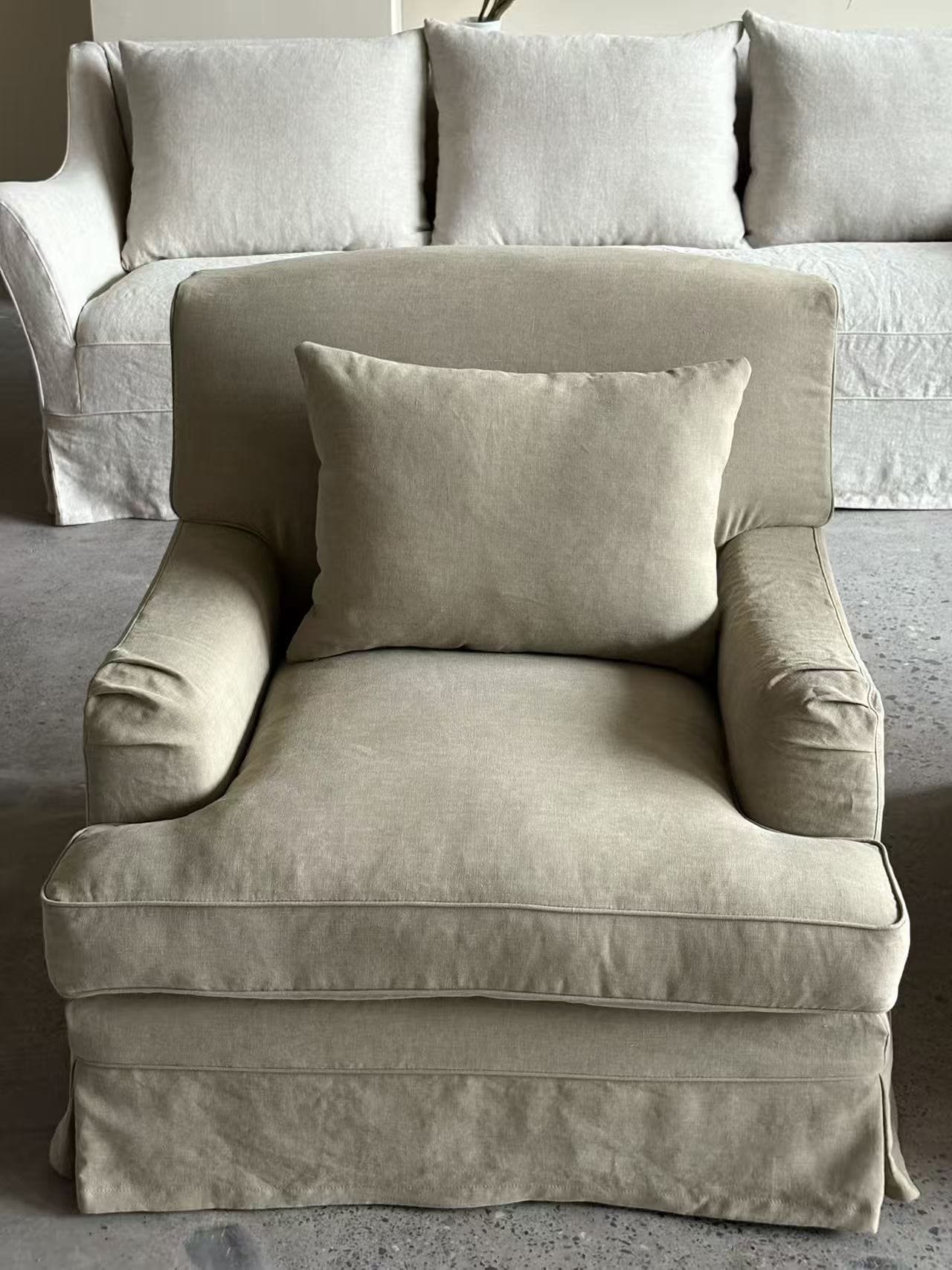
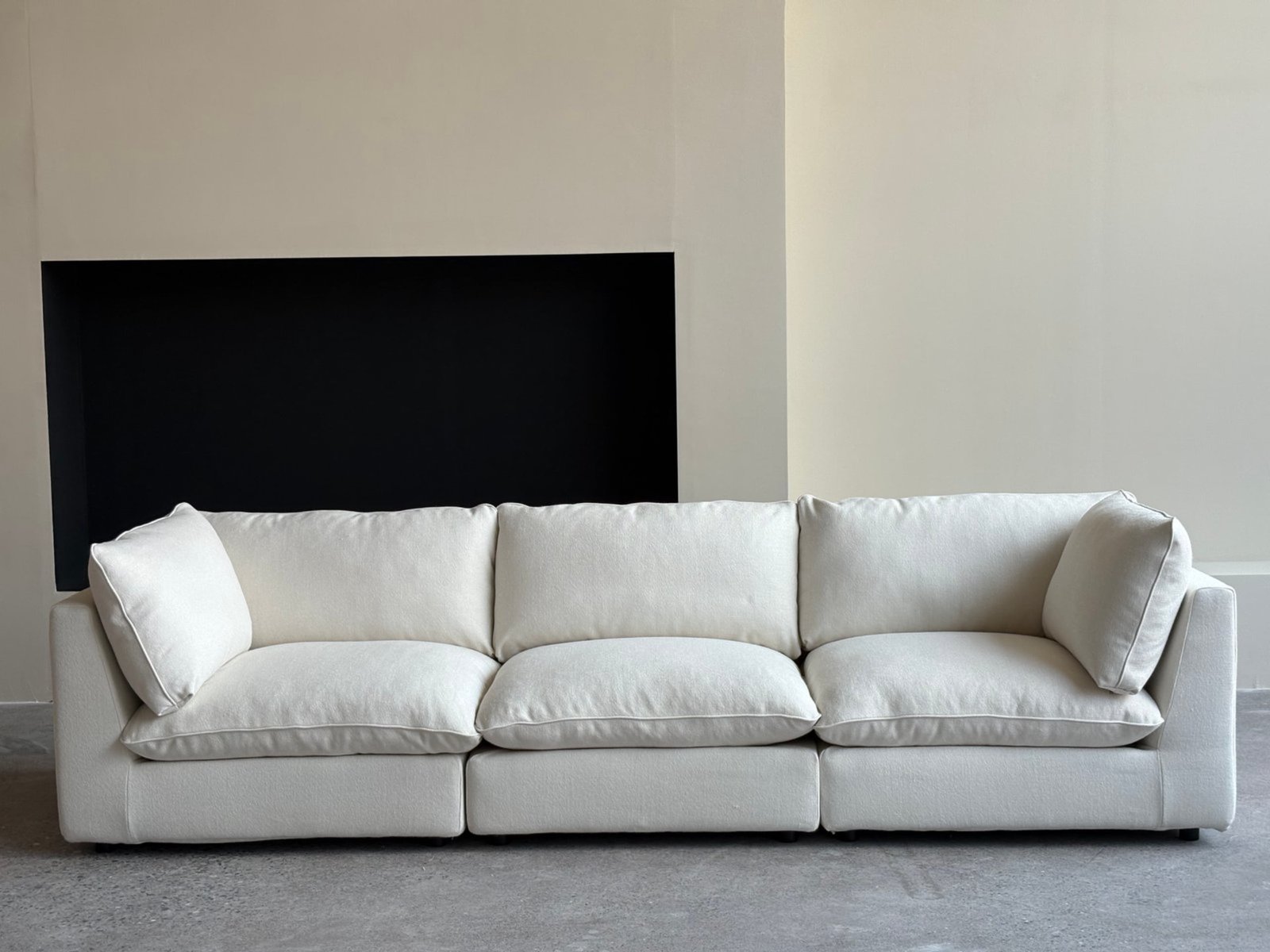
We have been manufacturing Belgian linen upholstery furniture in Foshan for 13 years. Every week, designers and homeowners ask us the same question: linen or cotton? Most of them already have a preference. But most of them are also comparing the wrong things. Before we get into the details, ask yourself three questions: What is the traffic level in this room? How much maintenance are you willing to do? And what feeling do you want the room to carry? Your answers matter more than anything else in this article.
What Actually Makes Belgian Linen Different From Regular Linen?
Most buyers know linen is "natural" and "premium." Very few can explain why Belgian linen specifically costs more — and that gap leads to poor purchasing decisions.
Belgian linen comes from flax grown in the Flanders region of Belgium and processed using traditional water-retting1. This method produces tighter, more uniform fibers than dry or chemical retting. The result is a fabric with greater strength, more consistent dye uptake, and a natural sheen that generic linen simply does not replicate.
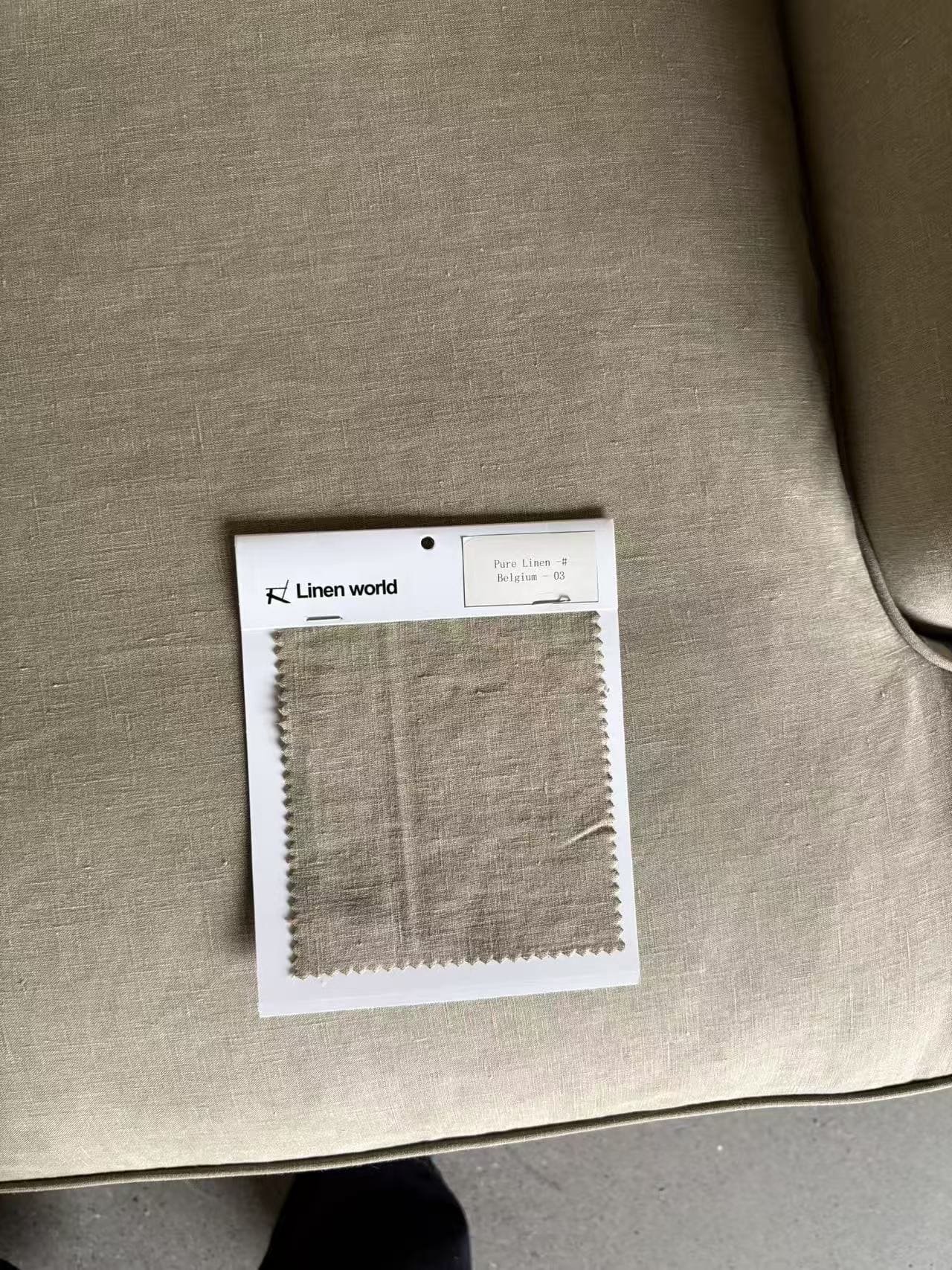
The distinction matters because the word "linen" on a fabric tag tells you almost nothing on its own. Linen is a category, not a quality standard. We source Belgium pure linen that meets Masters of Linen certification benchmarks — an industry-verified standard that traces fiber origin and processing method2. When clients come to us after a disappointing experience with "linen" furniture they bought elsewhere, the issue is almost always that they purchased generic linen at Belgian linen prices.
Why Does Fiber Origin and Processing Method Change the End Product?
| Factor | Belgian Linen (Water-Retted) | Generic Linen | Cotton |
|---|---|---|---|
| Fiber uniformity | High — tight, consistent | Variable | High |
| Natural sheen | Present | Minimal | None |
| Dye consistency | Very consistent | Inconsistent | Consistent |
| Tensile durability | High | Moderate | Moderate |
| Processing method | Traditional water-retting | Chemical or dry retting | Mechanical processing |
Water-retting means the flax stalks are soaked in river or pool water for weeks. This breaks down the pectin holding the fibers together slowly and gently, preserving fiber integrity. Chemical retting is faster and cheaper, but it degrades the fiber at a microscopic level.3 You cannot see this difference in a fabric swatch. You see it after two years of use.
This is why, in our production experience, upholstery-grade Belgian linen holds its structure and color significantly longer than generic linen alternatives at similar price points. We say this not as a marketing claim but as a sourcing decision we make every time we select fabric for a custom order. The fiber origin is something we verify with every bolt, because our clients' complaints eventually come back to us — and we intend to prevent them.
Does Linen Really Wrinkle More Than Cotton — And Should You Care?
The wrinkle objection is the first thing many clients raise. It is a real concern. And it deserves a direct answer, not a dismissal.
Yes, Belgian linen wrinkles more than cotton. However, in upholstery applications, this matters far less than it does in apparel. Upholstery-grade linen is tightly woven and stretched over a frame. Daily seating pressure and recovery cycles are different from the body movement that creases a linen shirt.4
We tell every client this honestly. If you are specifying a linen sofa and you expect it to look the way a velvet or tight-woven cotton sofa looks after heavy daily use, you will be disappointed. Linen develops a lived-in texture over time. That is not a flaw in the material — it is the character of the material. The question is whether that character fits your project.
When Does Linen's Wrinkling Behavior Become a Real Problem?
The answer depends almost entirely on use context. Here is how we help clients think through it:
| Scenario | Linen Wrinkle Impact | Recommendation |
|---|---|---|
| Formal living room, low daily traffic | Minimal — fabric recovers well between uses | Belgian linen is suitable |
| Home office reading chair, moderate use | Low — individual contact area is limited | Belgian linen is suitable |
| Primary family sofa, daily heavy use by children | Moderate — visible texture accumulation | Cotton or linen-cotton blend may be better5 |
| Rental property or hospitality project | High concern — maintenance frequency matters | Cotton is the lower-risk choice |
| High-design bedroom headboard or accent chair | Near-zero concern | Belgian linen preferred for aesthetic |
The nuance here is that linen's texture changes are often the reason designers choose it. A Belgian linen armchair in a Nantucket-style coastal interior is supposed to look slightly relaxed. The same fabric in a minimalist contemporary apartment where the client expects crisp, unchanging lines may generate a complaint within six months — not because the fabric failed, but because the wrong material was specified for that client's expectations.
We have had designers tell us this is the single most common specification error they make early in their careers: choosing linen for its look without having an honest conversation with the client about how linen ages. We now include a simple expectations document with every custom order.
Is Cotton Actually Inferior, or Just Different?
This is where many "linen vs. cotton" articles get dishonest. They are written to sell linen, so cotton becomes the cheaper, less desirable alternative. That framing is wrong.
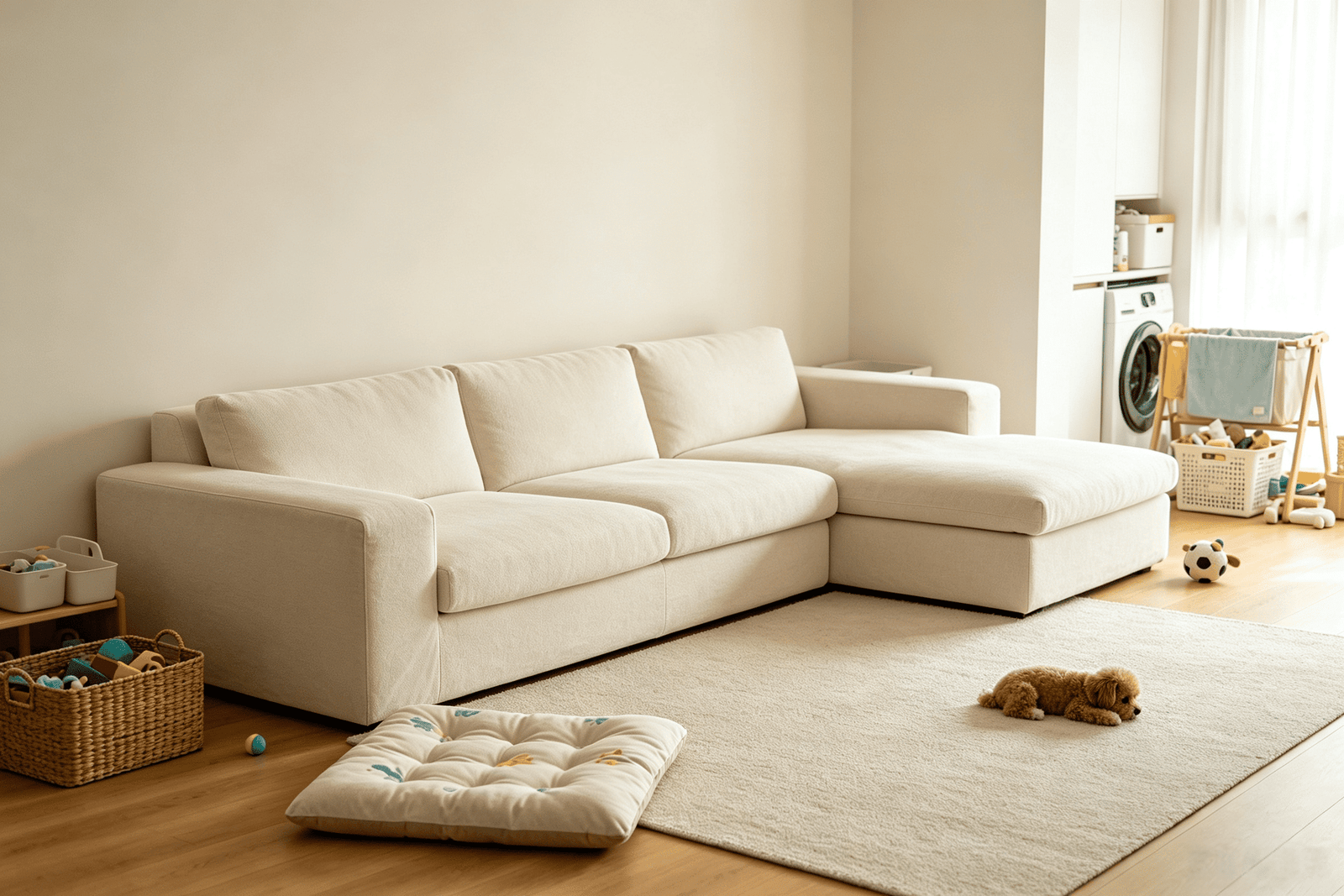
Cotton is not inferior to Belgian linen. It is softer to the touch, easier to clean, more forgiving in high-traffic environments, and lower in upfront cost. For families with young children, pets, or high daily use, cotton is frequently the more responsible specification choice.
How to Choose Between Belgian Linen and Cotton by Project Type
The real decision framework is not about which material is better. It is about which material fits your specific project variables.
| Decision Variable | Belgian Linen | Cotton |
|---|---|---|
| Aesthetic goal | Natural texture, high-design, organic | Soft, clean, versatile |
| Traffic level | Low to moderate | Moderate to high |
| Maintenance tolerance | Lower tolerance for spills, requires gentle care | Higher tolerance, often machine-washable covers |
| Client lifestyle | Adults-only, calm household | Families, children, pets |
| Ecological priority | Strong — linen requires less water and pesticide6 | Moderate — depends heavily on sourcing |
| Project longevity goal | Long-term investment, 10–15+ years | Medium-term, 5–10 years depending on use |
| Budget approach | Higher upfront, lower cost-per-year | Lower upfront, varies by quality tier |
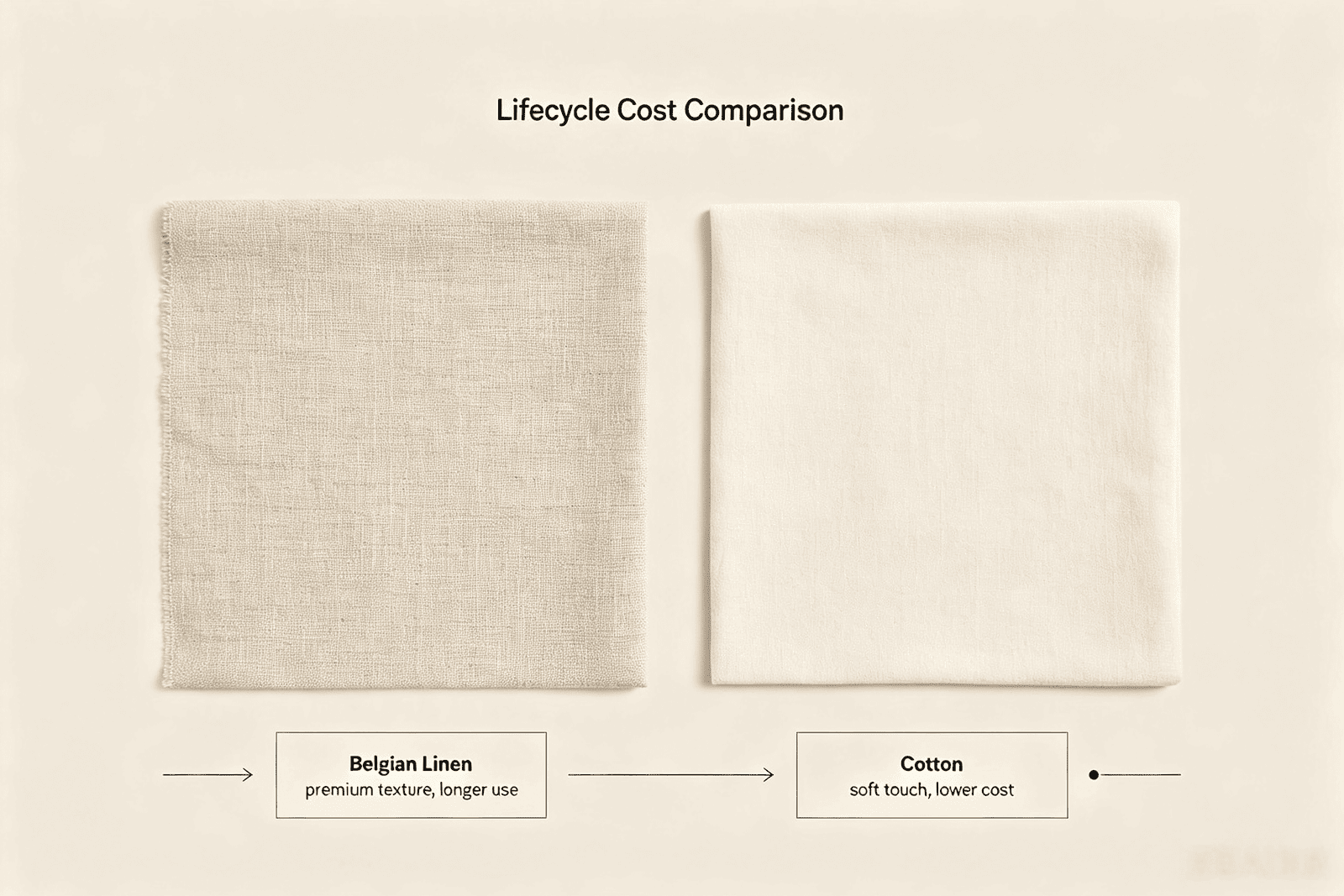
The last row is the one most buyers ignore. We always recommend thinking about price as cost-per-year-of-use rather than sticker price. A Belgian linen sofa that lasts 15 years and costs significantly more upfront may carry a lower annual cost than a cotton sofa at a lower price that needs replacing or recovering in seven years7. This reframe changes the conversation entirely for high-net-worth clients who are making long-term investment decisions.
One designer we work with regularly — she focuses on California coastal and Mediterranean-style interiors — told us she specs Belgian linen for almost every accent piece and armchair in her projects, but uses cotton for primary family sofas unless the client has specifically committed to a lower-traffic lifestyle. That distinction is simple, and it is almost always right.
How Do Price Differences Between Belgian Linen and Cotton Actually Break Down?
"Linen is more expensive" is something most buyers know. Why it is more expensive is something most buyers cannot explain — and that gap leads to two kinds of mistakes: overpaying for a linen label without getting linen quality, or rejecting linen as overpriced without understanding what the premium is paying for.
Belgian linen costs more because of fiber origin, processing complexity, and lower yield per acre compared to cotton. These are structural cost drivers, not marketing premiums. Understanding them helps buyers evaluate whether a specific product's price is justified — and whether the cost is appropriate for the project's expected lifespan.
We have clients come to us after purchasing "Belgian linen" furniture from other sources at prices that are not possible given the actual cost of certified Belgian linen fiber. In almost every case, the fabric was generic linen — sometimes blended — with Belgian linen used as a marketing descriptor rather than a material specification. We cannot police other manufacturers, but we can give our clients the tools to ask better questions.
What Drives the Cost Difference, Item by Item?
| Cost Driver | Belgian Linen | Standard Linen | Cotton |
|---|---|---|---|
| Flax growing region | Flanders, Belgium (premium climate and soil) | Variable — Eastern Europe, China | Global supply, lower cost |
| Retting method | Water-retting (slow, labor-intensive) | Chemical or dry retting (faster, cheaper) | Mechanical processing |
| Fiber yield per acre | Lower than cotton | Moderate | Higher |
| Processing complexity | High | Moderate | Lower |
| Certification overhead | Masters of Linen or equivalent | None typically | OEKO-TEX or similar |
| Typical upholstery fabric cost per meter | Higher (varies by weight and weave) | Moderate | Lower |
When we price a custom Belgian linen sofa for a US designer client, the fabric cost is a meaningful percentage of the total. But we also know that our price — even with international shipping — typically comes in 40–60% below what a comparable piece would cost from a domestic US manufacturer or a European brand like Blasco8. The reason is direct factory pricing with no retail or importer markup in between.
For designers managing client budgets, this matters. You can get the fabric quality and aesthetic that requires Belgian linen, at a price point that does not require the client to compromise elsewhere in the project. That is the practical case for sourcing directly, and it is why we work with designers who have previously only purchased domestically.
Conclusion
Belgian linen and cotton each have a place. Match the material to your project's traffic level, maintenance tolerance, and aesthetic goal — and think in cost-per-year, not sticker price.
If you are an interior designer working on luxury residential projects in the US, UK, Australia or Europe, our 13-year professional custom linen upholstery factory in Foshan provides free professional fabric specification consultation, certified Belgian physical linen swatch kits shipped worldwide at no cost, free custom dimension shop drawing design before deposit. We supply traceable Masters of Linen certified Belgian water-retted flax upholstery, full size customization and COM fabric support. Message us via WhatsApp to request fabric samples or complete furniture quotation support.https://linenworld.pro
References
"[From Flax to Linen: The Retting Process - Vala Alta](https://valaalta.co/blogs/writings/retting?srsltid=AfmBOorbWzLc8hNNb_LeuiIDM6QgtHNp25vsMB2IiX6H6WAdi23Jpi8l)". The European Confederation of Linen and Hemp (CELC) and its Masters of Linen program define Belgian linen by traceable fiber origin in the Flanders region and specify water-retting as the traditional processing method associated with premium fiber quality. Evidence role: definition; source type: institution. Supports: That Belgian linen is defined by flax cultivation in the Flanders region and traditional water-retting processing. Scope note: Certification body definitions may reflect industry self-regulation rather than independent academic or governmental standards. ↩
"[Masters of LINEN™ Certification - New standard | ALLIANCE](https://allianceflaxlinenhemp.eu/en/masters-of-linen-certification)". The Masters of Linen label is administered by the European Confederation of Linen and Hemp (CELC) and certifies that linen fiber is grown, retted, and processed entirely within Western Europe, providing supply chain traceability from field to finished fabric. Evidence role: definition; source type: institution. Supports: That Masters of Linen is a formal certification program verifying fiber origin and processing traceability for European linen. Scope note: Certification scope and enforcement rigor may vary; the label verifies origin and process steps but does not independently certify end-product durability performance. ↩
"[Linen Most Useful: Perspectives on Structure, Chemistry, and ... - PMC](https://pmc.ncbi.nlm.nih.gov/articles/PMC4403609/)". Textile science research on flax fiber processing has documented that retting method influences fiber bundle separation and tensile strength, with water-retting generally associated with finer, more uniform fiber extraction compared to chemical alternatives. Evidence role: mechanism; source type: paper. Supports: That water-retting preserves flax fiber integrity better than chemical or dew retting, resulting in stronger and more uniform fibers. Scope note: Comparative studies often focus on agricultural or industrial fiber applications rather than upholstery-grade fabric performance specifically. ↩
"[Study on crease recovery property of warp-knitted jacquard spacer ...](https://pmc.ncbi.nlm.nih.gov/articles/PMC11286793/)". Textile engineering principles establish that fabric wrinkling is a function of fiber crimp recovery and applied tension; in upholstery applications, fabric stretched and tacked over a rigid frame experiences sustained tensile stress that partially counteracts the fiber-level relaxation responsible for visible creasing in apparel. Evidence role: mechanism; source type: paper. Supports: That upholstery applications reduce linen's tendency to wrinkle compared to apparel use because the fabric is held under tension across a rigid frame. Scope note: Direct experimental studies comparing linen wrinkling in upholstery versus apparel contexts are limited; this claim is supported by general textile mechanics principles rather than upholstery-specific empirical research. ↩
"[fibers and fabrics - NIST Technical Series Publications](https://nvlpubs.nist.gov/nistpubs/Legacy/CIS/nbscis1.pdf)". Textile research on natural fiber blends indicates that linen-cotton combinations can reduce the wrinkling propensity of pure linen by incorporating cotton's greater elastic recovery, while maintaining higher tensile strength than equivalent pure-cotton fabrics, making blends a functional compromise for applications requiring both durability and appearance stability. Evidence role: mechanism; source type: paper. Supports: That linen-cotton blended fabrics combine properties of both fibers, moderating linen's wrinkling tendency while retaining some of its durability advantages. Scope note: Blend performance varies significantly with blend ratio and weave construction; a fabric labeled as a linen-cotton blend may range from predominantly linen to predominantly cotton, and performance claims should be evaluated against specific blend composition rather than the blend category generally. ↩
"[Flax | Iowa State University Extension and Outreach](https://www.extension.iastate.edu/alternativeag/flax)". Environmental lifecycle assessments of natural textile fibers have found that European flax cultivation requires minimal irrigation and lower pesticide application compared to conventional cotton, which is among the most pesticide-intensive agricultural crops globally. Evidence role: statistic; source type: research. Supports: That flax cultivation for linen requires significantly less water and pesticide input compared to conventional cotton production. Scope note: Environmental comparisons depend heavily on cotton sourcing region and farming practices; organic cotton narrows the gap considerably, and the article's claim is most accurate when comparing to conventional rather than certified organic cotton. ↩
"[Cotton and Linen Bedding Durability: What Lasts Longer? - MATTEO](https://matteola.com/blogs/bedding-blog/cotton-and-linen-bedding-durability-what-lasts-longer?srsltid=AfmBOop2t_FEkHt4krIozMjndFs-HdXpuTGoFuAOVoPxAKZXgjh55o83)". Industry durability standards such as the Martindale abrasion test are used to estimate upholstery fabric lifespan; linen fabrics generally achieve higher rub counts than equivalent-weight cotton, supporting claims of greater longevity under moderate use conditions. Evidence role: statistic; source type: institution. Supports: That linen upholstery fabric has a longer serviceable lifespan than cotton under equivalent use conditions. Scope note: Actual lifespan depends on weave density, finishing treatments, and use intensity; the specific figures of 15 years for linen and 7 years for cotton cited in the article are illustrative estimates rather than empirically validated benchmarks. ↩
"[The Effect of Furniture Imports from China on Employment in U.S. ...](https://www.usitc.gov/publications/332/working_papers/ecwp_2017-08-23-17_0.htm)". Trade and industry analyses of global furniture manufacturing have documented substantial labor and overhead cost differentials between Chinese production centers such as Foshan and domestic US or Western European manufacturers, with Chinese-origin furniture frequently priced significantly below comparable domestic alternatives at retail. Evidence role: general_support; source type: institution. Supports: That Chinese furniture manufacturing offers significant cost advantages over domestic US or European production for comparable quality goods. Scope note: The specific 40–60% figure cited in the article is the manufacturer's own claim and has not been independently verified; actual savings vary by product category, quality tier, shipping costs, import duties, and retail markup structures. ↩


