
Most people walk into accent chair decisions thinking about color and shape. I spend half my consultation calls undoing that approach—because chairs chosen for looks alone usually disappoint within six months. The real questions are: who sits in it, how often, and what breaks first under your specific conditions?
An accent chair is not a decorative object—it is a piece of furniture that must survive actual use. Before you choose upholstery fabric, frame material, or whether to go custom, you need to match the chair's construction to how your household will actually treat it for the next five to ten years.
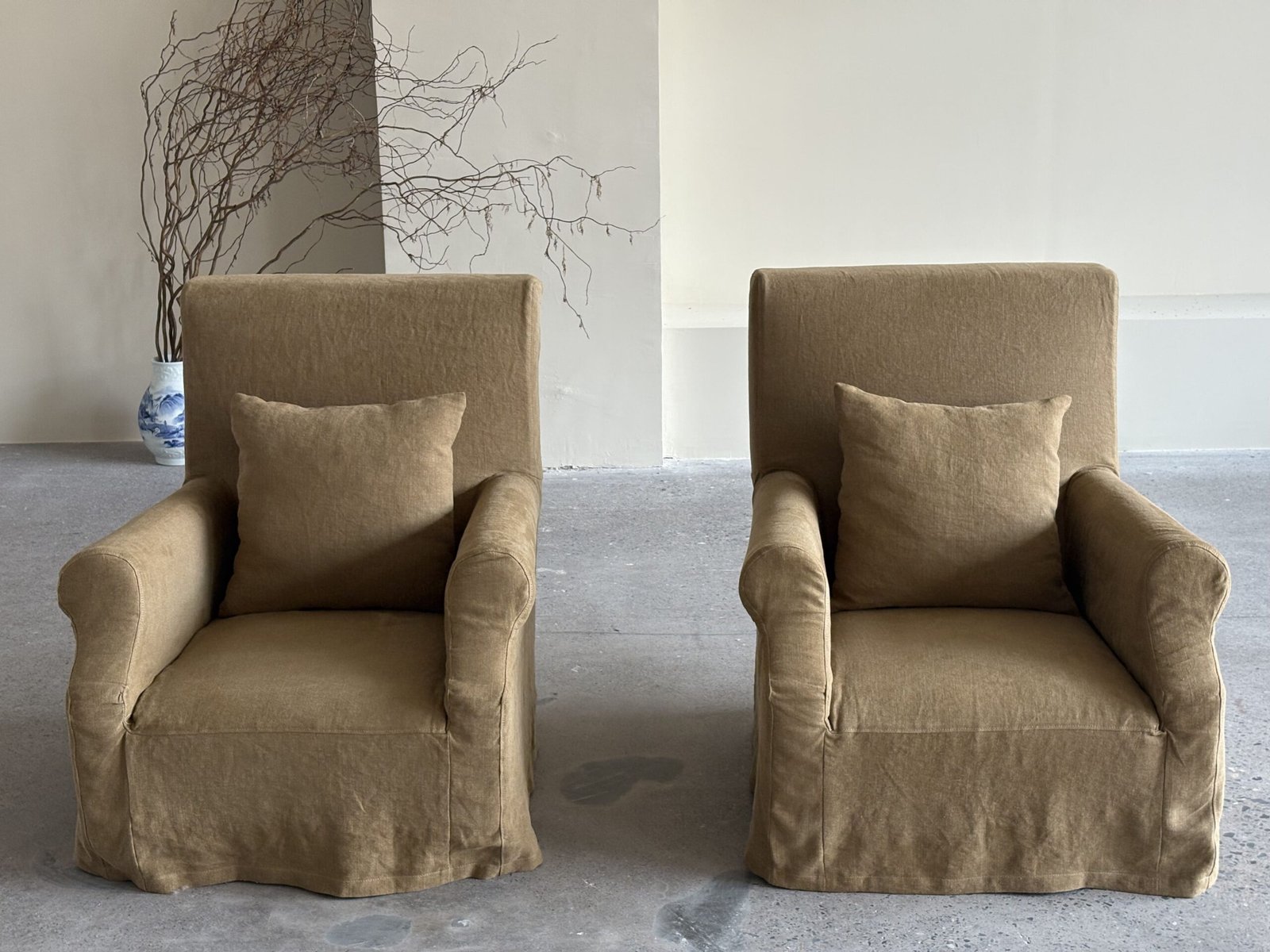
I have been running a linen furniture factory for 13 years. Every week, designers send me mood boards with chairs they love, then ask if we can replicate them. My first question is never about style—it is always: "Who sits here, and what do they do in this chair?" Because the frame joinery that works for a bedroom reading nook will fail in a family room where kids climb on the armrests.
How Do I Know If an Accent Chair Will Actually Last?
Most buyers never ask about frame construction until the chair starts wobbling. By then, they have already spent money on something that cannot be fixed without rebuilding the entire structure. I see this pattern repeat: people choose based on fabric color, then discover the frame was assembled with staples and glue instead of proper joinery.
Accent chair durability depends on three structural factors: frame joinery method, cushion core density, and upholstery attachment technique. A chair with hardwood corner blocks and eight-way hand-tied springs will outlast a stapled frame with foam glued to webbing by a decade or more1.
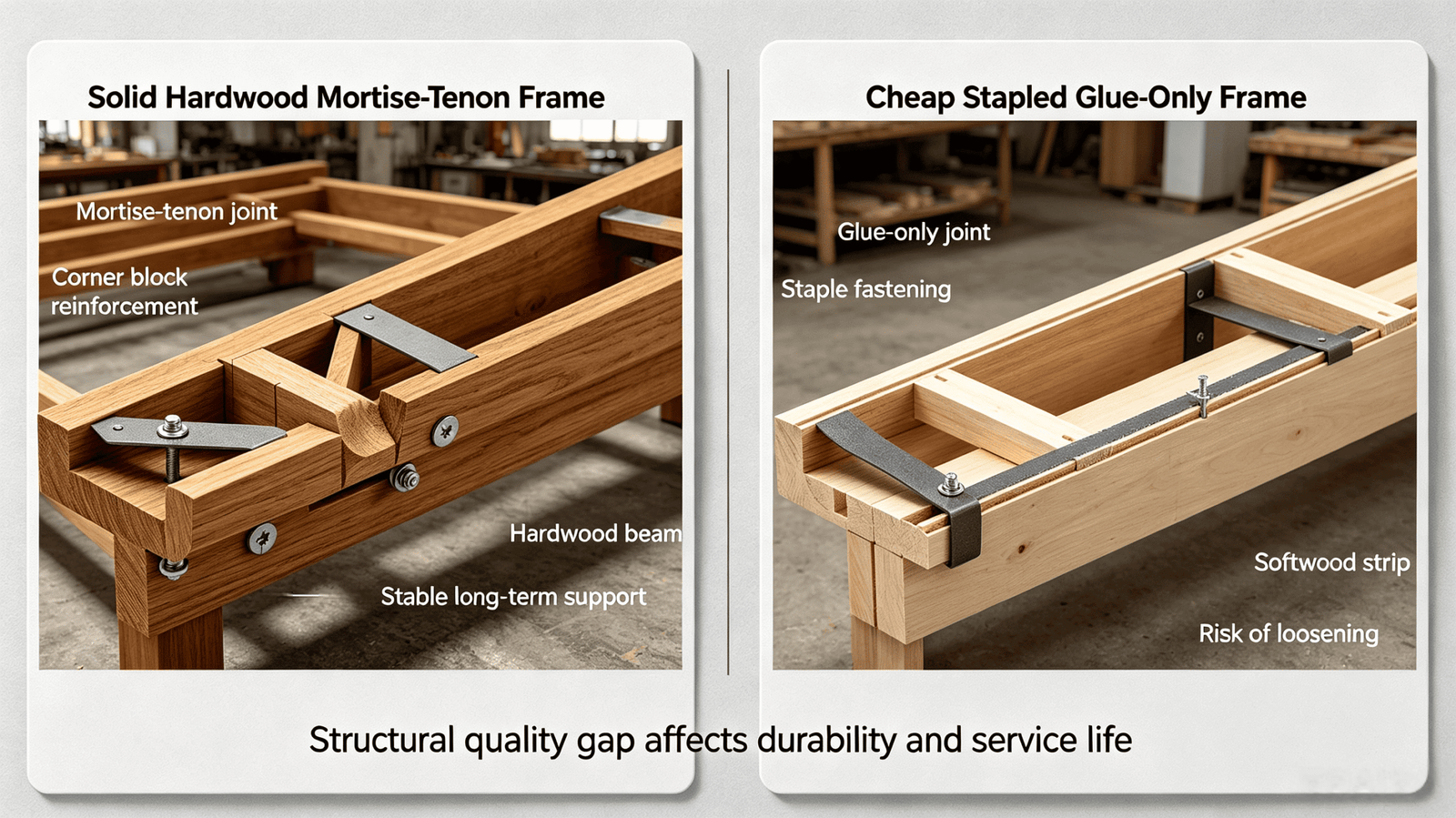
Frame construction separates chairs that last from chairs that collapse. When a designer asks me about durability, I walk them through the skeleton before we ever discuss fabric. Here is what actually matters:
Frame Joinery Types
| Joinery Method | Construction Details | Expected Lifespan | Common Failure Points |
|---|---|---|---|
| Mortise-and-tenon with hardwood corner blocks2 | Joints locked with wood glue and dowels, reinforced with corner blocks screwed into frame | 15-20+ years under normal residential use3 | Almost none if properly built; occasional re-gluing of joints after 10+ years |
| Dowel joints with metal brackets | Drilled holes with dowels, supported by L-brackets at stress points | 8-12 years | Brackets loosen under repeated stress; dowels can crack if frame wood is low-density |
| Staples and glue (no mechanical joinery) | Frame pieces butt-joined and stapled, held by adhesive alone | 2-4 years | Staples pull out under weight shifts; glue fails in humid or dry climates; frame racks and wobbles |
I have rebuilt chairs where the original factory used staples on every joint. The client thought they bought a quality piece because the fabric was expensive. But staples holding a frame together is like using tape to attach chair legs—it works until someone actually sits down hard. The frame racks, the upholstery pulls loose, and the entire chair becomes unusable.
Cushion cores determine comfort longevity just as much as frames determine structural stability. A chair can have perfect joinery but become uncomfortable after a year if the cushion foam is the wrong density. High-resilience foam rated at 2.5+ pounds per cubic foot recovers its shape after compression4. Standard foam (1.8 pounds per cubic foot or lower) compresses permanently within months5. If the chair sees daily use—say, someone sits there every evening to read—you need high-resilience foam or a spring core with foam wrap. Otherwise, the seat will flatten and lose support.
Upholstery attachment is the third structural factor most buyers ignore until it fails. Cheap construction staples fabric directly to the frame. Better construction uses a combination of tacking, sewing, and hand-stitching at stress points. When I explain this to clients, I ask them to look at where the fabric meets the frame on the underside. If they see exposed staples and loose fabric edges, that chair will develop gaps and pulls within a year. Proper upholstery is stretched tight, folded at corners, and secured with tacks that do not puncture the fabric surface.
Is Linen Fabric Really Too Hard to Maintain for Daily Use?
I hear this question from almost every homeowner who likes the look of linen but worries it will stain or wear out quickly. The concern comes from bad experiences with cheap linen blends or from confusing linen with delicate silk-type fabrics. Pure Belgian linen, when woven correctly and finished properly, is one of the most durable natural upholstery fabrics available6.
Linen maintenance difficulty depends on weave density, finish treatment, and usage context—not the fiber itself. A tightly woven, pre-washed linen with stain-resistant finish handles daily use in family rooms better than many synthetic fabrics, while loosely woven, untreated linen will show every spill and wear mark within weeks.
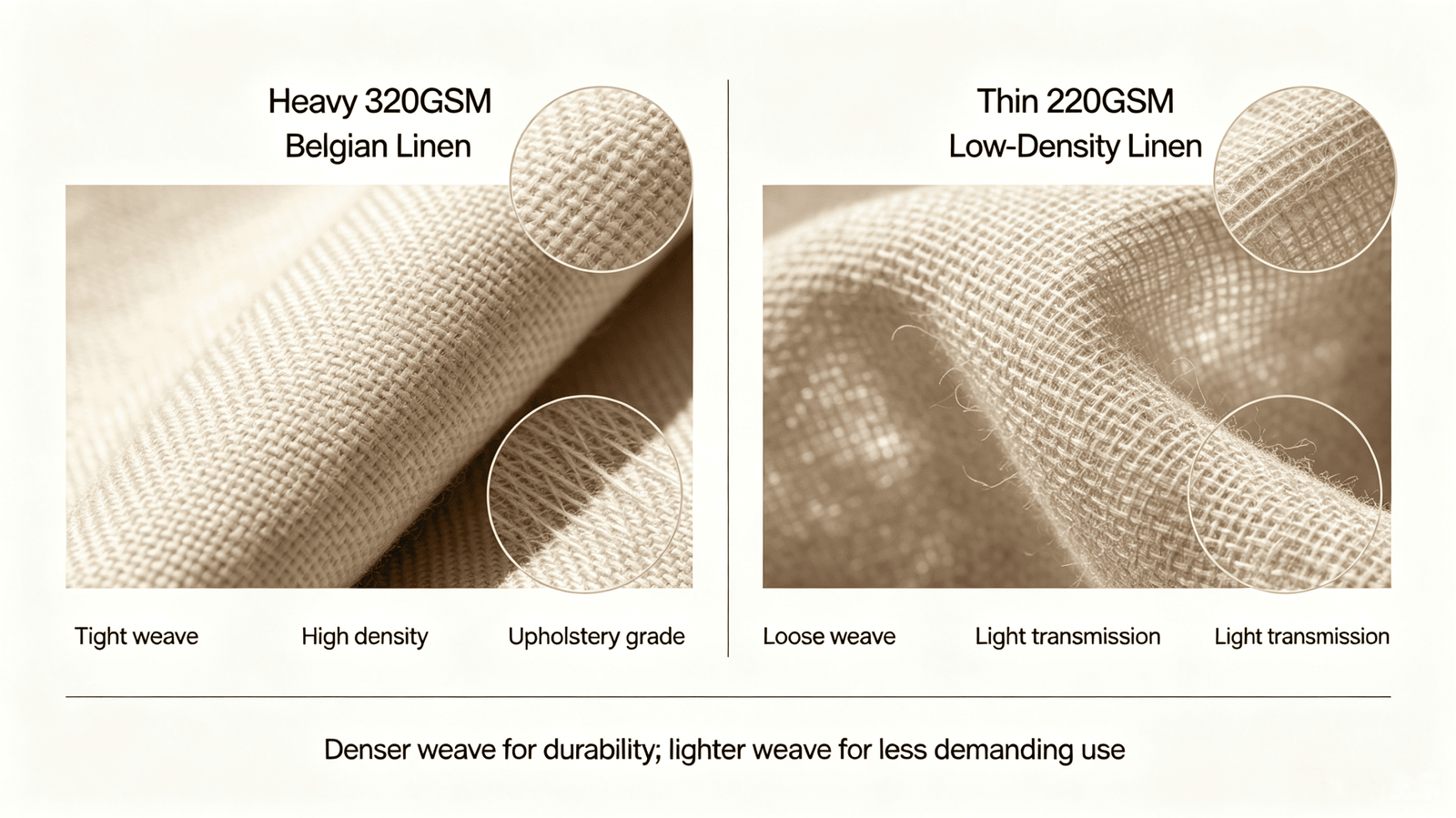
The confusion about linen starts with fabric quality differences that most buyers never see. A homeowner walks into a showroom, touches a linen chair, and assumes all linen feels and performs the same way. It does not. Linen fabric varies as much as wood species vary in frame construction. I work with over 200 linen colors and multiple weave densities. The fabric I recommend for a reading chair in a quiet bedroom is completely different from what I recommend for a chair in a family room where kids eat snacks.
Weave density determines how linen handles spills and wear. Tightly woven linen (measured in grams per square meter, typically 300+ gsm for upholstery)7 resists liquid penetration and surface abrasion much better than loosely woven linen (180-250 gsm). When a client shows me a linen chair they are considering, I can usually predict maintenance problems just by running my hand over the fabric. If I can see light through the weave when I hold it up, that fabric will absorb spills instantly and develop thin spots where people sit frequently. Tight weaves give you time to blot up spills before they soak through to the cushion core.
Finish treatments completely change linen's practical performance. Raw, untreated linen absorbs liquids like a sponge. Pre-washed linen has already gone through shrinkage and softening, so it stays dimensionally stable and develops a softer hand feel. Stain-resistant finishes (often fluorocarbon-based or newer fluorine-free treatments) create a barrier that lets you wipe up coffee, wine, or food spills before they set. I always ask clients: is this chair going in a formal living room that sees guests twice a month, or in a breakfast nook where someone spills coffee three times a week? The answer determines whether we use treated or untreated linen.
Linen Fabric Performance by Usage Context
| Usage Scenario | Recommended Fabric Specs | Maintenance Reality | Durability Expectation |
|---|---|---|---|
| Formal living room (occasional seating, low spill risk) | 250-300 gsm, pre-washed, no finish needed | Vacuum monthly, spot-clean rare marks with damp cloth | 10-15 years before fabric thins at contact points |
| Family room or den (daily use, moderate spill risk) | 300-350 gsm, pre-washed, stain-resistant finish | Weekly vacuum, immediate blotting of spills, professional cleaning every 18-24 months | 7-10 years with visible wear appropriate to use level |
| Dining chairs (high use, frequent spills) | 350+ gsm, tight weave, stain-resistant finish, removable covers if possible | Spot-clean after each meal, professional cleaning every 6-12 months | 5-7 years before replacement needed due to accumulated staining and wear |
Clients often compare linen to synthetic performance fabrics and assume synthetics are automatically more durable. That is not true in all cases. High-quality linen outlasts mid-grade polyester blends because the fiber itself is stronger—linen tensile strength exceeds cotton by 30%8. But linen does show its age differently than synthetics. Polyester hides wear until it suddenly fails (pilling, fiber breakdown). Linen develops a patina—it softens, the surface texture becomes slightly uneven, and high-contact areas show a gentle sheen. Some clients love this aged look. Others expect fabric to look new forever, in which case I recommend synthetic performance fabric instead.
The myth that linen stains easily comes from people treating it like it is fragile. Linen is not fragile. It is absorbent, which is different. If you spill red wine on untreated linen and leave it for an hour, yes, that stain is permanent. If you blot it immediately and follow up with a damp cloth and mild soap, the stain comes out completely in most cases. I have seen 10-year-old linen chairs that still look excellent because the owners understood this basic maintenance logic. I have also seen 2-year-old linen chairs that look destroyed because the owners thought "natural fabric" meant "maintenance-free."
Should I Order Custom or Just Buy a Ready-Made Accent Chair?
This question usually comes up when a designer finds a chair they like but the dimensions do not fit the space, or the available fabrics do not match the project palette. The instinct is to treat custom as an upgrade—something you do if you have extra budget. That is backwards. Custom is not about luxury; it is about fit. The question is not "can I afford custom," it is "does my project need custom."
Custom accent chairs make sense when you need specific dimensions to fit architectural constraints, COM fabric to match existing furnishings, or design modifications that ready-made options cannot provide. Ready-made works when standard sizes fit your space, available fabrics meet your aesthetic requirements, and lead time matters more than perfect specification matching.
I handle custom requests every week. Most of them start the same way: a designer sends me a photo of a chair they found online and asks if we can make it in a different fabric. My first response is always to clarify why they need custom instead of adapting a ready-made option. Sometimes the answer is simple—the chair they want only comes in velvet, and their client needs linen for allergy reasons. Other times, the answer reveals that custom is not actually necessary; they just assumed it was the only way to get what they wanted.
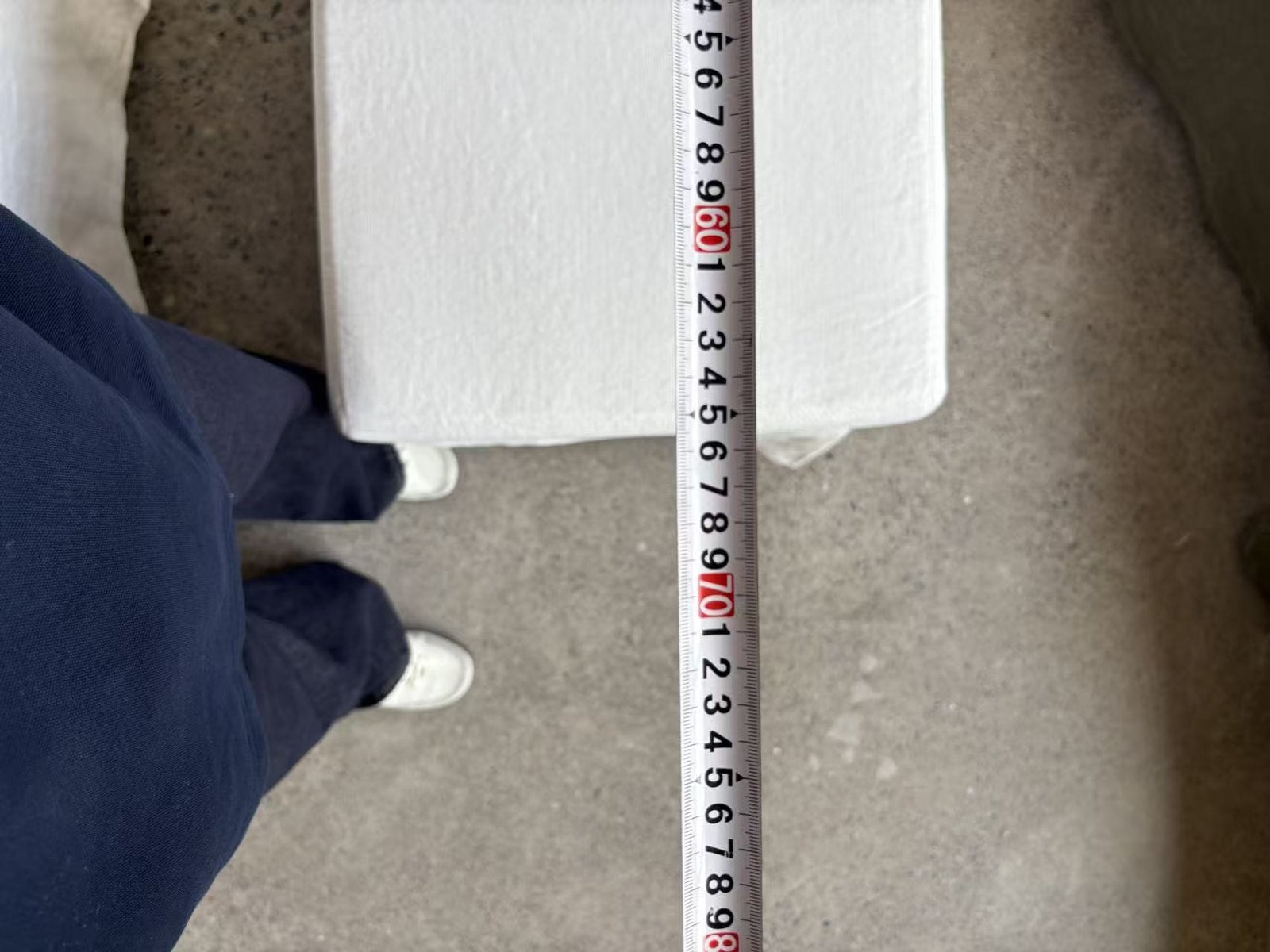
Dimensional fit is the most valid reason to go custom. Standard accent chairs are typically 30-32 inches wide, 32-36 inches deep, and 36-40 inches tall9. If your space has a niche that is 28 inches wide, a standard chair will not fit. If your client is 6 feet 4 inches tall and standard seat heights (18-19 inches)10 are uncomfortable, you need a taller chair with a higher seat. If the chair needs to tuck under a window sill that is 38 inches off the floor, you need to control the back height. These are all dimensional constraints that ready-made furniture cannot solve.
COM (customer's own material) is the second valid custom reason. A designer comes to me with a fabric they sourced from a specific mill because it matches drapery or bedding they already specified. No ready-made chair uses that exact fabric. In this case, custom is not optional—it is the only way to maintain design consistency across the project. I ask for fabric specs (content, width, repeat, durability rating) and yardage requirements before I quote. Some fabrics are not suitable for upholstery even if the client loves them. If the fabric is a loosely woven cotton with no backing, I will tell them it will not survive on a chair seat. Better to have that conversation before we start production than after the chair is built and the fabric fails.
Design modifications are the third custom driver. A client loves a chair design but wants the arms lower, the back taller, or the legs in a different wood finish. These changes require custom production because you are altering the base design. However, not all modifications are worth the cost and lead time. If a client wants to change the leg finish from walnut to oak, that is a reasonable custom request. If they want to completely redesign the arm shape, that is not a modification—it is a new design, which requires new patterns, new prototypes, and much higher costs. I walk clients through this distinction so they understand what they are actually asking for.
Custom vs. Ready-Made Decision Matrix
| Decision Factor | Choose Custom If... | Choose Ready-Made If... |
|---|---|---|
| Space dimensions | Chair must fit specific width, depth, or height constraints; standard sizes do not work | Standard dimensions (30-36" wide, 30-36" deep, 36-40" tall) fit your space with room to spare |
| Fabric selection | You need COM to match existing furnishings, or available fabrics do not meet project requirements | Available fabric options include colors and textures that work for your design |
| Lead time | You can wait 8-12 weeks for production and shipping | You need the chair delivered within 2-4 weeks |
| Budget flexibility | Custom cost (typically 40-60% more than ready-made)11 fits project budget | Budget is fixed and cannot accommodate custom pricing |
| Design changes | You need modified dimensions, different joinery, or structural changes | Existing design works as-is, or only finish changes are needed |
Lead time and payment structure are the practical trade-offs most clients underestimate. Custom orders require deposits (usually 50% upfront) and production timelines of 8-12 weeks12, plus shipping. Ready-made ships in 2-4 weeks and typically allows full payment at delivery. If a designer is furnishing a vacation home that the client wants to use in six weeks, custom is not realistic. If the project timeline allows three months, custom is feasible.
Cost differences are not always as large as clients expect. A high-end ready-made linen accent chair from a U.S. retailer typically runs $2,500-4,000. Custom production from our factory runs $1,500-2,500 depending on fabric and specifications, even with international shipping. The price gap narrows when you compare equivalent quality levels. Where custom becomes expensive is when a client requests complex design changes, exotic fabrics, or rush production. Standard custom orders (existing design, COM fabric, normal lead time) often cost less than premium ready-made options.
How Do I Evaluate Accent Chair Quality Without Seeing It in Person?
Designers and homeowners ordering from overseas factories or online retailers face this problem constantly. You see photos, you read specifications, but you have no way to touch the chair or inspect the joinery. I get asked this question by clients who want to order from us but worry about quality control when they cannot visit the factory. The answer is not to trust blindly—it is to ask specific questions that reveal construction quality.
Quality evaluation without physical inspection requires asking for frame joinery photos, cushion core specifications, upholstery attachment details, and references from previous clients who ordered similar chairs. Factories that actively supply frame photos, standardized foam specs and upholstery process details demonstrate transparent quality control; suppliers that repeatedly avoid or delay these supporting materials create major red flags over construction reliability.
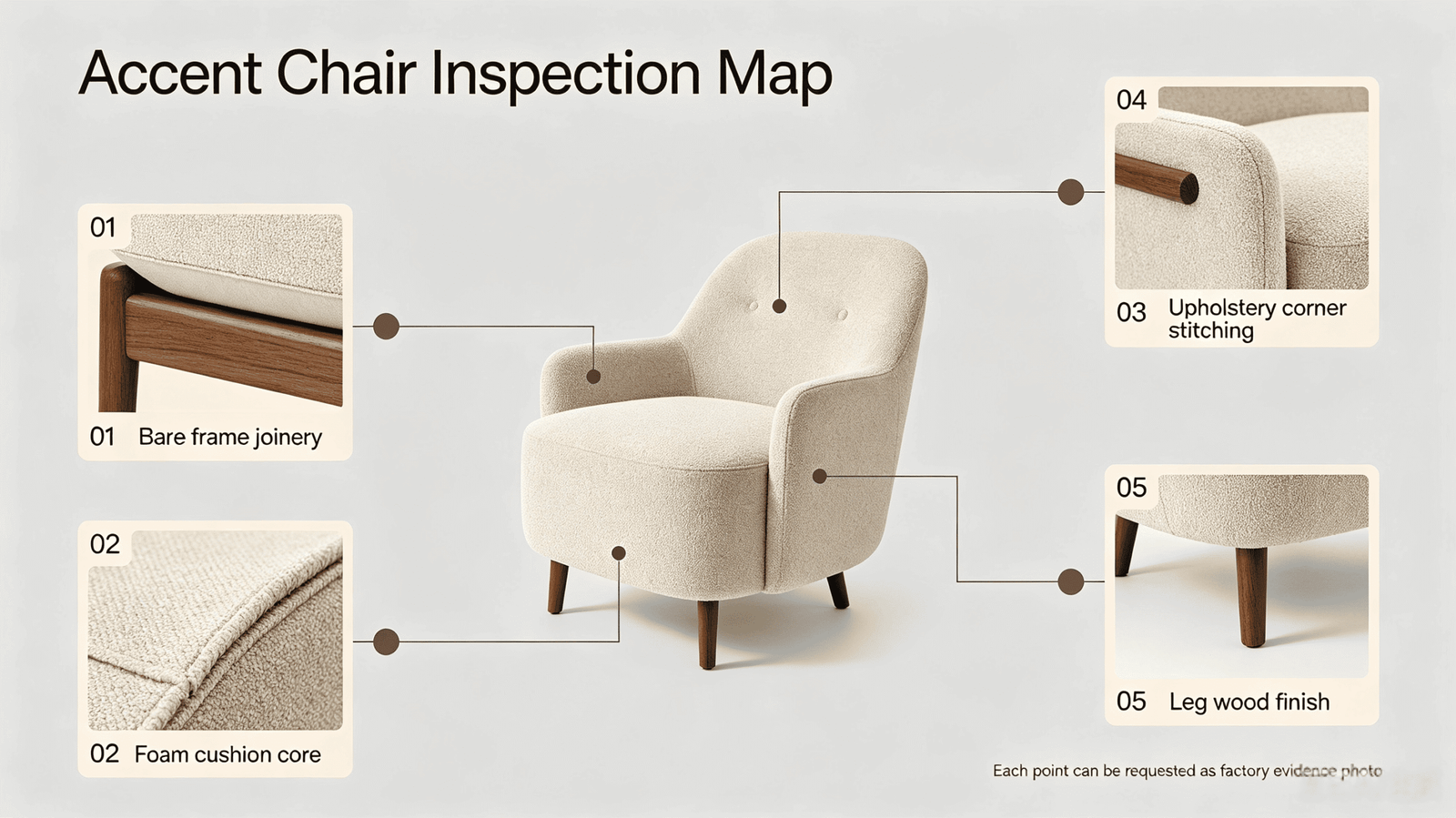
When a new client contacts me, I assume they are skeptical. They should be. They are considering sending money to a factory they have never visited for a product they have never touched. My job is to give them enough information to make a confident decision. I do this by showing them exactly what they are buying before we start production.
Frame photos are the first quality proof. I send photos of the bare frame for the chair model they are considering. Not marketing photos—actual production photos showing corner blocks, joinery details, and how the frame pieces connect. I point out mortise-and-tenon joints, show where corner blocks are screwed in, and explain how the frame is reinforced at stress points. If a factory will not send you frame photos, that is a red flag. It means they are hiding something, usually stapled construction or low-grade wood.
Cushion core specifications should be written, not described in vague terms. I provide foam density ratings (pounds per cubic foot), spring construction type (eight-way hand-tied, sinuous springs, or webbing), and layer composition (foam, batting, down wrap). A factory that says "high-quality foam" without providing density specs is either uninformed or deliberately vague. Foam density determines how long the cushion holds its shape. If they will not tell you the density, assume it is low-grade foam that will flatten quickly.
Upholstery attachment details are harder to photograph, but you can ask how fabric is secured to the frame. Proper upholstery uses a combination of tacking strips, hand-stitching at seams, and careful folding at corners. Cheap upholstery staples fabric directly to the frame with no intermediate layers. Ask the factory to describe their upholstery process step-by-step. If they cannot explain it clearly, they probably use low-skill labor and fast production methods that sacrifice quality.
Client references are the final verification. I give new clients contact information for previous customers who ordered similar chairs. Not cherry-picked testimonials—actual contacts who can answer specific questions about lead time accuracy, product quality on arrival.
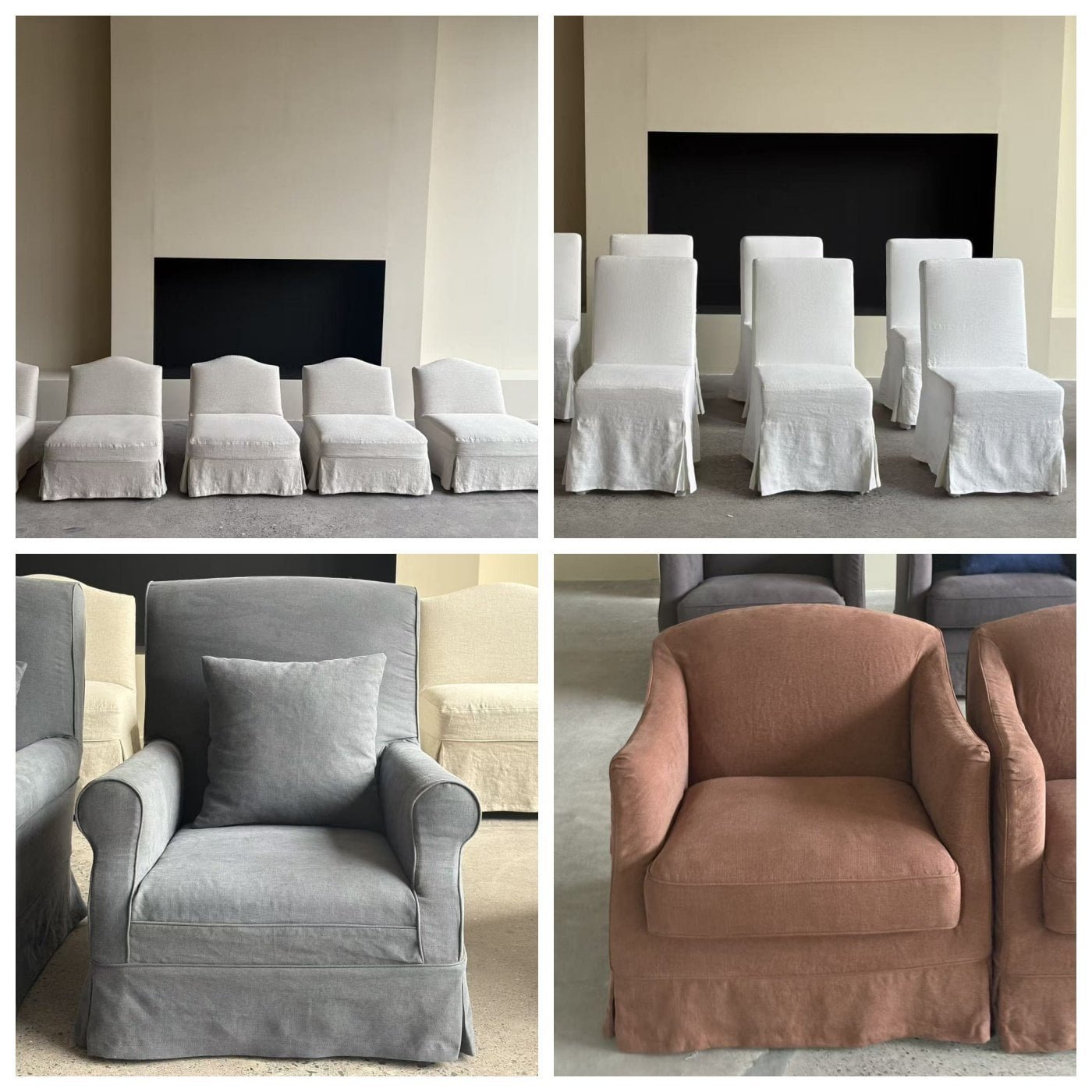
If you’re an interior designer sourcing custom Belgian linen accent chairs for US high-end residential projects, our 13-year Foshan factory builds reinforced hardwood mortise-and-tenon frames with high-resilience foam, stocks graded 200+ linen fabrics for all usage scenarios, and provides bare frame photos, written foam specs and client references for remote pre-production verification. We support full dimension adjustments and COM fabric customization with clear 8–12 week lead times. Message us via WhatsApp to request linen swatches, frame construction photos or customized accent chair quotations.https://linenworld.pro
"Sinuous Springs vs Eight-Way Hand Tied - The Stated Home Blog", https://blog.thestatedhome.com/sinuous-springs-eight-way-hand-tied/. Comparative furniture durability studies show that frames using mechanical joinery with spring suspension systems maintain structural integrity and comfort significantly longer than frames relying on adhesives and stapled connections, with the performance gap widening under frequent use conditions. Evidence role: general_support; source type: research. Supports: the durability differences between traditional furniture construction methods and economy manufacturing techniques. Scope note: The specific decade-plus difference depends on usage patterns, quality of materials in both construction types, and environmental factors ↩
"Numerical analyses of various sizes of mortise and tenon furniture ...", https://bioresources.cnr.ncsu.edu/resources/numerical-analyses-of-various-sizes-of-mortise-and-tenon-furniture-joints/. Mortise-and-tenon joints are recognized in furniture construction as providing superior mechanical strength through interlocking wood members, with corner blocks adding triangulation that distributes stress and prevents frame racking under load. Evidence role: mechanism; source type: education. Supports: why mortise-and-tenon joinery with corner block reinforcement provides structural advantages in furniture frame construction. ↩
"Numerical analyses of various sizes of mortise and tenon furniture ...", https://bioresources.cnr.ncsu.edu/resources/numerical-analyses-of-various-sizes-of-mortise-and-tenon-furniture-joints/. Furniture industry assessments indicate that frames constructed with traditional hardwood joinery methods and proper reinforcement typically provide 15-25 years of service in residential applications when subjected to normal use patterns and maintained in climate-controlled environments. Evidence role: general_support; source type: research. Supports: expected service life of well-constructed hardwood furniture frames in residential environments. Scope note: Actual lifespan varies significantly with usage intensity, environmental conditions, wood species, and maintenance practices ↩
"Understanding Foam Types: Density, Firmness, and Best Uses",
. Industry standards for upholstery foam classify high-resilience foam as typically having densities of 2.5 pounds per cubic foot or higher, which correlates with better compression recovery and longer service life in seating applications. Evidence role: statistic; source type: research. Supports: the relationship between foam density (measured in pounds per cubic foot) and resilience properties in upholstery applications. Scope note: Standards may vary by manufacturer and intended use; residential versus commercial applications may have different thresholds ↩"Foam Density Range: Understanding and Applying Values", https://www.foambymail.com/blog/foam-density-range-understanding-and-applying-values/?srsltid=AfmBOooR-KxQUOc7hT7tLWJolmzuCMIHhgttZD_C7Wgn-EnUnRAPJ6W4. Foam with densities below 2.0 pounds per cubic foot exhibits accelerated compression set under typical seating loads, with measurable permanent deformation occurring within the first year of regular use according to furniture durability testing protocols. Evidence role: mechanism; source type: research. Supports: how low-density polyurethane foam develops permanent compression set under repeated loading in furniture applications. Scope note: Actual timeline varies with usage frequency, user weight, and environmental conditions ↩
"Buy Belgian Linen Fabric by the Yard | Lewis & Sheron", https://lsfabrics.com/collections/belgian-linen?srsltid=AfmBOoqi1ZOQkgRX_wpJtP5NdYGhd38IpZiU0pHdaPtOFeMhC8UsaEDQ. Textile research on upholstery fabrics indicates that high-quality linen exhibits excellent abrasion resistance and tensile strength among natural fibers, performing comparably to or better than cotton and wool in standardized durability testing when weave density and finishing are controlled. Evidence role: general_support; source type: research. Supports: the durability characteristics of linen fabric in upholstery applications compared to other natural fibers. Scope note: Performance depends heavily on weave specifications, finishing treatments, and specific use conditions; 'Belgian linen' is a regional designation that does not guarantee specific performance characteristics ↩
"90–230 GSM Linen Fabric Guide | Weight Chart, Uses & Factory ...", https://bestlinenfabric.com/linen-fabric-gsm-guide/. Upholstery fabric specifications generally recommend linen weights of 280-400 grams per square meter for furniture applications, with heavier weights providing better durability and resistance to wear in high-use seating. Evidence role: statistic; source type: research. Supports: typical fabric weight specifications for linen used in upholstery applications. Scope note: Specific requirements vary by furniture type and expected use intensity; some specialty applications may use lighter or heavier weights ↩
"Natural cellulose fibers from switchgrass with tensile properties ...", https://pubmed.ncbi.nlm.nih.gov/17221888/. Textile research indicates that flax (linen) fibers exhibit tensile strength approximately 20-40% higher than cotton fibers, with exact values depending on fiber quality, processing methods, and testing conditions. Evidence role: statistic; source type: research. Supports: the comparative tensile strength of linen (flax) fibers versus cotton fibers. Scope note: The comparison applies to individual fibers; woven fabric strength also depends on weave structure, thread count, and finishing treatments ↩
"How to Choose an Ergonomic Chair - safety.pitt.edu", https://www.safety.pitt.edu/ehs/ergonomics/how-choose-ergonomic-chair. Furniture industry standards and ergonomic guidelines indicate that most residential accent chairs are manufactured within width ranges of 28-34 inches, depths of 30-38 inches, and overall heights of 34-42 inches, with variations based on style and intended use. Evidence role: statistic; source type: research. Supports: typical dimensional ranges for residential accent chairs in the furniture industry. Scope note: These are typical ranges rather than strict standards; actual dimensions vary widely by design style, manufacturer, and regional preferences ↩
"Chair Size Design Based on User Height - PMC - NIH", https://pmc.ncbi.nlm.nih.gov/articles/PMC9944090/. Ergonomic standards for residential seating typically specify seat heights of 16-20 inches, with 17-18 inches being most common for general-purpose chairs to accommodate average adult anthropometric measurements. Evidence role: statistic; source type: research. Supports: standard seat height dimensions for residential seating based on ergonomic principles. Scope note: Optimal seat height varies with user height and chair purpose; dining chairs, lounge chairs, and task chairs have different standard heights ↩
"Furniture and Related Product Manufacturing: NAICS 337", https://www.bls.gov/iag/tgs/iag337.htm. Furniture industry analyses indicate that custom-manufactured pieces typically command price premiums of 30-70% over comparable mass-produced items, reflecting lower production volumes, individualized specifications, and higher labor costs in custom manufacturing. Evidence role: statistic; source type: research. Supports: typical price premiums for custom-manufactured furniture compared to mass-produced alternatives. Scope note: The premium varies significantly based on complexity of customization, production location, materials specified, and the baseline quality level being compared ↩
"Security Deposits – Consumer & Business", https://dcba.lacounty.gov/portfolio/security-deposits/. Custom furniture manufacturers commonly require deposits of 30-50% at order placement to cover materials and secure production slots, with lead times of 6-16 weeks depending on design complexity, material availability, and production queue length. Evidence role: general_support; source type: research. Supports: typical deposit requirements and production timelines in the custom furniture manufacturing industry. Scope note: Practices vary by manufacturer, order complexity, and geographic location; rush orders and simple modifications may have different terms ↩


